
A dormer loft conversion is one of the most intelligent and effective ways to unlock the untapped potential of your attic. The concept is simple yet transformative: our in-house craftsmen build a structural extension that projects vertically from the slope of your existing roof. This creates a distinctive box-like room with straight walls and a far higher, flat ceiling.
Suddenly, a cramped, awkward loft space becomes a bright, spacious, and genuinely liveable part of your home.
Defining the Dormer Loft Conversion
Think about transforming that dark, dusty attic into a luxurious master suite, a peaceful home office, or a vibrant playroom. That’s precisely what a dormer loft conversion makes possible. For homeowners with Victorian and Georgian properties in areas like Hampstead (NW3), Kensington (SW7), and Highgate (N6), this kind of renovation is particularly transformative.
It brilliantly resolves the classic issue of limited headroom and usable floor space found in so many period homes with their steeply pitched roofs. With over two decades of specialist experience, our in-house craftsmen are masters at seamlessly blending these modern structures with historic architecture. Our goal is always to create an extension that honours your home’s original character while delivering the comfort and sophistication you expect from contemporary design. The result is a new space that feels both fresh and like it has always been there.
Maximising Space in Period Properties
The dormer is a favoured home improvement across London, and for good reason. By extending your sloping roof vertically, we craft that signature box-like structure that adds crucial headroom and floor space. This makes it the perfect solution for turning attics in period properties around Chelsea (SW3) or Belgravia (SW1X) into stunning bedrooms or home offices.
While dormers have roots stretching back centuries, they truly became popular in the UK during the Victorian era as terraced houses became the standard in London, and growing families needed more living space without building outwards.
For homeowners in prime London postcodes, the key benefits are clear:
- Increased Headroom: The vertical walls and flat ceiling completely eliminate the restrictive feel of a sloped roof. This makes the room feel instantly more comfortable and versatile.
- Enhanced Natural Light: Dormer windows are typically much larger than standard rooflights. They flood the new space with natural light and often open up stunning views over areas like Hampstead Heath or the elegant streets of Kensington.
- Greater Floor Space: By pushing the roofline outwards, a dormer maximises the usable square footage. This allows for far more ambitious layouts and furniture arrangements.
- Architectural Flexibility: This type of conversion is incredibly versatile. It can accommodate anything from a bespoke kitchen renovation Hampstead might need in a top-floor apartment to a serene bedroom with a full en-suite bathroom. To get a better sense of the possibilities, you might be interested in our guide on what a loft conversion is.
To give you a quick overview, here’s a breakdown of what a dormer loft conversion offers for a London home.
Dormer Loft Conversion at a Glance
| Aspect | Description for London Period Properties |
|---|---|
| Primary Benefit | Maximises usable headroom and floor space in pitched roofs. |
| Best For | Victorian/Georgian terraces in areas like Chelsea, Kensington & Hampstead. |
| Headroom | Excellent – creates a room with straight walls and a flat ceiling. |
| Natural Light | Superb – allows for large vertical windows instead of smaller rooflights. |
| Cost | Mid-to-high range, offering a strong return on investment in prime postcodes. |
| Planning Permission | Often falls under Permitted Development, but rules are strict in conservation areas. |
| Architectural Style | Can be designed to blend seamlessly with period features or create a modern contrast. |
Ultimately, a dormer conversion is a powerful tool for adding significant value and highly functional living space, especially within the unique constraints of London’s beautiful period homes.
Exploring Different Types of Dormer Conversions
When you start looking into what is a dormer loft conversion, you quickly realise it’s not a one-size-fits-all solution. The right choice hinges on your property’s architecture, your personal taste, and the often-strict planning rules in areas like Hampstead (NW3) or Chelsea (SW3). The ideal dormer for a Victorian terrace won’t be the same as for a detached Georgian villa. Our in-house craftsmen specialise in creating designs that feel like a natural part of your home’s original character while adding a layer of modern luxury.
This visual guide breaks down the basic principle of adding a dormer extension to unlock your attic’s potential.
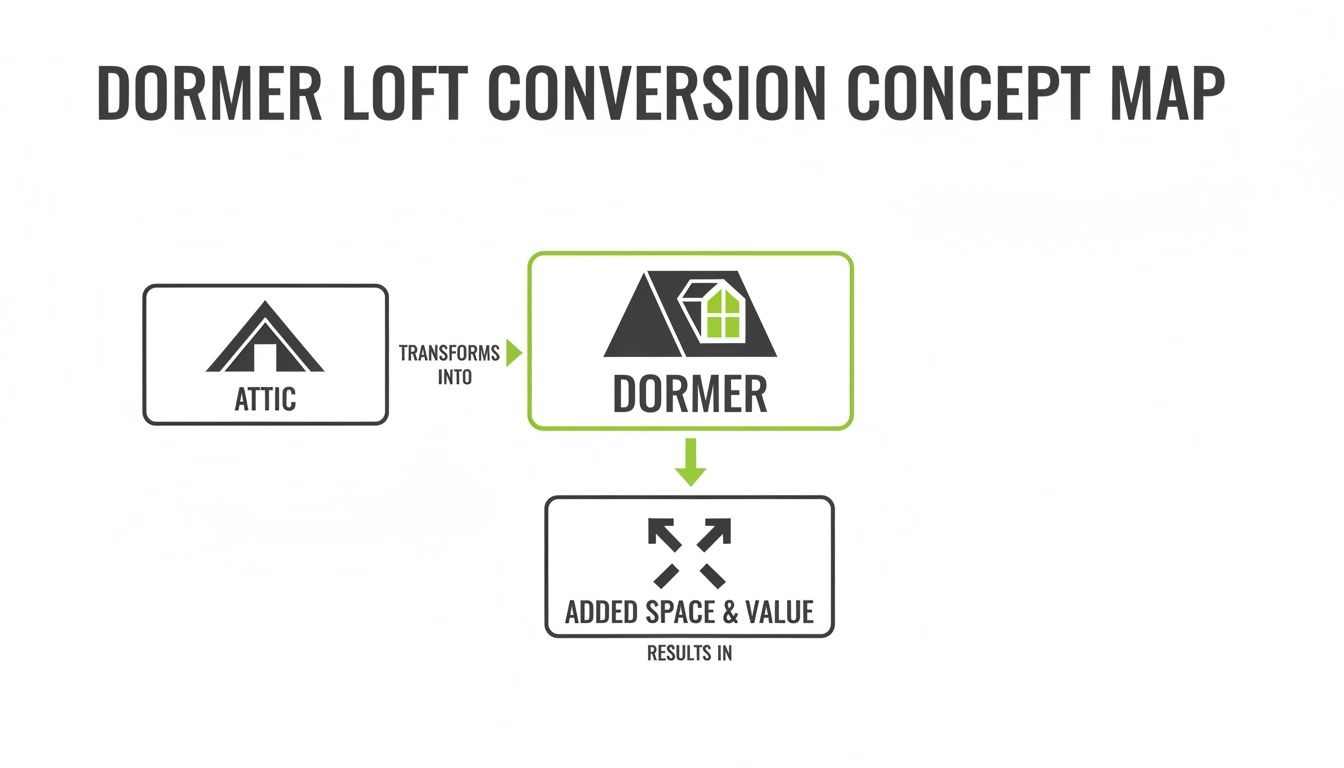
As the diagram shows, a dormer is a structural extension that projects vertically from a sloping roof, turning a cramped, awkward attic into a bright, usable room.
The Flat Roof Dormer
By far the most common style, the flat roof dormer is essentially a box-like structure added to the roof slope. Its straight walls and nearly level roof are all about one thing: maximising interior space. It creates the most headroom and usable floor area possible, making it an incredibly practical choice for homeowners in postcodes like St John’s Wood (NW8) aiming for a grand master suite or a spacious home office.
Practical doesn’t have to mean plain. A flat roof dormer can be an architectural statement. Our design team loves using high-end materials like zinc cladding, sustainable timber, and expansive glazing to craft a finish that feels both contemporary and luxurious. It’s a skill we’ve refined over 20+ years of working with London’s beautiful period properties—making the new feel like it has always belonged.
For many Victorian and Georgian properties, the flat roof dormer offers the most significant spatial gain. It provides a blank canvas for creating truly bespoke interiors, from a custom bathroom installation Kensington clients dream of to a penthouse-style bedroom with panoramic views.
The Pitched Roof Dormer
Often called a ‘gable-fronted’ dormer, this style has its own pitched roof that mirrors the main roofline. It’s a firm favourite in conservation areas like Highgate (N6) or Belsize Park (NW3) where preserving the traditional look of a period property is paramount. The result is a softer, more integrated appearance that feels timeless.
While you get slightly less internal volume compared to a flat roof dormer, the architectural charm is undeniable. This style creates characterful nooks and alcoves inside—perfect for a built-in window seat or a cosy reading corner. Our in-house joiners can craft stunning bespoke storage, using materials from trusted suppliers like Howdens, that work beautifully with these unique angles.
- Aesthetic Harmony: The pitched roof naturally blends with the main roofline, making it the perfect choice for front-facing extensions where kerb appeal is everything.
- Planning Advantage: In sensitive conservation areas, this style is often looked upon more favourably by planning authorities because it respects the home’s historic character.
The L-Shaped Dormer
This is the powerhouse of dormer conversions, an ingenious solution almost exclusively found on Victorian and Edwardian terraced houses that have a rear extension, often called an ‘outrigger’. It involves building two connecting dormers. The main one sits on the primary roof, while a second, smaller one is built on the roof of the outrigger below.
The two sections join to form an ‘L’ shape, unlocking a surprisingly vast amount of new floor space. This is the go-to for clients in Mayfair or Knightsbridge looking to add multiple rooms—think a large bedroom with a separate luxury bathroom and a walk-in wardrobe. It perfectly complements projects like premium kitchen extensions Knightsbridge homeowners might undertake on the floor below, creating a cohesive, multi-level renovation.
By linking these two volumes, we create a space that feels less like a loft and more like a natural upper storey of the home. It completely redefines the property’s layout and adds significant, lasting value. With our services now seamlessly available locally in Finchley, we deliver expert project management across London’s most desirable postcodes.
To help you visualise which option might be right for your London home, here’s a quick comparison of the dormer types we’ve discussed.
Comparing Dormer Conversion Types for Luxury London Homes
| Dormer Type | Best Suited For | Key Benefit | Typical Cost Bracket (Prime London) |
|---|---|---|---|
| Flat Roof Dormer | Most property types, especially Victorian terraces, seeking maximum space. | Maximum internal volume and headroom; a blank canvas for design. | £65,000 – £95,000+ |
| Pitched Roof Dormer | Period properties, particularly in conservation areas or for front-facing additions. | Aesthetically pleasing and often preferred by planning authorities. | £75,000 – £105,000+ |
| L-Shaped Dormer | Victorian and Edwardian properties with a rear ‘outrigger’ extension. | Vast space creation, allowing for multiple new rooms like a master suite. | £90,000 – £130,000+ |
Each dormer type offers a unique way to enhance your property. The final choice depends on a blend of architectural suitability, planning permissions, and your personal vision for the space—all areas where our 20+ years of experience provide expert guidance.
How a Dormer Conversion Increases Your Property’s Value
A bespoke dormer loft conversion isn’t just about adding a room; it’s one of the smartest financial decisions you can make for your London home. Especially for owners of period properties in postcodes like Knightsbridge (SW1X), Belgravia (SW1X), and St John’s Wood (NW8), this kind of renovation delivers a powerful return by turning dusty, unused attic space into prime, liveable square footage.
This isn’t just about adding a bedroom. It’s about fundamentally elevating your property’s profile. Imagine shifting a three-bedroom Victorian terrace into a four-bedroom home complete with a stunning master suite, or creating a quiet, dedicated home office. You’re directly answering the needs of discerning buyers in London’s most competitive property markets.
Quantifying the Return on Investment
Investing in a dormer loft conversion is a proven way to boost your property’s value, particularly in the space-starved London market. Industry analysis consistently shows that a well-executed loft conversion can increase a home’s value by as much as 20-25%. For a £2 million townhouse in Hampstead, that could mean an uplift of nearly half a million pounds. In highly desirable areas like Chelsea (SW3) and Kensington (SW7), where period properties dominate, this extra space is pure gold.
This impressive return is driven by creating the kind of spaces buyers dream of. A dormer gives you the headroom and light to add a full master bedroom with an en-suite bathroom—a feature that always commands a premium.
A thoughtfully designed dormer loft conversion doesn’t just add space; it adds tangible, quantifiable value. By creating a new storey with a luxury bathroom or a self-contained suite, you are making a powerful investment that will yield significant returns when it comes time to sell.
Realistic High-End Budgeting Guidance
For a luxury dormer conversion in prime London, a realistic budget is the foundation for achieving a finish that meets the highest standards. The final cost will always depend on the project’s complexity, the quality of materials you choose, and the unique challenges that come with working on period properties.
Here’s a breakdown of what you can expect for a high-end project:
- Structural Work: This is the core of the budget. It covers creating the dormer itself, installing essential steel beams, and ensuring the new roof is completely weatherproof. We only use high-grade materials from trusted suppliers like Builder Depot to guarantee it’s built to last.
- Luxury Finishes: The interior fit-out is what truly defines the space. This includes bespoke joinery from our in-house craftsmen, high-end tiling from specialists like Topps Tiles, and beautiful premium flooring.
- Bespoke Features: A luxury conversion often includes a custom-designed bathroom or kitchenette. For example, a custom bathroom installation Kensington clients often request might feature premium fixtures, underfloor heating, and bespoke vanity units.
- Premium Appliances: If your new space includes a kitchenette or utility area, we integrate chef-level appliances. Our expertise covers everything from professional-grade Wolf Sub-Zero luxury kitchen Chelsea installations to the sleek Gaggenau integrated appliances Mayfair clients prefer.
Timeless Upgrades for Long-Term Value
The real value of a dormer conversion lies in creating a timeless space that enhances your home for decades. With over 20 years of experience, we know exactly which upgrades deliver the most enduring appeal and the best financial return. It comes down to creating functional, light-filled rooms that perfectly blend modern luxury with your home’s historic character.
Our approach to sustainable loft conversions Belgravia homeowners value ensures the new space is not only beautiful but also energy-efficient. By using high-performance insulation, low-VOC paints, and energy-efficient appliances, we build a space that cuts down on running costs and appeals to environmentally conscious buyers. The result is a renovation that gives you immediate lifestyle benefits while securing your property’s future value. To see how this fits into a wider project, explore our expertise in full home renovation in London.
Navigating Planning Permission and Building Regulations
For anyone owning a period property in postcodes like Primrose Hill or South Kensington, navigating the legal framework is fundamental. The rules that dictate what you can and can’t build are notoriously complex, especially in a conservation area or with a listed building. A core part of our client-focused service is managing this entire process to ensure your project is fully compliant from day one.
The good news is that many dormer loft conversions in London fall under Permitted Development (PD) rights. This is a scheme that allows homeowners to carry out certain types of work without needing to go through the full planning permission process. However, it’s not a free-for-all. PD rights come with strict limitations on the dormer’s size, where it can be placed, and the materials used, and these rules become even tighter in conservation areas.
Understanding Permitted Development
Permitted Development is a fantastic route for many homeowners, but its limits must be respected. The rules are there to control the impact of extensions on your neighbours and the look of the street. For instance, any materials on the outside of your dormer must look similar to the existing house—a critical detail for preserving the character of Victorian and Georgian homes in neighbourhoods like Belsize Park.
Here are the key things to keep in mind for a dormer under PD rights:
- Volume Limits: You’re allowed to add up to 40 cubic metres of new roof space to a terraced house, or 50 cubic metres if your home is detached or semi-detached.
- Height Restrictions: The dormer cannot be any higher than the highest point of your existing roof.
- Setbacks: Your new structure has to be set back at least 20cm from the original eaves.
- Prohibited Areas: PD rights don’t apply to flats, maisonettes, or properties within certain protected zones like conservation areas.
Even if your project fits neatly within these rules, we always advise clients to apply for a Lawful Development Certificate (LDC). Think of it as an official seal of approval from your local council, confirming that your conversion was legal when it was built. It provides invaluable peace of mind and makes any future sale of your property much smoother.
When Full Planning Permission is Required
What if your vision for your dormer conversion goes beyond the limits of Permitted Development? Or perhaps you live in a conservation area where PD rights are restricted. In these cases, a full planning application is the next step. This is a much more detailed process where the council will carefully assess your design’s impact on the local area’s character and heritage. With over 20 years of experience navigating these applications in London’s most protected postcodes, our in-house team excels at creating designs that are both ambitious and approvable.
Dormer loft conversions lead the trends in the UK for a reason; they offer the best balance of cost, space gained, and build feasibility. They work particularly well in the terraced and semi-detached homes you see all over affluent postcodes like Highgate (N6) or Belgravia (SW1X). In fact, industry experts have called dormers the ‘most popular choice,’ especially as Permitted Development covers around 70% of London semis, allowing for extensions without the need for full planning.
The Importance of Building Regulations
Completely separate from planning permission, Building Regulations are a set of legal standards that make sure all construction work is safe, structurally sound, and energy-efficient. Compliance here is non-negotiable. Our in-house craftsmen are meticulous about adhering to every single standard.
This covers critical areas like:
- Structural Integrity: We ensure the existing floor joists can handle the new load and install the correct steel beams to provide robust support.
- Fire Safety: This means fitting mains-powered smoke alarms, fire-resistant doors, and ensuring there’s a safe escape route.
- Insulation: Your new space must meet tough thermal efficiency standards. This not only creates a comfortable room but also an eco-friendly one with lower running costs.
Our comprehensive project management means we handle every single detail, from the initial architectural drawings right through to the final sign-off from inspectors. We ensure your dormer conversion is a completely seamless and stress-free experience.
Designing a Luxury Dormer with High-End Materials
Once the structural work is complete, the true transformation begins. This is where we move beyond engineering and into pure artistry, turning an attic into a breathtaking living space. When designing a luxury dormer for a period property in Hampstead or Kensington, it’s all about striking the perfect balance—marrying contemporary comforts with the irreplaceable character of your home.
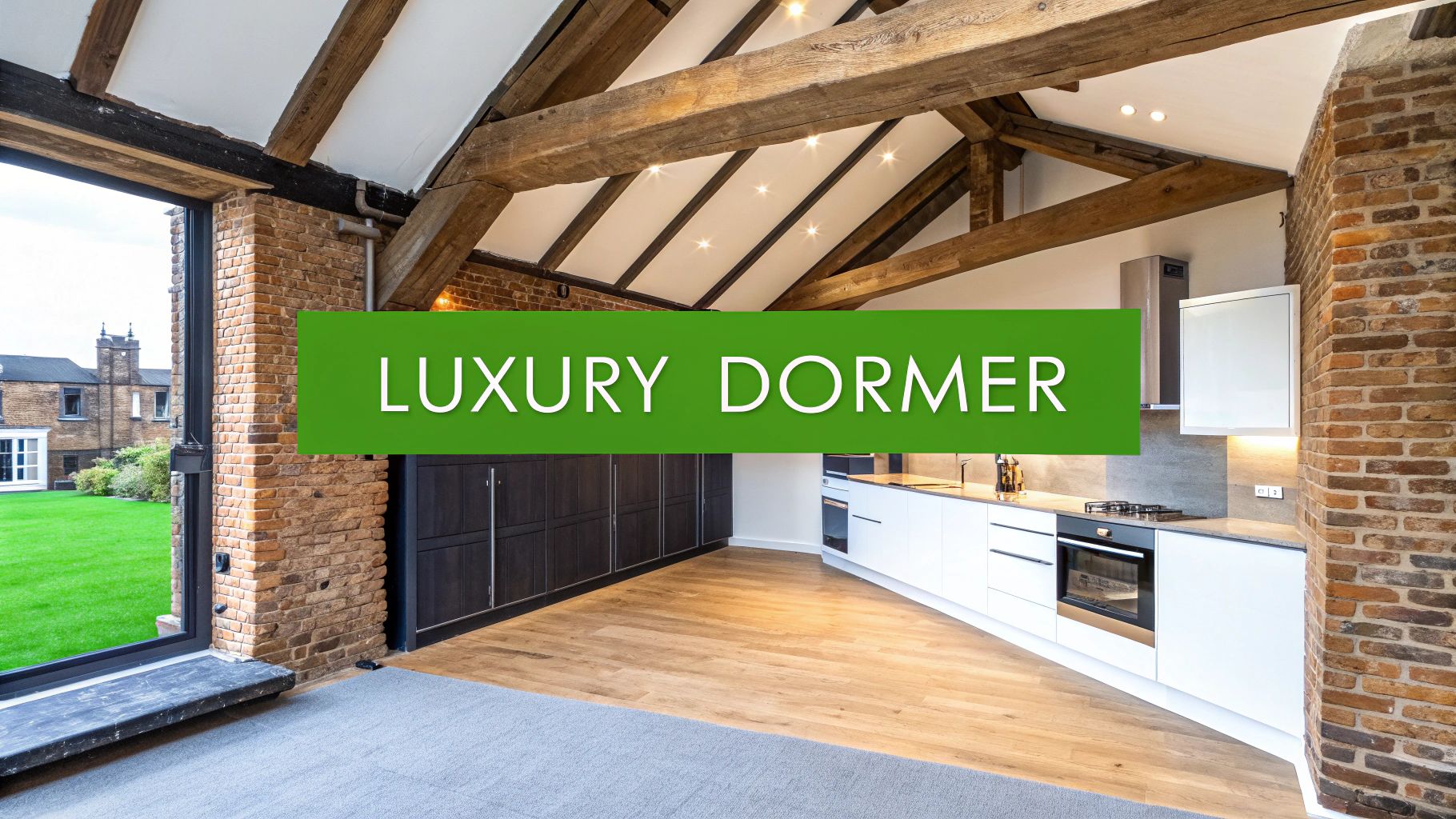
With over 20+ years of hands-on experience, our in-house craftsmen are masters of this delicate process. We believe the most beautiful spaces are those that tell a story, effortlessly weaving the old with the new.
Blending Modern Luxury with Period Character
The secret to a successful design is to honour the home’s original soul. Instead of hiding historic features, we make them the centrepiece of the new space. It’s an approach that adds texture, warmth, and a sense of history that you simply can’t replicate.
Our design strategies often include:
- Exposing Historic Brickwork: We can carefully reveal and restore original brick walls, creating a stunning feature that provides a beautiful contrast to clean, modern plasterwork.
- Retaining Timber Beams: Whenever possible, we leave original timber beams exposed. This not only floods the space with rustic charm but also proudly displays the building’s historic framework.
- Celebrating Architectural Quirks: The unusual angles and nooks of a loft aren’t challenges; they’re design assets. They become the perfect spots for bespoke shelving or a cosy window seat.
This philosophy ensures the new dormer feels like it has always been a part of your home, not just a later addition.
Creating a Functional and Elegant Space
A luxury dormer has to be as practical as it is beautiful. The generous headroom and floor space unlock a world of possibilities, completely transforming your home’s functionality. Many of our clients in Chelsea and Belgravia use the new floor to create a private, self-contained sanctuary.
Imagine a magnificent master suite, complete with a walk-in wardrobe and a spa-like bathroom designed by our luxury bathroom designers Chelsea clients trust. Or perhaps a multi-functional space combining a private study with a discreet utility area. Our expertise in bespoke solutions means we can seamlessly integrate high-performance appliances into the design. We can build a compact kitchenette featuring state-of-the-art Gaggenau integrated appliances Mayfair clients adore for their sleek profile, or a practical laundry zone with whisper-quiet Miele kitchen appliances Hampstead homeowners specify for their reliability.
The ultimate luxury is a space that is perfectly tailored to your lifestyle. Whether that means a tranquil yoga studio with skyline views or a sophisticated guest suite, our in-house design team works with you to bring that vision to life with precision and flair.
A Commitment to Sustainable and Premium Materials
A high-end finish is all about the quality of the materials you can see and feel. We are absolutely committed to using products that are not only beautiful and durable but also sustainable. This focus on eco-friendly solutions is central to our work, such as the high-end eco kitchen Mayfair clients are increasingly requesting.
We build relationships with trusted suppliers who share our dedication to quality. Our building materials are sourced from reliable names like Wickes and Builder Depot to guarantee structural integrity. For custom joinery and cabinetry, we often turn to the extensive range offered by Howdens, which allows our craftsmen to create truly bespoke pieces. The finishing touches, like stunning surfaces and tiles, are hand-picked from specialists such as Topps Tiles.
Our material selection is always guided by sustainability and your wellbeing:
- Responsibly Sourced Timber: We insist on using FSC-certified timber for all structural work and joinery, ensuring it comes from well-managed forests.
- Low-VOC Paints: We specify paints with low levels of Volatile Organic Compounds (VOCs) to improve indoor air quality and create a healthier home environment.
- High-Performance Insulation: We use eco-friendly insulation made from recycled materials, which maximises thermal efficiency and shrinks your home’s carbon footprint.
By combining thoughtful design with premium, sustainable materials, we create exceptional living spaces that are built to last—enhancing both your home and your quality of life.
Why Trust Our In-House Team with Your Conversion
When you’re about to begin a project as personal and significant as a dormer loft conversion in a period property, the team you choose is easily the most critical decision you’ll make. For over 20+ years, we’ve carved out a reputation in London’s most sought-after postcodes—from Hampstead to Chelsea—built entirely on a foundation of uncompromising quality. And that quality starts with our people.

Unlike many firms that rely on a revolving door of subcontractors, we do things differently. Every single project is delivered by our in-house team of skilled craftsmen. This isn’t just a point of pride for us; it’s our promise of quality, accountability, and seamless communication, from the very first design sketch right through to the final handover.
The Power of In-House Craftsmanship
Having a dedicated, permanent team means every plumber, electrician, joiner, and decorator is working to the exact same high standards. They intimately understand the unique quirks and complexities of Victorian and Georgian properties in Kensington and Mayfair because they work on them every single day. There are no communication breakdowns or blame-shifting between different contractors—just a unified team focused on one goal: excellence.
This integrated approach brings clear advantages:
- Uncompromising Quality Control: We personally oversee every last detail, ensuring each stage of the build meets our own rigorous standards.
- Complete Accountability: The buck stops with us. You have one team, one point of contact, and one unwavering commitment to perfection.
- Seamless Project Flow: Our in-house project managers coordinate our tradespeople like a well-oiled machine, minimising delays and disruption to your life.
This method is fundamental to how we work and a key reason why discerning homeowners trust us. If you’re considering a renovation, understanding these benefits is essential; you can learn more about this in our guide on choosing the right building team for your Central London renovation.
A Case Study in Hampstead Heritage
We recently demonstrated this commitment on a complex project in a Hampstead (NW3) Victorian property, subject to strict conservation area guidelines. The proposed dormer conversion required a delicate touch to preserve a series of original, but deteriorating, roof timbers.
An outsourced team might have found it easier to simply remove these historic features. But our in-house structural engineers and master carpenters devised a bespoke solution. They carefully reinforced the original beams with discreet, custom-fabricated steel supports, transforming them into a stunning centrepiece for the new master suite. It was our integrated expertise that allowed us to preserve the home’s soul while delivering a structurally sound, beautiful space.
Verified Excellence and Local Presence
Our commitment to excellence isn’t just something we talk about; it’s independently verified. We are proud members of the Guild of Master Craftsmen, a testament to our skill and professionalism. Furthermore, our consistently high standards are reflected in the exceptional client feedback on our TrustATrader profile.
With our services now seamlessly available locally from our base in Finchley, we are perfectly positioned to serve our core areas. This ensures we are always on hand to deliver the responsive, client-focused service you deserve for your bespoke dormer conversion.
Answering Your Questions on Dormer Loft Conversions
When you’re planning a project of this scale, questions are bound to come up. With over two decades of experience transforming London’s finest properties, we’ve answered just about all of them. Here’s some clarity on the most common queries we receive.
How Long Does a Luxury Dormer Loft Conversion Typically Take?
While every bespoke project has its own timeline, a high-end dormer conversion in a period property, say in Kensington, generally takes about 10-14 weeks from the day our in-house team starts on site. Our dedicated project management is the key to this efficiency. We coordinate our skilled craftsmen seamlessly, minimising disruption to your life. This timeframe covers everything from the initial structural works right through to fitting the last custom tap in your new bathroom, all executed to an impeccable standard.
Can a Dormer Conversion Include Sustainable Features?
Absolutely. This is central to our design philosophy and a core part of our client-focused work. For our clients in postcodes like Mayfair and Belgravia, integrating sustainable, high-performance solutions is often a priority.
We frequently incorporate features like:
- High-performance insulation made from natural or recycled materials.
- Energy-efficient glazing to keep your new space warm in winter and cool in summer.
- Low-VOC paints, which contribute to a healthier indoor air quality.
- Plumbing infrastructure for greywater recycling systems.
We also specify premium, energy-efficient appliances from brands like Miele, V-ZUG, and Siemens StudioLine, proving that luxury living and environmental responsibility can go hand in hand. You can read more about our approach in our guide to eco-friendly renovations.
Is a Dormer Conversion Possible in a Conservation Area?
Yes, it often is. Many of the beautiful properties in London’s conservation areas, such as those in Highgate or Belsize Park, are perfectly suited for a dormer conversion. The key difference is that these projects require a sensitive design approach and a full planning application, as the usual Permitted Development rights are typically restricted.
This is where our 20+ years of experience really comes into play. We are experts at designing conversions that respect a property’s heritage while meeting the council’s stringent planning requirements. Our team handles the entire application process for you, ensuring the design is not only compliant but also beautifully complementary to your home’s character—just as we’ve done for our clients in Hampstead. This expertise makes for a smooth, predictable journey from the first sketch to the finished space.
Ready to transform your home with timeless luxury? Contact BathKitchenLondon.com for a personalized quote on your bespoke kitchen, bathroom, or full renovation project.