

In London’s most esteemed postcodes, from the Georgian terraces of Belgravia (SW1X) to the Victorian villas of Hampstead (NW3), space is the ultimate luxury. A small bathroom, when expertly designed, is not a limitation but an opportunity for concentrated opulence. With over 20 years of experience, our team at BathKitchenLondon.com has specialised in transforming compact spaces into bespoke sanctuaries. The key lies in strategic material selection and masterful installation, particularly with tiling. The right tile can dramatically expand the perception of space, enhance light, and infuse a room with a character that reflects the heritage and prestige of its location.
This guide presents 10 sophisticated small bathroom tile ideas, moving beyond generic advice to offer actionable insights tailored for discerning homeowners in areas like Chelsea (SW3), Kensington (SW7), and Mayfair (W1K). We will explore how to select materials that not only create an illusion of grandeur but also add tangible value to your property, blending timeless elegance with contemporary functionality. From sourcing rare natural stone to implementing sustainable, eco-friendly solutions, our focus is on in-house craftsmanship that respects both architectural integrity and modern luxury living.
We will delve into specific challenges common in London’s period properties, such as uneven floors and limited natural light, providing expert solutions that our in-house artisans employ daily. This is a curated collection of design principles for creating an exceptionally luxurious and spatially intelligent bathroom that feels both expansive and impeccably detailed.
1. Large Format Porcelain Tiles (60x120cm+)
One of the most effective and sophisticated small bathroom tile ideas is to defy conventional wisdom and embrace oversized porcelain tiles. While it may seem counterintuitive, using large format tiles (60x120cm or even larger) creates a powerful illusion of space by drastically reducing the number of visible grout lines. This technique minimises visual clutter, allowing the eye to see a continuous, uninterrupted surface that feels expansive and calming.
For discerning homeowners in areas like Kensington (SW7) and Chelsea (SW3), this approach transforms a compact bathroom into a seamless, gallery-like sanctuary. The large scale of the tiles imparts a sense of grandeur and permanence, aligning perfectly with the high-end aesthetic of luxury London properties. Renowned manufacturers like Porcelanosa and Marazzi have perfected these engineered slabs, offering exceptional durability and minimal porosity—essential for wet environments.
Implementation in London Period Properties
This technique is particularly successful in both period conversions and contemporary apartments. In a Knightsbridge (SW1X) luxury flat, floor-to-ceiling 80x160cm tiles in a soft, Calacatta-inspired pattern can make the room feel taller and wider. Similarly, in a renovated Hampstead townhouse bathroom, these tiles provide a clean, modern contrast to original Victorian features, creating a sophisticated blend of heritage charm and modern luxury.
Step-by-Step Tips for Flawless Execution
To execute this design flawlessly, our experts recommend the following:
- Minimise Grout: Insist on minimal grout spacing of 2-3mm and use a colour-matched epoxy grout. This creates a monolithic, seamless appearance that is the primary goal of using large format tiles.
- Prioritise Matte Finishes: In steamy environments like shower enclosures, a matte or honed finish is superior to polished. It reduces the visibility of water spots and offers better slip resistance.
- Choose Neutral Palettes: To maximise the space-enhancing effect, opt for light, neutral tones. Soft whites, gentle greys, and warm beiges reflect more light and amplify the sense of openness.
- Specialist Installation is Crucial: Handling and installing these large, heavy tiles requires specialised tools and expertise. It is vital to hire experienced installers familiar with large-format specifications to ensure a perfect, level finish without lippage. Factoring this specialist labour into your budget is essential; you can explore how installation costs impact overall renovation quotes for a comprehensive view.
2. Marble & Natural Stone Tiles
For an atmosphere of pure opulence and timeless appeal in a compact space, nothing surpasses the beauty of marble and other premium natural stones like limestone or travertine. This classic choice elevates a small bathroom from a purely functional room to a luxurious, spa-like sanctuary, significantly enhancing property value. Each slab of natural stone boasts unique veining and tonal variations, ensuring a completely bespoke finish that is impossible to replicate—a quality highly sought after in the exclusive residences of Belgravia (SW1X) and Knightsbridge (SW1X).
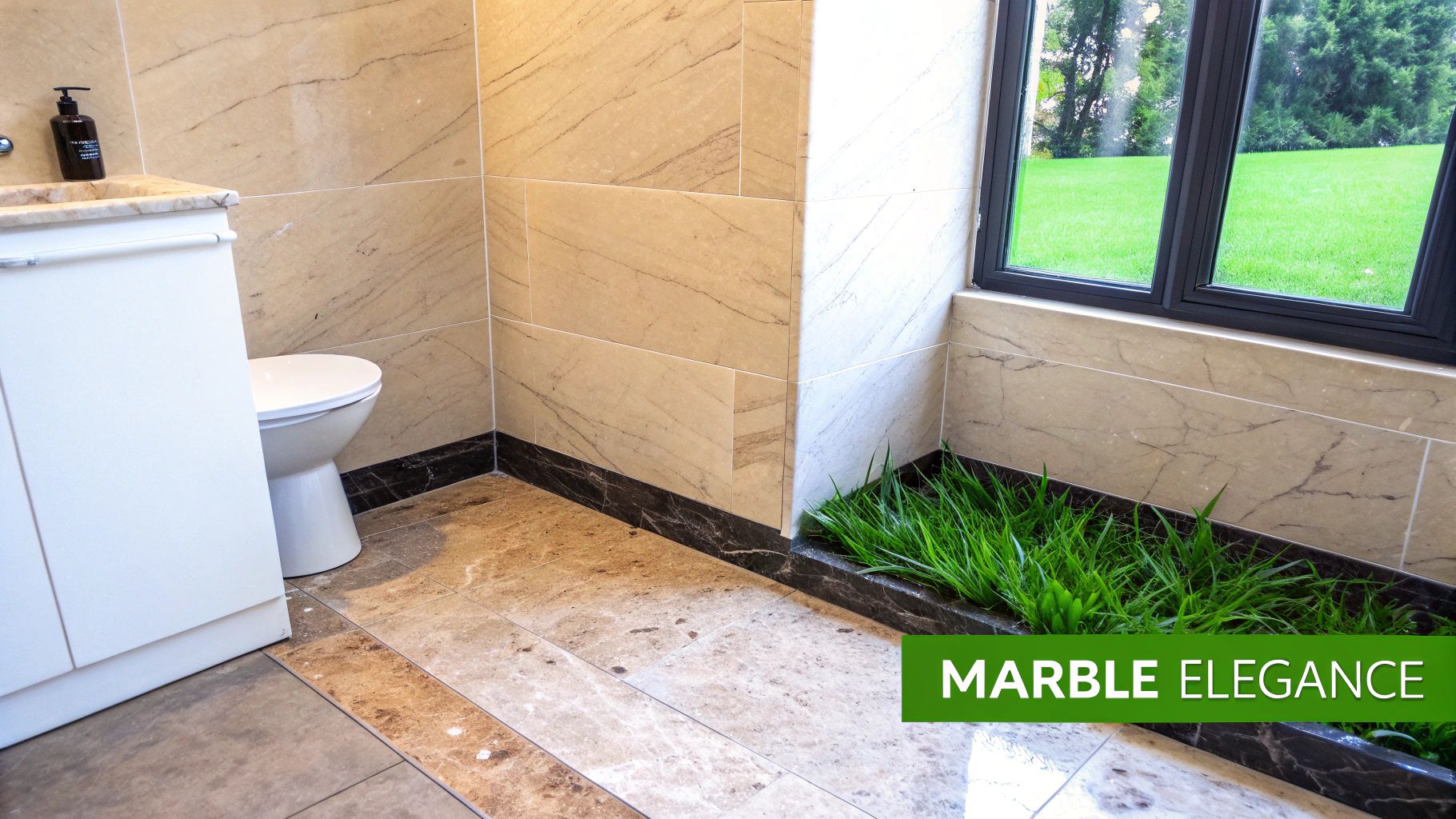
The inherent grandeur of materials like Calacatta or Carrara marble makes them a perennial favourite among discerning homeowners and designers. Using a consistent stone across both floor and walls can create a seamless, monolithic effect that cleverly blurs the room’s boundaries, making it feel more expansive and unified.
Blending Modern Luxury with Heritage Charm
This approach is exceptionally effective in both contemporary apartments and period properties. In a Chelsea (SW3) luxury apartment, floor-to-ceiling honed limestone tiles create a warm, serene, and spacious feel. Similarly, a Georgian townhouse in Hampstead (NW3) could feature a striking Carrara marble feature wall in the shower enclosure, adding a dramatic focal point without overwhelming the smaller footprint. This is a core element of many bespoke tailored bathroom renovations that aim for a perfect blend of modern luxury and heritage character.
Key Considerations for Period Properties
- Prioritise Safety with Finishes: For flooring, always select a honed or tumbled finish over polished. These textures provide essential slip resistance in wet conditions while offering a sophisticated, understated aesthetic.
- Essential Sealing and Maintenance: Natural stone is porous and must be sealed immediately after installation and re-sealed annually to protect against staining and water damage. Use only pH-neutral stone cleaners.
- Address Uneven Floors: Victorian and Georgian properties often have uneven subfloors. It is critical to have a specialist prepare and level the substrate perfectly before laying expensive stone to prevent cracking.
- Enhance with Underfloor Heating: Natural stone can feel cold. Integrating electric underfloor heating is a non-negotiable luxury that transforms the bathroom into a consistently comfortable and inviting space.
3. Subway Tiles with Modern Grout
The classic subway tile, a staple of Victorian design, undergoes a luxury renaissance when paired with modern grouting techniques. This timeless choice is reimagined for contemporary sensibilities, offering a sophisticated and effective small bathroom tile idea. By strategically using contrasting or perfectly matched grout, this humble tile adds depth, character, and a bespoke feel without overwhelming a compact space.
For discerning homeowners in areas like Primrose Hill and St John’s Wood (NW8), this approach balances heritage aesthetics with modern luxury. The clean, geometric lines provide a familiar comfort, while the grout choice introduces a sharp, design-led element.
Implementation in London Homes
This technique is exceptionally versatile. In a St John’s Wood (NW8) period home, crisp white subway tiles laid in a classic brick bond pattern with a dark charcoal grout create a striking, graphic statement in a shower enclosure. Similarly, in a chic Chelsea (SW3) loft, cream subway tiles installed in a dynamic herringbone pattern with a soft grey grout can add visual interest and a sense of movement to a feature wall, making the room feel more expansive.
Actionable Insights for a Luxury Finish
- Embrace Contrast: Use a dark grout (charcoal or black) with light tiles to create a bold, graphic look that defines each tile and adds visual depth.
- Opt for Herringbone: Installing subway tiles in a herringbone pattern draws the eye upwards and outwards, creating an illusion of height and width. This adds a layer of bespoke sophistication.
- Balance with Other Surfaces: Confine subway tiles to a single area, like the shower walls or a splashback. Pair them with large-format tiles on the floor to balance the traditional pattern with modern simplicity.
- Specify Epoxy Grout: For a truly high-end and practical finish, insist on epoxy grout. It is non-porous, offering superior stain and mould resistance compared to traditional cement-based grout, ensuring the clean lines remain pristine for years.
4. Terrazzo Tiles
Terrazzo represents a sophisticated and artistic choice for a compact bathroom, combining fragments of marble, quartz, or glass within a resilient matrix. This classic Italian material has seen a resurgence among London’s design-conscious homeowners. In a small bathroom, terrazzo tiles inject personality and bespoke luxury, turning a functional space into a design-led statement.
For high-end properties in areas like Belgravia (SW1X) or Mayfair (W1K), modern engineered terrazzo offers superior durability and design flexibility. These contemporary tiles are less porous and more consistent, making them one of the most practical and impactful small bathroom tile ideas. The multi-tonal surface masterfully disguises minor water spots and creates a dynamic feel. For those seeking a high-end eco kitchen or bathroom in Mayfair, look for suppliers using recycled aggregates.
Implementation in London Homes
In a Chelsea (SW3) townhouse, a floor of large-format terrazzo tiles with a neutral base and bold, colourful aggregate can serve as the primary design feature. Similarly, a Knightsbridge (SW1X) penthouse bathroom could use a custom terrazzo slab as a feature wall within a shower enclosure, paired with minimalist brassware to highlight its artistic quality.
Key Considerations and Tips
- Strategic Application: In a smaller space, use terrazzo strategically on the floor or a single feature wall. Covering every surface can feel overwhelming.
- Select Epoxy-Based Terrazzo: For bathrooms, epoxy-based terrazzo is superior to its cement-based counterpart. It offers greater stain resistance and water repellency.
- Commission Bespoke Designs: For true luxury differentiation, work with suppliers to create a custom terrazzo mix, specifying the colour, size, and type of aggregate to perfectly match your design vision.
- Maintain with Professional Sealing: Although durable, terrazzo benefits from protection. Ensure your installer applies a high-quality sealant upon installation and schedule a professional reseal every 2-3 years.
5. Zellige (Moroccan Hand-Made Tiles)
For those seeking to imbue a compact bathroom with unparalleled character and artisanal depth, Zellige tiles offer an exceptional solution. These traditional Moroccan tiles, hand-cut and glazed by skilled craftspeople, bring an authentic, soulful quality. Their inherent variations in colour, texture, and size create a surface that is alive with movement and light, making it one of the most compelling small bathroom tile ideas for a bespoke aesthetic.
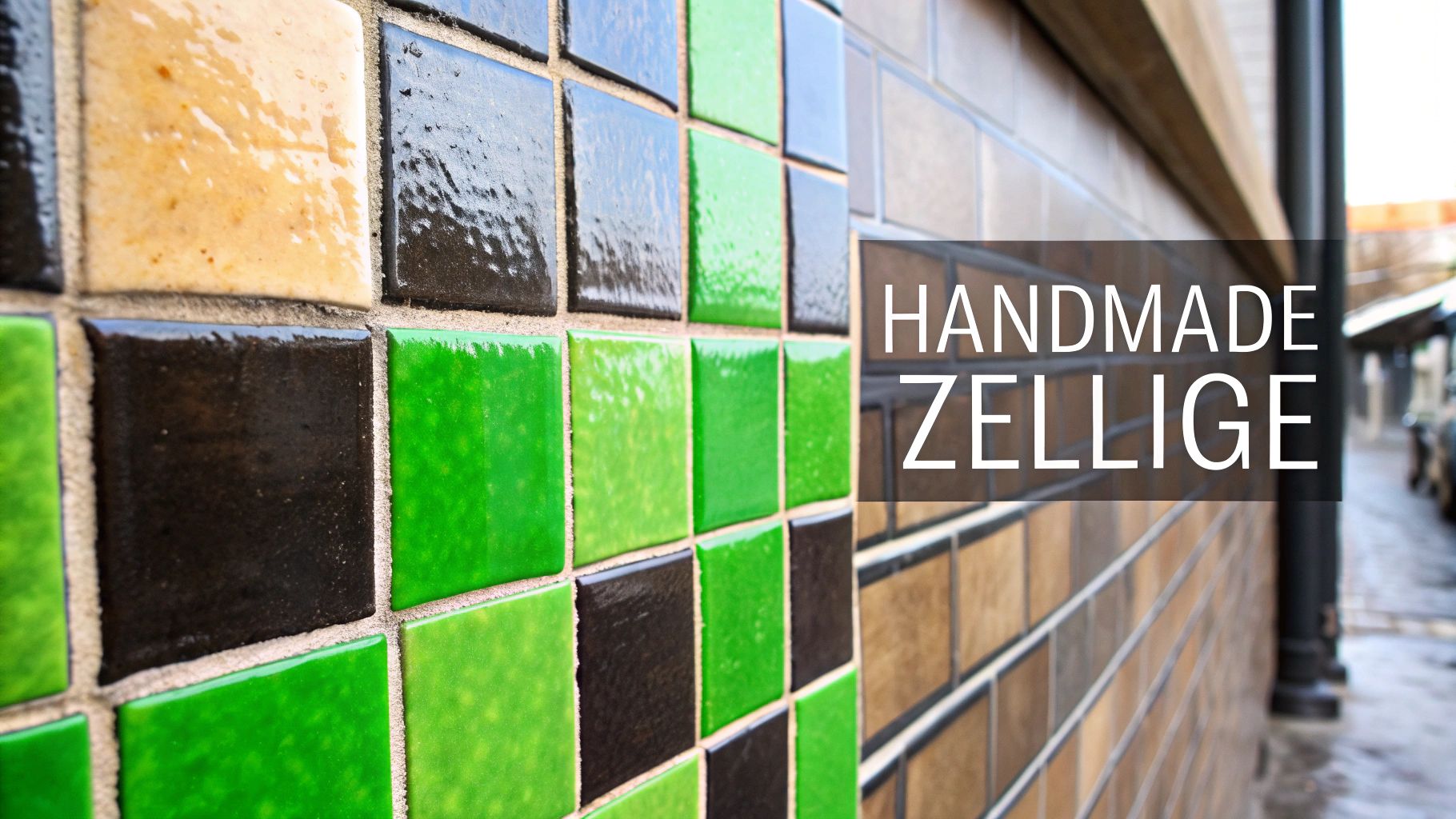
The charm of Zellige lies in its “perfect imperfection.” Subtle undulations on the surface catch and reflect light in unique ways, adding a dynamic shimmer that can make a small space feel brighter and more vibrant. This bohemian-meets-opulent style is favoured in design-led circles and is a signature of many luxury bathroom designers in Chelsea.
Implementation in London Homes
In a Belsize Park (NW3) townhouse, a feature wall of jewel-toned Zellige in a shower enclosure can create a stunning, luxurious focal point. Similarly, they might be used to craft an intricate, bespoke backsplash behind a vanity in a guest powder room, adding a layer of rich, tactile artistry.
Key Considerations for a Flawless Finish
- Embrace Imperfection: The beauty of Zellige is in its irregularity. Allow for the natural variations in colour and the slightly uneven edges; this is a hallmark of its artisanal quality.
- Strategic Application: In a smaller bathroom, use Zellige as a feature wall, shower surround, or floor to add impact without visually shrinking the space.
- Pair with Simplicity: To let the tiles take centre stage, combine them with minimalist fixtures and neutral finishes. Sleek, modern taps and simple vanity units create a sophisticated balance.
- Professional Sealing is Non-Negotiable: Due to their porous nature, Zellige tiles must be professionally sealed immediately after installation, particularly in wet areas, to protect them from water damage and staining.
6. Microcement Finishes
For a truly seamless and contemporary aesthetic, microcement offers a sophisticated solution that transcends traditional tiling. This versatile material creates a monolithic, grout-free surface that instantly makes a small bathroom feel more spacious and unified. This is one of the most forward-thinking small bathroom tile ideas for a modern, industrial-luxe finish.
The appeal for high-end London properties, such as Mayfair (W1K) apartments or Belgravia (SW1X) townhouses, lies in microcement’s unique blend of raw texture and refined elegance. Its inherent water resistance and durability make it a practical yet visually striking choice. This technique allows for a continuous application from floor to walls and even into a walk-in shower, creating an immersive, spa-like environment.
Implementation in London Homes
In a modernised Knightsbridge (SW1X) penthouse, a seamless grey microcement bathroom can be elevated with fine brass geometric inlays. Similarly, in a renovated Chelsea (SW3) townhouse, tinted microcement in a soft, earthy tone provides a warm, tactile backdrop for minimalist fixtures, achieving a perfect balance between comfort and high design.
Key Considerations for a Perfect Finish
- Specify Premium Products: Insist on high-performance microcement systems from reputable brands with a proven track record for durability in wet areas.
- Integrate Patterns Thoughtfully: Work with your designer to plan the placement and scale of any inlays. These should complement the room’s proportions rather than overwhelm them.
- Opt for Satin or Matte Finishes: These finishes are superior for concealing water spots and fingerprints compared to a high-gloss polish.
- Professional Application is Non-Negotiable: The application of microcement is a highly skilled craft. It is crucial to engage specialist contractors experienced in luxury residential projects to ensure a perfect, seamless finish free of cracks.
7. Encaustic & Patterned Cement Tiles
To infuse a small bathroom with narrative depth and artisanal character, encaustic and patterned cement tiles are an exceptional choice. These tiles, rooted in Victorian and European traditions, feature intricate geometric or botanical patterns. The design runs through the entire thickness of the tile, ensuring the pattern never fades with wear.
For homeowners in period properties across Hampstead (NW3) and Primrose Hill, these tiles offer a way to honour architectural heritage while introducing a bespoke, artistic element. The hand-crafted nature of these tiles provides a unique texture and colour variation that mass-produced tiles cannot replicate, transforming a functional space into a statement of personal style.
Implementation in London Homes
Encaustic tiles are particularly effective for creating a feature floor. In a St John’s Wood (NW8) townhouse, a bold monochrome geometric floor tile can add modern dynamism without overwhelming the compact layout. Similarly, in a South Kensington (SW7) apartment, a colourful, patterned tile splashback behind the basin provides a vibrant focal point.
Key Considerations and Tips
- Create a Focal Point: Use patterned tiles strategically on one surface, such as the floor or a single feature wall. Pairing them with simple, solid-colour tiles on the remaining walls prevents visual overload.
- Seal for Protection: Cement and encaustic tiles are porous and must be sealed immediately after installation and periodically thereafter. This protects the hand-finished surface from water ingress and staining.
- Plan for Complexity: The intricate patterns require meticulous planning and installation to ensure correct alignment. This can affect the project timeline and labour costs.
- Honour the Property’s Age: In a Victorian or Georgian home, select patterns that are sympathetic to the building’s original aesthetic to create a cohesive design.
8. Geometric Mosaics & Decorative Borders
For those looking to infuse a small bathroom with personality and artistic flair, geometric mosaics and decorative borders offer a concentrated dose of high-impact design. Rather than overwhelming a compact space, intricate patterns used strategically draw the eye and create sophisticated focal points. This approach allows a limited area to function as a piece of art.
This is one of the most effective small bathroom tile ideas for creating a bespoke, jewel-box effect in exclusive London properties. In a Belgravia (SW1X) penthouse or a Mayfair (W1K) apartment, a carefully selected mosaic transforms a functional space into a statement of luxury.
Implementation in London Homes
In a Chelsea (SW3) townhouse, a floor-to-ceiling geometric mosaic in a walk-in shower can create a dramatic, gallery-like feature. Similarly, a bespoke mosaic border tracing the floor perimeter or framing a mirror in a compact Hampstead (NW3) bathroom adds a layer of custom detail and refinement that distinguishes the space.
Actionable Insights for Using Mosaics
- Contain the Impact: Limit the use of intricate mosaics to a single accent wall or a defined feature area, such as a basin splashback or shower niche.
- Simplify Installation: Opt for high-quality, pre-mounted mosaic sheets. This significantly reduces installation complexity and time, ensuring a precise, uniform finish.
- Balance with Minimalism: Pair your chosen mosaic with clean-lined, minimalist fixtures and larger, plain tiles on other surfaces. This contrast allows the mosaic to become the star.
- Harmonise the Palette: Ensure the core colours within the mosaic are coordinated with the other finishes in the bathroom for a cohesive and intentional design scheme.
9. Hexagonal & Geometric Shaped Tiles
Moving beyond traditional squares, hexagonal and other geometric-shaped tiles introduce dynamic visual interest and a contemporary edge. These non-rectangular forms create intricate patterns that draw the eye, making a compact space feel more engaging and thoughtfully designed. A well-chosen geometric tile, particularly in a larger format, can subtly guide the eye and create a sense of movement.
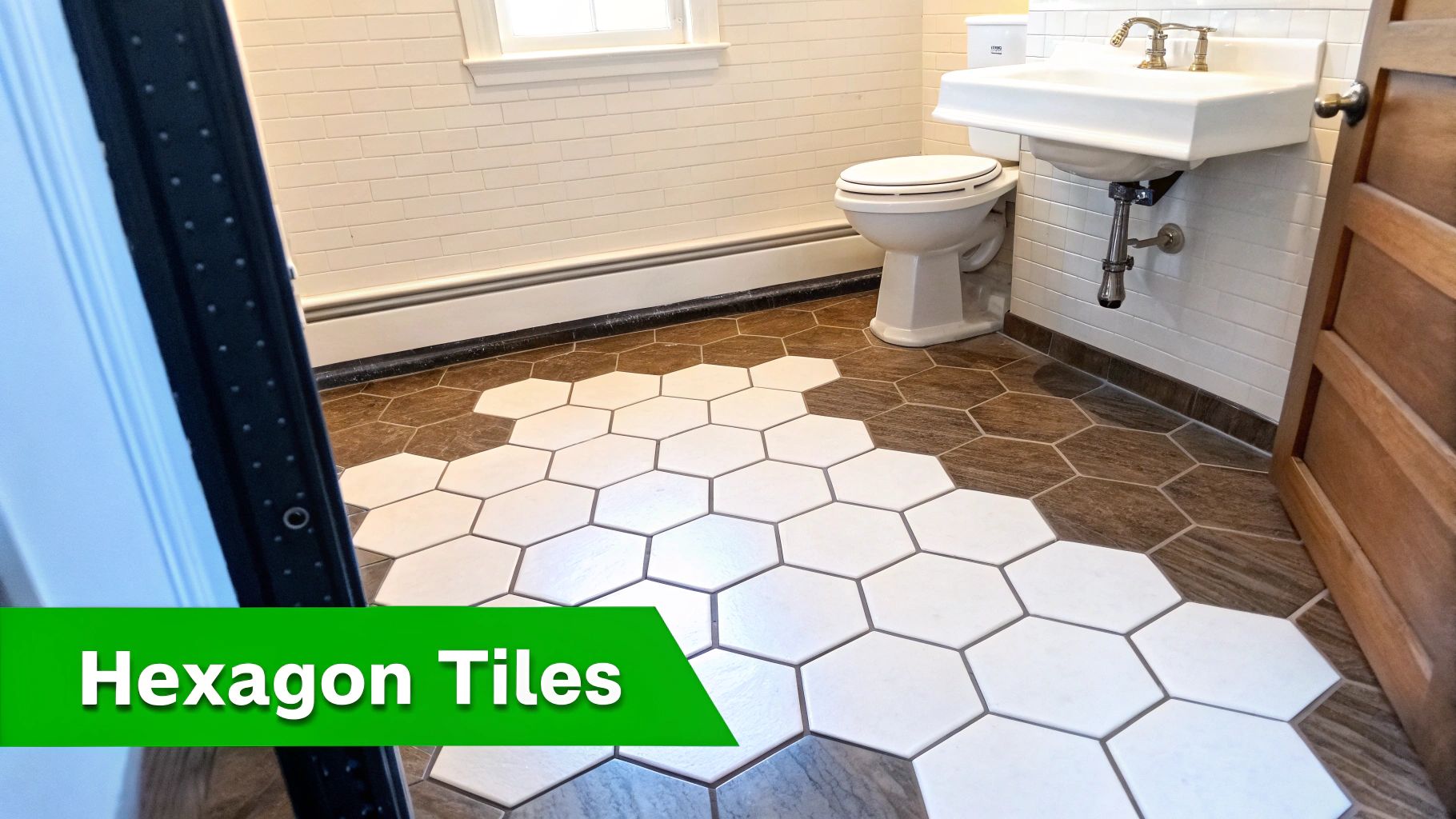
For the discerning aesthetic of London’s premium properties, this approach offers a perfect balance of modern luxury and timeless sophistication. This makes them one of the most versatile small bathroom tile ideas for homeowners seeking a unique yet refined finish.
Implementation in London Homes
In a Hampstead (NW3) period home, a floor laid with large-format (15-20cm) hexagonal marble tiles can add a layer of modern elegance that complements original features. Similarly, a Chelsea (SW3) townhouse bathroom could feature a stunning accent wall of geometric porcelain behind the vanity, creating a focal point that adds depth.
Key Considerations and Tips
- Opt for Larger Formats: Choose larger hexagons (15cm or more) over smaller mosaic versions. This reduces the number of grout lines, creating a less busy, more expansive pattern.
- Create a Focal Point: Use geometric tiles on a single surface, such as the floor or a shower enclosure accent wall. Tiling every wall in a small bathroom with a complex shape can feel overwhelming.
- Balance with Simplicity: Pair bold geometric patterns with clean, linear fixtures and simple rectangular tiles on other walls.
- Plan for Complex Cuts: Geometric tiles require more intricate cuts. This demands a highly skilled installer, and you should account for slightly higher material wastage and labour costs in your renovation budget.
10. Textured & 3D Relief Tiles
Introducing tactile intrigue is one of the most sophisticated small bathroom tile ideas for creating a high-end, sensory experience. Three-dimensional and textured tiles introduce visual depth and a luxurious tactile appeal, turning a simple wall into a dynamic design statement. Modern 3D tiles feature subtle geometric reliefs or elegant wave patterns that catch and manipulate light, creating shifting shadows and highlights.
This approach works exceptionally well in minimalist luxury bathrooms, common in Mayfair (W1K) and Belgravia (SW1X), where a limited colour palette allows the dimensional complexity to take centre stage. Rather than relying on bold colours, the design captivates through its sculptural form.
Implementation in London Homes
In a Chelsea (SW3) townhouse, an organic textured accent wall behind a freestanding bath can create a serene, spa-like focal point. Similarly, a Belgravia (SW1X) luxury bathroom could feature a full wall of geometric 3D tiles. The subtle nature of these reliefs means they can also enhance period aesthetics, for instance, by adding modern texture that complements original features in a renovated Hampstead (NW3) home.
Key Considerations and Tips
- Strategic Lighting is Essential: Install high-quality directional LED lighting, such as downlights or wall washers, to graze the surface. This technique will dramatically accentuate the tile’s relief.
- Limit to Vertical Surfaces: For practicality and safety, reserve these tiles for walls. Floor applications can be difficult to clean and may present an uneven surface, a key consideration when planning for accessibility. You can discover more on creating future-proofed spaces here.
- Embrace Monochromatic Schemes: The impact of 3D tiles is most profound within a single-colour scheme. This allows the texture itself, rather than colour, to be the primary design element.
- Balance with Smooth Finishes: Juxtapose the textured wall with smooth, polished fixtures and simple, unadorned surfaces elsewhere in the room. This contrast creates a beautiful visual balance.
Budgeting for Your Luxury Bathroom Renovation
Transforming these concepts into reality requires a clear understanding of the investment. A high-end bathroom renovation in London’s premier postcodes like Chelsea (SW3) or Knightsbridge (SW1X) typically ranges from £15,000 to £70,000+. This budget accommodates:
- Bespoke Design & Planning: Tailored layouts that maximise space and light.
- Premium Materials: Sourcing exclusive tiles, natural stone, and high-end fixtures.
- Master Craftsmanship: The cost of our experienced, in-house team of tilers, plumbers, and electricians.
- Structural Considerations: Addressing challenges in period properties, such as reinforcing floors or updating plumbing.
A detailed consultation is the first step to creating a precise quote tailored to your vision and property.
Conclusion: From Inspiration to Impeccable Installation
The journey through these small bathroom tile ideas reveals that a compact footprint is an invitation for creativity, not a limitation. Whether it’s the heritage charm of patterned encaustic tiles in a Kensington (SW7) townhouse or the sleek, modern appeal of textured porcelain in a Mayfair (W1K) apartment, the right tile selection lays the foundation for a truly bespoke sanctuary.
Transforming these concepts from a mood board into a tangible, flawlessly executed reality requires more than just selecting a beautiful tile. It demands a profound understanding of material science, the unique structural challenges of London’s period properties, and the meticulous skill of master craftspeople. The success of your project hinges on several critical factors:
- Expert Material Guidance: Understanding the sealing requirements for porous natural stone versus the robust nature of porcelain is essential for long-term satisfaction.
- Precision Installation: The visual impact of your chosen tiles is directly tied to the quality of the installation. Perfect alignment and minimal grout lines are hallmarks of our superior craftsmanship.
- Navigating Period Property Quirks: Victorian and Georgian homes in Hampstead (NW3) or Highgate (N6) often present challenges like uneven floors. A seasoned renovation specialist anticipates these issues, ensuring proper sub-floor preparation for a perfect, durable finish.
- Integrated Project Management: A truly high-end renovation involves not just tilers but also plumbers, electricians, and decorators, all working seamlessly together. Our 20+ years of experience ensure your project is completed on time, within budget, and to the highest possible standard.
Ultimately, your bathroom renovation is an investment in your home’s value and your daily well-being. By partnering with experts who possess deep knowledge of both luxury design and the specific demands of high-end London properties, you ensure your vision is not just realised, but elevated.
Contact BathKitchenLondon.com for a personalized quote on your luxury renovation project.
Article created using Outrank