
In London’s most distinguished postcodes, from the Georgian terraces of Hampstead to the elegant mansion blocks of Chelsea, maximising luxury within a compact bathroom is a defining feature of sophisticated interior architecture. For over two decades, our in-house artisans have specialised in transforming these intimate spaces into sanctuaries of bespoke elegance. The challenge is not the size, but the vision. The right tile selection is paramount; it can manipulate perception, amplify light, and establish a tone of unparalleled quality that elevates the entire property.
This guide moves beyond fleeting trends to present eight carefully curated small bathroom tile ideas, focusing on timeless materials, expert craftsmanship, and intelligent design strategies tailored for London’s period properties. We will explore how to blend heritage charm with modern functionality, offering practical insights into material selection, installation nuances, and budgeting considerations. A full luxury bathroom renovation in prime areas like Kensington or Mayfair typically ranges from £15,000 to £70,000+, and the tile choice is a critical component of this investment.
You will discover how specific textures, formats, and patterns can create an illusion of space while delivering an uncompromisingly high-end finish. Whether you’re planning a bespoke bathroom renovation in St John’s Wood or seeking inspiration for your Knightsbridge apartment, these concepts provide a definitive blueprint for achieving enduring style and tangible value. Each idea is grounded in our extensive experience delivering projects in Chelsea, Belgravia, and Highgate, ensuring the advice is both aspirational and entirely practical for the discerning London homeowner.
1. Large Format Porcelain Tiles & Monochromatic Matte Finishes
One of the most effective strategies for making a compact London bathroom feel more expansive and luxurious is to defy conventional wisdom and embrace large format tiles. This approach centres on using oversized porcelain formats, ranging from 600x600mm up to expansive 1200x1200mm slabs, to create a seamless, monolithic surface. By minimising the number of visible grout lines, which can visually clutter a small space, the eye perceives the room as larger and more cohesive.
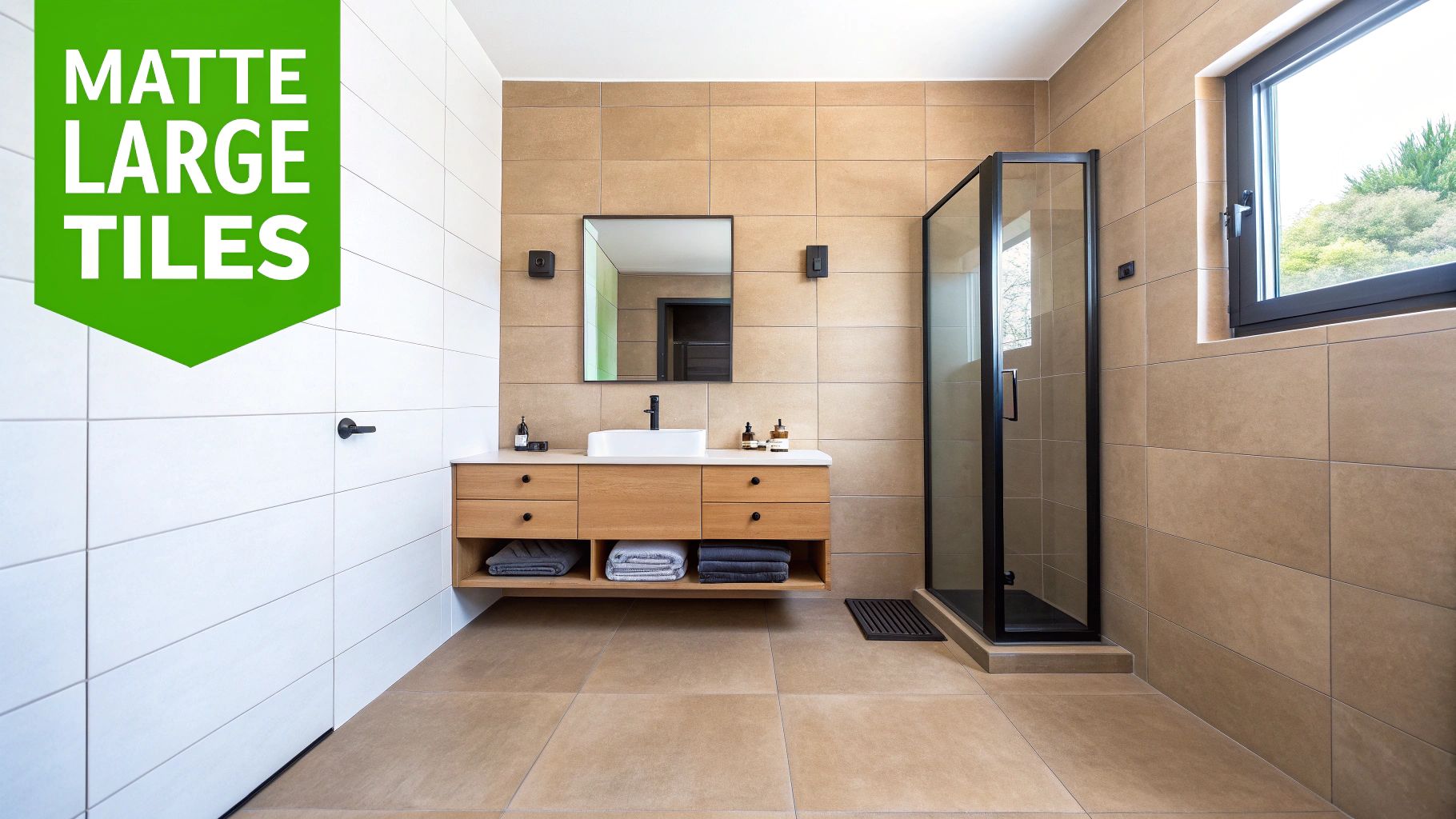
This technique is particularly powerful when paired with a restrained monochromatic palette and a modern matte finish. Unlike high-gloss surfaces that can create distracting reflections, matte finishes absorb light, cultivating a soft, serene, and spa-like atmosphere. This sophisticated, low-reflective aesthetic is perfectly suited to the refined interiors of properties in Mayfair, Belgravia, and Knightsbridge, where understated luxury is paramount. The result is a clean, contemporary canvas that feels both calming and visually generous.
Why It Works for London Properties
For the compact en-suites often found in Victorian townhouses in Chelsea or modern apartments in Kensington, this method provides a powerful sense of scale. The uninterrupted surfaces draw the eye across the room, creating an illusion of depth. Leading innovators like Porcelanosa and Laminam offer ultra-thin yet durable large-format porcelain that mimics the look of natural stone without the maintenance, a practical choice for a high-end bathroom makeover.
Implementation Tips:
- Wall-to-Floor Cohesion: Use the same large format tile on both the floor and walls to create a unified, wrap-around effect that blurs the room’s boundaries.
- Layered Neutrals: Build subtle depth by layering two or three tones from the same family. Consider a soft grey floor tile (e.g., 800x800mm) with off-white walls and a textured beige accent in the shower niche.
- Select Rectified Edges: Opt for tiles with perfectly straight, rectified edges. This allows for extremely narrow grout lines (1-2mm), enhancing the seamless appearance. Always use a premium grout sealant for maximum waterproofing and longevity.
- Warm Lighting & Fixtures: Counteract the potential coolness of a monochromatic scheme by installing warm LED lighting (2700K). Pair the matte tiles with contrasting fixtures in polished brass or warm chrome to add a touch of opulent warmth.
2. Marble Subway Tiles with Honed Finish
For period properties in London, marrying classic materials with contemporary sensibilities is key. Marble subway tiles, particularly in a honed finish, offer a perfect solution. This choice moves away from the high-gloss, polished look, providing a tactile, velvety surface that exudes understated luxury. The non-reflective nature of honed marble is excellent at hiding water spots and fingerprints, making it a practical yet elegant option for high-traffic bathrooms.
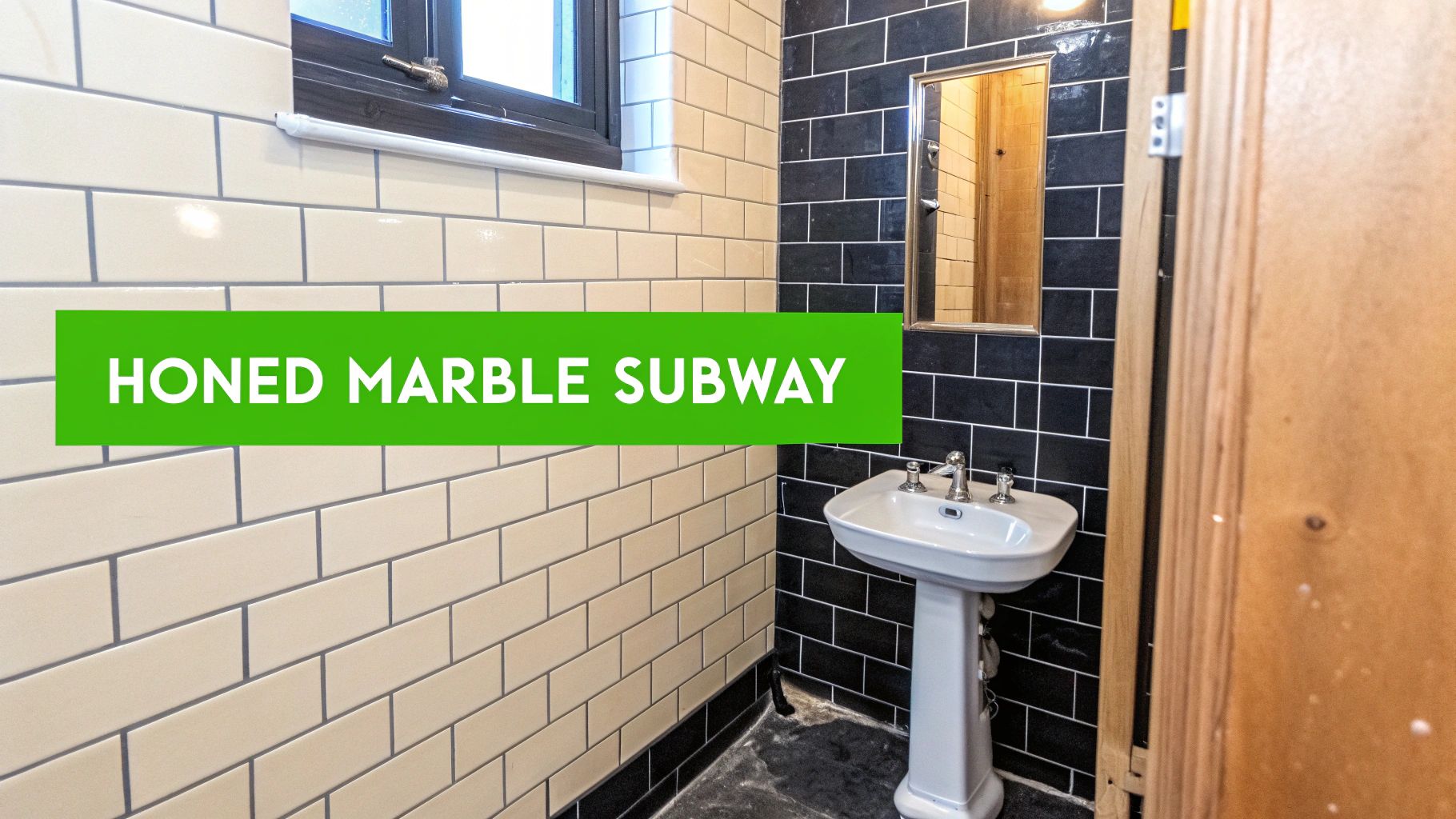
The classic subway format (typically 75x300mm or 100x300mm) is incredibly versatile. When laid vertically, it draws the eye upward, creating an illusion of height in bathrooms with lower ceilings. The soft, matte surface beautifully showcases the natural veining of stones like Carrara or Calacatta, adding organic texture and depth without overwhelming the space. This approach is favoured in Hampstead’s Edwardian homes and the chic apartments of Knightsbridge, where timeless elegance is a priority.
Why It Works for London Properties
In the heritage-rich townhouses of Primrose Hill and South Kensington, a honed marble subway tile respects the property’s historical character while feeling fresh and modern. Unlike some contemporary trends, its appeal is enduring. The subtle texture enhances grip underfoot in wet zones, providing a safer, more practical surface than its polished counterpart. This combination of classic aesthetic, tactile luxury, and enhanced safety makes it a superior choice for a bespoke tailored bathroom renovation.
Implementation Tips:
- Pattern and Direction: Install tiles in a vertical stack bond to make ceilings feel higher or a classic staggered brick pattern to elongate the walls horizontally.
- Invest in Sealing: Natural marble is porous. Protect your investment by using a premium impregnating sealer like Miracle Sealants 511 Impregnator upon installation and resealing periodically.
- Grout Selection: Use a high-quality, mould-resistant grout. For ultimate durability and stain resistance in a shower area, consider specifying an epoxy grout over a standard cementitious one.
- Luxurious Fixtures: Pair the soft, muted tones of honed Carrara or Statuario marble with fixtures in warm, unlacquered brass or polished nickel to create a sophisticated, high-contrast look.
- Care and Maintenance: Clean exclusively with pH-neutral stone cleaners. Avoid all acidic or abrasive products, which can etch the delicate surface of the marble.
3. Mosaic and Feature Tile Accents
While large tiles create an illusion of space, the strategic use of small-format mosaics and artisanal feature tiles can inject personality and bespoke luxury into a compact bathroom. This approach uses intricate tiles, from classic 25x25mm glass mosaics to hand-painted Portuguese azulejos, to create a captivating focal point. By concentrating these detailed designs in specific zones like a shower niche, a splashback behind the basin, or a feature wall, you can add depth and character without overwhelming the room.
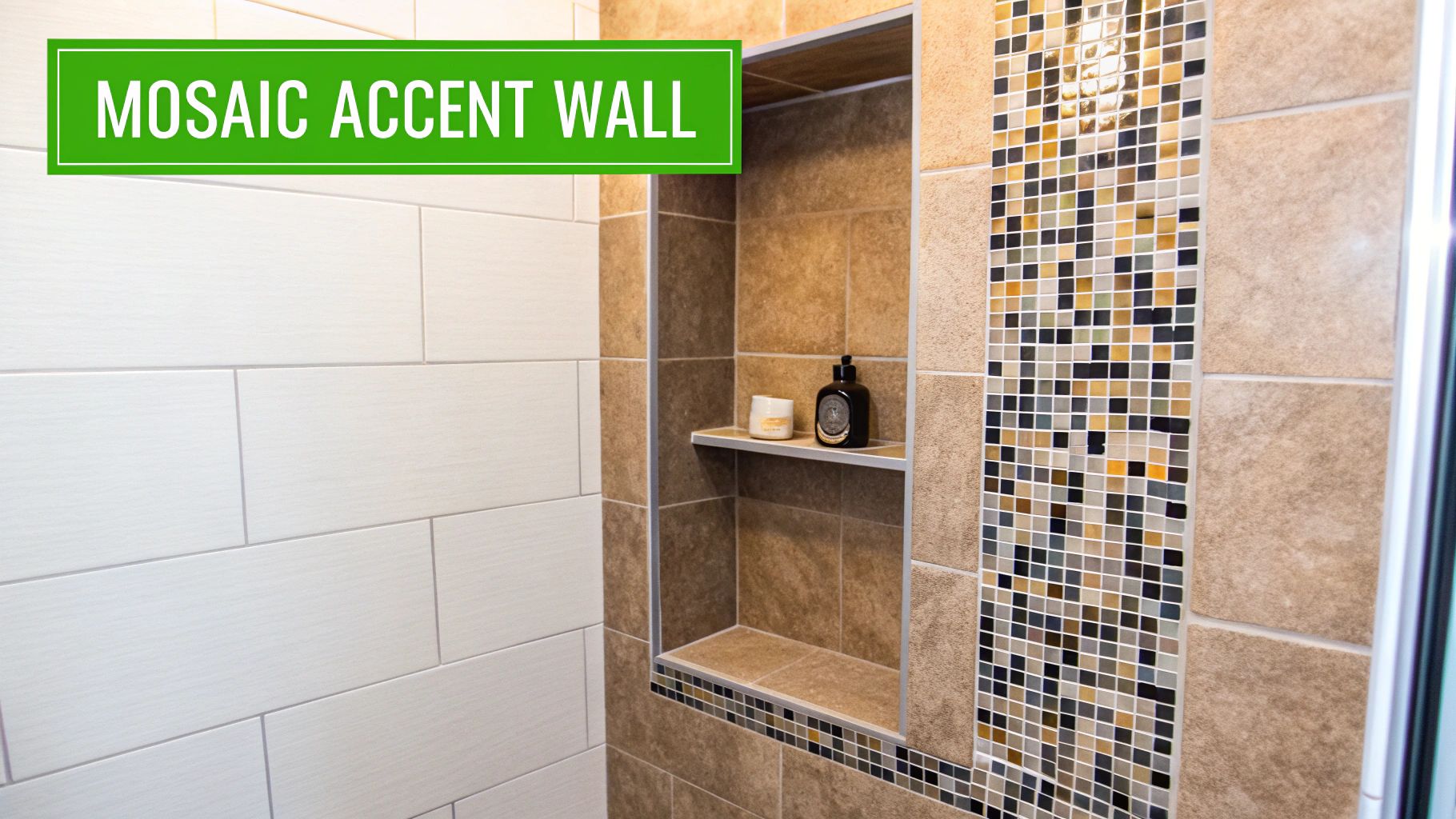
This method is about creating a curated, art-like statement. The goal is not to tile the entire room in a busy pattern but to introduce a moment of intense beauty and craftsmanship. Premium options like iridescent glass mosaics from Bisazza or hand-painted Moroccan tiles lend an air of exclusivity and world-class design, transforming a functional space into a jewel box. This makes it one of the most impactful small bathroom tile ideas for homeowners seeking a truly unique and high-end finish.
Why It Works for London Properties
In the exclusive en-suites of Belgravia apartments or the family bathrooms of St John’s Wood townhouses, a feature mosaic provides a powerful design signature. It’s a way to reflect personal taste and global influences, whether it’s a Marrakech-inspired niche in a Chelsea property or a classic geometric pattern in a Hampstead period home. Artisanal tilework speaks to a deeper appreciation for craftsmanship, a value held in high regard in London’s most distinguished postcodes.
Implementation Tips:
- Restrict for Impact: To avoid visual clutter, confine the mosaic or feature tile to a single, well-defined area. An entire wall in a walk-in shower or the wall behind a freestanding bath works exceptionally well.
- Balance with Neutrals: Pair your vibrant, intricate mosaic with understated large-format porcelain or natural stone tiles on the other walls and floor. This contrast ensures the feature tile remains the hero of the design.
- Invest in Premium Grout: For intricate mosaics, especially in wet areas, insist on a high-performance epoxy grout. It offers superior durability, water resistance, and stain protection, preserving the beauty of the installation for years.
- Engage a Specialist: The precise installation required for luxury mosaics is a craft in itself. Engage a professional tiler or artisan with proven experience in high-end materials to ensure flawless execution and perfect symmetry.
4. Textured and 3D Tile Designs
To introduce architectural depth and a tactile, sophisticated dimension to a smaller bathroom, consider moving beyond flat surfaces with textured and 3D tiles. This innovative approach uses tiles with geometric reliefs, subtle ripples, or modular three-dimensional patterns to create a dynamic interplay of light and shadow. When used judiciously, these designs can make a compact space feel more intriguing and curated, adding a layer of visual interest that flat tiles cannot replicate.
The beauty of this concept lies in its ability to transform a simple wall into a piece of art. The raised patterns catch the light differently throughout the day, creating a constantly evolving aesthetic. Leading innovators like Mutina and Porcelanosa have pioneered ranges that feel both contemporary and timeless, offering everything from subtle waves to bold geometric forms. This makes them one of the most compelling small bathroom tile ideas for homeowners seeking a unique, high-design finish.
Why It Works for London Properties
In the design-led residences of Chelsea and Knightsbridge, a textured feature wall can serve as the central design statement in an en-suite or guest bathroom. For modern renovations in Hampstead, where blending minimalism with character is key, a wall of 3D tiles behind a floating vanity introduces sophisticated detail without overwhelming the space. The tactile nature of these surfaces also adds a functional benefit, as certain textures can help obscure water marks.
Implementation Tips:
- Create a Focal Point: Designate one area, such as the wall behind the basin or the interior of the shower enclosure, as a feature wall. Clad this in your chosen 3D tile and keep the surrounding surfaces neutral and flat to avoid visual clutter.
- Balance with Simplicity: Pair intricate tile designs with minimalist fixtures and frameless glass. This ensures the textured wall remains the star of the show and prevents the room from feeling too busy.
- Strategic Lighting: Use wall sconces or downlights to graze the surface of the textured tiles. This technique, known as “wall washing,” dramatically accentuates the three-dimensional patterns and creates beautiful highlights and shadows.
- Grout and Sealing: For tiles with deeper reliefs, precise grouting is essential. Use a high-quality hydrophobic grout and consider applying an anti-mould sealant quarterly, especially within shower areas, to simplify cleaning and maintain a pristine finish.
5. Neutral Tone Terrazzo and Aggregate Tiles
For a sophisticated and eco-conscious approach, engineered terrazzo and aggregate tiles offer a unique blend of heritage charm and modern sustainability. This material, composed of recycled marble, glass, and stone chips set within a cement or resin binder, provides the visual texture of natural stone with superior durability. Using neutral-toned terrazzo creates a refined, spa-like atmosphere that is perfect for expanding the feel of a compact bathroom without sacrificing character.
The subtle, multi-tonal flecks within the tile add depth and interest without overwhelming the space, making it an excellent choice among small bathroom tile ideas. This understated complexity is ideal for high-end properties in Chelsea and Belgravia, where homeowners seek a balance between classic aesthetics and contemporary, sustainable design. A honed or matte finish is essential in a bathroom setting, providing a non-slip, tactile surface that feels both safe underfoot and luxurious to the touch.
Why It Works for London Properties
Terrazzo is an incredibly versatile choice for the varied architectural styles across prime London. In an eco-conscious renovation in Hampstead (NW3) or St John’s Wood (NW8), specifying terrazzo with a high percentage of recycled glass or marble aligns perfectly with a sustainable luxury ethos. For modern apartments in Knightsbridge, a subtle grey terrazzo feature wall can introduce texture and a bespoke feel, while in high-traffic family townhouses, its robustness ensures longevity and timeless appeal.
Implementation Tips:
- Select a Honed Finish: Always choose a honed (matte) finish for bathroom floors to ensure a safe, non-slip surface that still feels smooth and premium.
- Go Large for Less Clutter: Opt for larger formats, such as 600x600mm or even 800x800mm, to minimise grout lines and create a more expansive, seamless look.
- Neutral & Cohesive Palette: Stick to neutral bases like soft grey, off-white, or warm beige. Using the same terrazzo on the floor and a key feature wall, such as behind the vanity, enhances the sense of space.
- Proper Sealing is Key: Ensure your installer uses a high-quality impregnating sealer, like those from Miracle Sealants, to protect the surface from water and stains, which is crucial for longevity in a wet environment.
6. Geometric and Linear Tile Patterns
To introduce dynamic movement and architectural character into a compact bathroom, geometric and linear tile patterns are an unparalleled choice. Formations like chevron, herringbone, and hexagonal tiles create visual pathways and sophisticated details that can cleverly manipulate the perception of space. This approach moves beyond simple tiling to become a central design feature, lending a bespoke, curated feel to the room.
When executed with precision using high-quality materials like marble or artisanal porcelain, these patterns infuse a contemporary elegance that is perfectly at home in the refined properties of Hampstead, Primrose Hill, and Kensington. The structured, rhythmic lines of a herringbone layout or the tessellated beauty of hexagons can make a small bathroom feel not only larger but significantly more luxurious and thoughtfully designed.
Why It Works for London Properties
In the period properties of Kensington and the characterful family homes of Primrose Hill, these patterns provide a bridge between classic architecture and modern interior design. A herringbone marble feature wall in a Hampstead en-suite, for example, adds a layer of opulent texture without overwhelming the space. Similarly, a chevron floor can draw the eye lengthwise, elongating the room and making it feel more expansive. This is one of the most effective small bathroom tile ideas for adding high-impact design in a limited footprint.
Implementation Tips:
- Create a Focal Point: Use a geometric pattern on a single feature wall, such as behind the vanity or in the shower enclosure, or limit it to the floor. This prevents the pattern from visually cluttering the small space.
- Neutral Palette: Select tiles in a neutral colour palette (soft greys, whites, or muted tones) to allow the pattern itself to be the main design element, ensuring the overall feel remains serene and spacious.
- Expert Installation is Key: Patterns like herringbone and chevron demand exceptional precision. Always ensure your installer has a proven portfolio of this type of work, as improper layout can ruin the effect.
- Plan the Layout: Before a single tile is laid, the entire layout should be mapped out to minimise awkward cuts and ensure the pattern is perfectly centred and symmetrical.
- Calculate for Waste: These intricate patterns require more cuts, leading to higher material wastage. Budget for at least a 25-30% overage when ordering your tiles to ensure you have enough material to complete the job perfectly.
7. Natural Stone (Slate, Limestone, Travertine) with Honed Finishes
For those seeking to infuse a small bathroom with authentic materiality and long-term value, natural stone is an unparalleled choice. Using premium materials like Welsh slate, Cotswold limestone, or classic travertine establishes a connection to heritage and nature, a quality highly valued in London’s prestigious period properties. The key to successfully implementing these materials in a compact space lies in selecting a honed finish.
A honed finish is created by sanding the stone to a smooth, flat, consistent surface, resulting in a matte or low-sheen look. Unlike a polished finish, which can feel slippery and create distracting reflections, the soft, velvety texture of honed stone absorbs light. This creates a serene, grounded atmosphere while providing essential non-slip properties, making it both a safe and sophisticated choice for wet areas. This approach honours the architectural integrity of a home, adding investment-grade quality that will mature beautifully over time.
Why It Works for London Properties
In heritage-rich areas like Hampstead and Chelsea, natural stone provides a period-appropriate aesthetic that feels both authentic and luxurious. For the Victorian and Georgian townhouses that define these postcodes, a honed Cotswold limestone floor or a Welsh slate feature wall adds a layer of timeless elegance that complements original features. It’s a classic small bathroom tile idea that sidesteps fleeting trends, appealing directly to discerning homeowners in Belgravia and Mayfair who prioritise enduring quality and natural beauty.
Implementation Tips:
- Prioritise Sealing: Natural stone is porous. It is crucial to seal tiles immediately after installation and then annually with a high-quality impregnating sealer to protect against staining and water damage.
- Use pH-Neutral Cleaners: Harsh, acidic, or alkaline cleaners can etch and damage the stone’s surface. Exclusively use pH-neutral, stone-specific cleaning products to maintain its integrity.
- Opt for Larger Formats: To minimise grout lines and create a more expansive feel, select larger formats such as 300x600mm or 600x600mm. This enhances the natural veining and texture of the stone.
- Responsible Sourcing: For clients with a global perspective, verify the quarry credentials to ensure the stone is sourced responsibly and ethically. This adds another layer of value to a high-end bathroom makeover.
8. Luxury Waterproof Wall Panels and Tile Alternatives (Ultra-Compact Surfaces)
For the ultimate in modern, seamless design, ultra-compact engineered surfaces and composite waterproof panels offer a sophisticated alternative to traditional tiles. Materials like Neolith, Lapitec, and Corian allow for the creation of completely grout-free walls and wet areas. This approach involves installing large-format, custom-fabricated slabs that cover entire surfaces, delivering a monolithic and minimalist aesthetic that is both visually striking and exceptionally practical. The absence of grout lines not only creates an uninterrupted visual flow, making the space feel larger, but also eliminates the primary area for mould and mildew growth.
This method moves beyond tiling into the realm of architectural surfacing, providing unparalleled durability, hygiene, and water resistance. Ultra-compact surfaces are non-porous, highly resistant to scratches and stains, and can be book-matched to mimic the dramatic veining of natural marble slabs perfectly. This makes them a prime choice for ultra-modern small bathrooms in Mayfair luxury apartments or Belgravia penthouses, where hygiene, low maintenance, and a flawless, high-end finish are non-negotiable priorities.
Why It Works for London Properties
In the compact, high-value bathrooms of Knightsbridge flats or contemporary Kensington mews houses, maximising visual space while ensuring longevity is crucial. Seamless panels provide a clean, gallery-like backdrop that elevates the entire room. For busy international buyers and professionals, the maintenance-free benefit is a significant advantage. Brands like Neolith (a Spanish leader in sintered stone) and Lapitec (an Italian specialist) offer finishes that convincingly replicate the most coveted natural stones, delivering opulent style without the associated upkeep.
Implementation Tips:
- Specify Certified Installers: These large-format slabs require specialist handling and installation. Always work with a firm whose team is certified by the manufacturer to ensure a flawless fit and valid warranty.
- Book-Matched Marble Look: To achieve the most luxurious effect, select a marble-effect finish and specify book-matched slabs for the main feature wall. This creates a stunning symmetrical pattern that serves as a piece of art.
- Combine Textures: Pair a smooth, seamless wall panel in the shower with a contrasting tiled floor or a textured feature wall elsewhere. This hybrid approach adds depth and tactile interest to the design scheme.
- Understand the Investment: While the initial outlay is higher than for standard tiling, the long-term value in durability and zero maintenance is significant. When planning your project, it’s vital to understand the pricing structure for a high-end refurbishment to account for specialist materials and labour.
8-Option Tile Comparison for Small Bathrooms
| Tile Option | Implementation Complexity 🔄 | Cost & Maintenance ⚡ | Expected Outcomes ⭐📊 | Ideal Use Cases 💡 | Key Advantages ⭐ |
|---|---|---|---|---|---|
| Large Format Porcelain Tiles & Monochromatic Matte Finishes | High — expert installers; heavy tiles; structural checks | Moderate–High cost (£40–80+/m²); grout sealing; durable long-term | Visually expands small bathrooms; minimalist spa-like luxury | Mayfair / Belgravia / Knightsbridge minimalist luxury apartments | Seamless look, easy to clean, timeless contemporary aesthetic |
| Marble Subway Tiles with Honed Finish | Medium — professional install and sealing required | High cost (£50–150+/m²); reseal every 6–12 months; sensitive to acids | Timeless, tactile elegance; period-appropriate luxury | Period properties (Hampstead, Highgate, Knightsbridge) | Authentic natural stone, high perceived value, understated luxury |
| Mosaic and Feature Tile Accents | Very High — labour‑intensive, specialist tilers/artisans | Very High (£80–200+/m²); complex grout maintenance; detailed cleaning | Strong bespoke focal points; adds character and depth | Accent niches, splashbacks in bespoke / artisanal projects | Distinctive, customizable, supports artisan/eco credentials |
| Textured and 3D Tile Designs | High — precise layout; specialized sealing to avoid moisture traps | High (£40–100+/m²); harder to clean; requires regular sealing | Architectural depth; hides marks; modern tactile interest | Feature walls in family-focused luxury bathrooms (Primrose Hill, St John’s Wood) | Adds sculptural depth, contemporary statement |
| Neutral Tone Terrazzo and Aggregate Tiles | Medium — professional install; large formats preferred | Moderate (£30–60/m²); annual sealing; eco-friendly options | Durable, sophisticated spa-like look; sustainable appeal | Eco-conscious family homes and sustainable luxury developments (NW3, NW8) | Durable, recycled content, good value vs marble, stylish neutrality |
| Geometric and Linear Tile Patterns | High — pattern precision; higher waste (20–30%+) | High (material + labour); planning and expert installer required | Dynamic movement; can elongate or enlarge perceived space | Feature floors/walls in Hampstead, Primrose Hill, Kensington | Architectural interest, directional eye-flow, versatile material compatibility |
| Natural Stone (Slate, Limestone, Travertine) with Honed Finishes | High — careful handling; sourcing and sealing essential | High (£60–150+/m²); annual professional sealing; moisture management | Authentic, investment-grade materiality; heritage appeal | Period and heritage properties (Hampstead, Belgravia, Highgate) | Genuine geological character, longevity, strong resale appeal |
| Luxury Waterproof Wall Panels & Tile Alternatives (Ultra‑Compact) | Medium — specialist installers; fewer visible joints | Very High (£80–200+/m² installed); low ongoing maintenance; verify sustainability | Seamless, hygienic, grout‑free modern bathrooms | Ultra-modern apartments for international executives (Mayfair, Belgravia) | Virtually grout-free, superb water resistance, customizable integrated details |
Partnering with a Master Craftsman for Your Bespoke Bathroom Renovation
Transforming a compact bathroom in a prime London property from a mere functional space into a sanctuary of bespoke luxury is an exercise in both artistic vision and technical mastery. Throughout this guide, we have explored a curated collection of small bathroom tile ideas, each chosen for its ability to enhance space, light, and aesthetic sophistication within the unique constraints of properties from Kensington to Hampstead.
The journey begins with understanding the core principles: large-format porcelain tiles create seamless, expansive surfaces, while the timeless elegance of honed marble subway tiles adds character without overwhelming the room. We have seen how strategic accents, such as a delicate mosaic niche or a wall of textured 3D tiles, can introduce a powerful design statement. Similarly, the subtle depth of neutral terrazzo or the clean lines of geometric patterns can redefine a room’s perceived dimensions. The key takeaway is that material, pattern, and finish must work in concert to achieve a cohesive, spacious feel.
From Concept to Flawless Execution
Selecting the perfect tile is a critical first step, but the true measure of a high-end renovation lies in its flawless execution. The ideas discussed-from laying large-format natural stone to creating intricate geometric patterns-demand a level of precision that can only be delivered by seasoned professionals. In period properties across Knightsbridge and Belgravia, this challenge is magnified.
Consider these common complexities that require expert handling:
- Subfloor Integrity: Victorian and Georgian homes often have timber joists that require significant reinforcement and specialist decoupling membranes to support the weight of natural stone or prevent large tiles from cracking.
- Uneven Surfaces: Centuries-old walls are rarely perfectly plumb. A master craftsman must skilfully prepare these surfaces to ensure tiles are laid with imperceptible grout lines and a perfectly level finish.
- Heritage Compliance: Renovations in listed buildings or conservation areas in postcodes like NW3 and SW7 demand materials and techniques that respect the property’s architectural integrity.
- Intricate Layouts: Achieving a book-matched marble effect or a perfectly symmetrical herringbone pattern in a compact, often irregularly shaped bathroom requires meticulous planning and cutting, minimising waste and maximising visual impact.
Mastering these small bathroom tile ideas is not simply about following a trend; it is about making an intelligent, long-term investment in your property. A meticulously planned and executed bathroom renovation enhances your daily life and adds significant, lasting value to your home. It demonstrates a commitment to quality that resonates with the discerning standards of London’s most exclusive neighbourhoods. By partnering with a specialist who understands the nuances of luxury materials and the architectural demands of period properties, you ensure your vision is realised to the highest possible standard.
For a truly exceptional result that blends innovative design with uncompromising craftsmanship, the expertise of a dedicated specialist is paramount. The team at Bathkitchen Renovation Ltd brings over two decades of experience in delivering bespoke bathroom renovations across London’s most prestigious addresses, ensuring every detail of your project is executed to perfection. Contact us today for a personalised consultation and discover how we can bring your vision to life.
Article created using Outrank