

True luxury in bathroom tiling is not merely about the price tag. It is a meticulous balance of exceptionally rare materials, masterful craftsmanship, and a design heritage that feels utterly timeless. For discerning homeowners in London’s most prestigious postcodes—from the grand villas of Hampstead (NW3) to the elegant townhouses of Chelsea (SW3)—the right tile is a foundational investment. It transforms a functional room into a personal sanctuary and adds tangible value to your property.
The Cornerstones of a Truly Luxurious Bathroom
Across London’s most sought-after neighbourhoods, from the leafy streets of Highgate (N6) to the exclusive residences of Belgravia (SW1X), the choice of tile is a statement of intent. It is the canvas upon which the rest of the bathroom is designed. So, what separates a high-quality tile from a genuinely luxurious one? The difference lies in key pillars that create an atmosphere of refined elegance and enduring worth.
At its heart, true luxury is about artistry and exclusivity. It means stepping away from mass-produced options to embrace materials sourced from specific, often historic quarries, or tiles handcrafted by artisans. It is about appreciating the subtle, unique veining in a slab of Calacatta marble or the bespoke glaze on a handmade ceramic tile. This dedication to quality, honed over our 20+ years of experience, ensures your bathroom is not just stunning, but a genuine reflection of your personal style.
The Defining Elements of a Luxury Tile
The path to creating a truly bespoke bathroom starts with understanding these fundamental qualities.
- Rare Materials and Provenance: True luxury is often found in scarcity. Picture marble with veining so unique it can only come from a single Italian quarry, or the deep, rich tones of slate sourced from one particular region. The story and origin of the material are a significant part of its prestige.
- Exceptional Craftsmanship: Whether it’s the razor-sharp, precision-cut edges of a large-format porcelain slab or the beautiful, intentional imperfections of a Zellige tile, the touch of a skilled artisan is unmistakable. This is where our 20+ years of in-house craftsmanship truly makes a difference.
- Timeless Design: The best luxury tiles possess a quality that transcends fleeting trends. They look just as right in a modern Knightsbridge (SW1X) apartment as they do in a period property in St John’s Wood (NW8), adding a layer of enduring sophistication.
The appetite for these exceptional finishes is undeniable. For a full bespoke bathroom renovation in London, discerning clients should budget from £15,000 to over £70,000+, an investment that reflects the quality of materials and skill required. This guide provides a clear roadmap for your project, from choosing materials that honour the heritage of your home to navigating the unique challenges of renovating period properties.
Choosing the Perfect Tile Material for Your Home
Choosing the right material is the first and most foundational decision in a luxury bathroom renovation. It dictates the entire feel of the space, influencing everything from the aesthetic to the long-term maintenance. In distinguished properties across Kensington (SW7) and Mayfair (W1K), the tile choice must not only look the part but also respect the home’s inherent character.
With over two decades of hands-on experience, we have guided countless clients through this critical process. The goal is always to find a tile that is not just beautiful, but perfectly matched to their lifestyle and the architectural integrity of their home. Whether you’re captivated by the timeless depth of natural stone or the sleek resilience of modern porcelain, understanding what makes each material unique is key.
This visual guide quickly breaks down the three core attributes that define a true luxury tile: the level of craftsmanship, the rarity of the raw material, and its innate design potential.
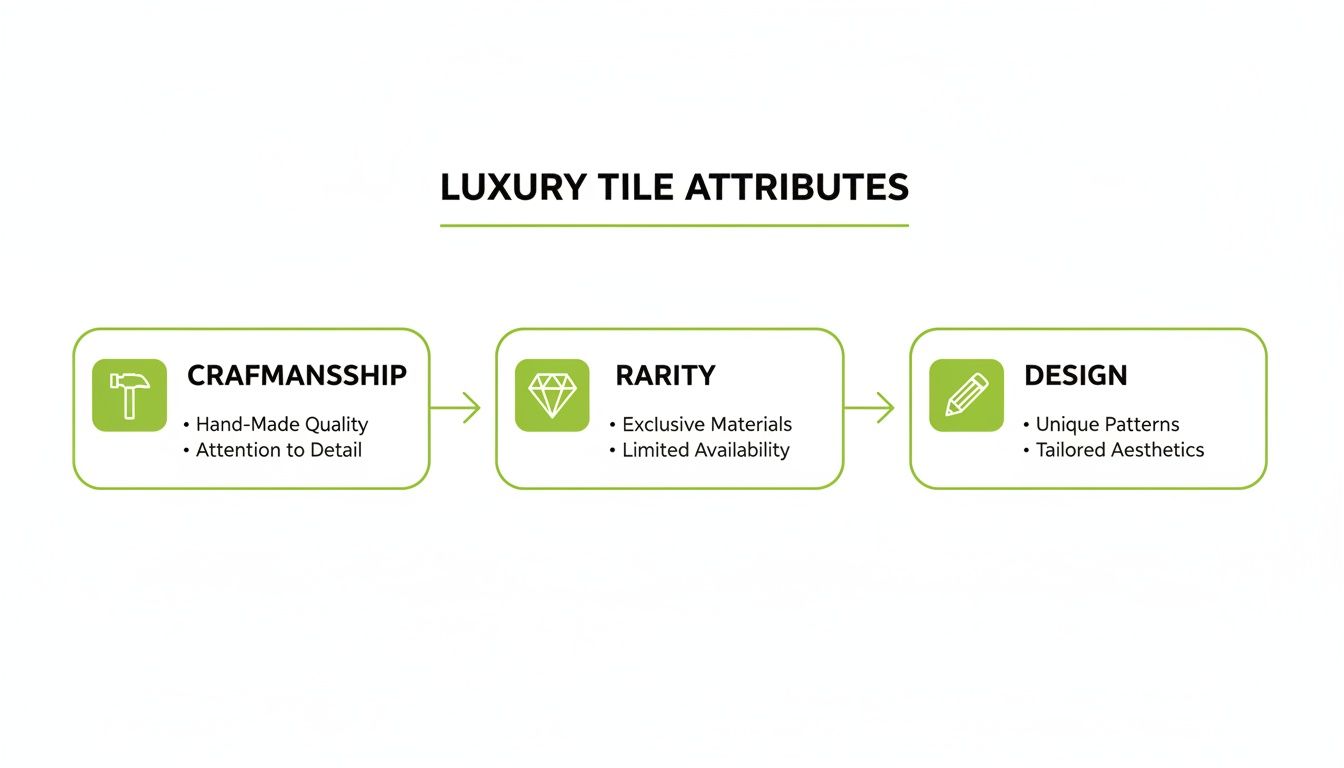
As you can see, genuine luxury is born from a delicate interplay between sourcing exceptional materials, the artisan skill needed to shape them, and a sophisticated design vision to bring it all together.
The Enduring Elegance of Natural Stone
Natural stone is the very definition of luxury. It offers a tangible connection to the earth that is impossible to replicate, with every slab telling a unique story written over millennia. For owners of historic Victorian and Georgian properties in areas like South Kensington (SW7), materials like marble and travertine offer a seamless bridge between heritage and modern opulence.
-
Marble: The quintessential luxury material, marble brings a classic, sculptural sophistication to any bathroom. Its famous veining creates a sense of movement and grandeur that elevates the entire room. While it requires sealing to protect against staining, its beauty is an undeniable asset in high-end homes.
-
Travertine: Known for its warm, earthy tones and fibrous patterns, travertine adds wonderful texture and character. It’s softer than marble, offering an understated, rustic elegance that works beautifully with period architecture. Like marble, it must be sealed to maintain its appearance.
-
Slate: For a bolder, more contemporary feel within a heritage setting, slate is a fantastic choice. Its dark, rich tones and naturally cleft surface provide brilliant slip resistance, making it a stylish yet practical option for floors and wet rooms.
The Modern Resilience of Porcelain
For clients who love the look of natural stone but prefer lower maintenance, high-grade porcelain is an outstanding alternative. Advanced manufacturing allows porcelain to mimic the appearance of marble, wood, and concrete with astonishing realism, offering robust performance ideal for a busy family home in Belsize Park (NW3).
The real beauty of porcelain lies in its non-porous nature. It’s exceptionally resistant to water, stains, and scratches, and it never needs sealing. This makes it one of the most durable and low-maintenance options for a luxury bathroom tile installation.
Furthermore, its excellent thermal conductivity makes it the perfect partner for underfloor heating systems—a standard feature in our bespoke bathroom renovations. We explore the nuances of these systems in our detailed guide to reviving Victorian homes.
Artisanal and Eco-Conscious Choices
For a truly one-of-a-kind statement, nothing compares to artisanal tiles. Handcrafted ceramics or intricate glass mosaics can create a breathtaking feature wall or add a bespoke touch to a shower niche, offering a level of personalisation that mass-produced options cannot match.
In neighbourhoods like Primrose Hill, where sustainability is a key consideration, eco-friendly tiles are also increasingly popular. Recycled glass, for example, is a vibrant and environmentally responsible choice, often specified for a high-end eco kitchen Mayfair or bathroom. These tiles reflect light beautifully, creating a bright, airy feel while aligning with the values of a modern, eco-conscious homeowner.
Ultimately, a well-planned renovation can significantly increase your property’s value. You can learn more by exploring how much a home renovation costs. The final choice always comes down to balancing your aesthetic dreams with the practical demands of daily life—a process we expertly manage for every client.
Luxury Bathroom Tile Material Comparison
| Material | Key Characteristics | Best For | Maintenance Level | Estimated Cost (£/sqm) |
|---|---|---|---|---|
| Marble | Unique veining, classic and opulent feel, porous nature | Statement floors, wall cladding, vanity tops | High (Requires regular sealing) | £150 – £400+ |
| Travertine | Warm, earthy tones, textured and rustic appearance | Period properties, spa-like bathrooms | High (Requires sealing and gentle cleaning) | £100 – £300 |
| Slate | Dark, rich colours, naturally slip-resistant texture | Wet rooms, modern-heritage schemes, flooring | Medium (Requires sealing to prevent stains) | £80 – £250 |
| Porcelain | Extremely durable, non-porous, huge design variety | High-traffic areas, underfloor heating, minimalists | Low (No sealing required) | £70 – £200 |
| Glass Mosaics | Luminous, reflective, available in endless colours | Feature walls, shower niches, decorative accents | Medium (Grout lines require regular cleaning) | £200 – £500+ |
| Recycled Glass | Eco-friendly, vibrant colours, light-reflecting qualities | Eco-conscious designs, bright bathrooms | Medium (Similar to standard glass) | £150 – £350 |
This table serves as a great starting point, but the best way to make a final decision is by touching and seeing these materials in person. Each has a unique texture and presence that can only be truly appreciated up close.
Using Scale and Finish to Shape Your Space
Once you’ve settled on a material, the next layer of artistry comes from playing with scale and finish. These two elements are powerful design tools for shaping the feel of a bathroom. They can make a compact space feel grand, a large room feel intimate, or lend an air of serene calm to the entire scheme.
This is a crucial conversation, whether we’re designing a sprawling master ensuite in a Belgravia townhouse (SW1X) or maximising a more modest footprint in a Mayfair apartment (W1K).
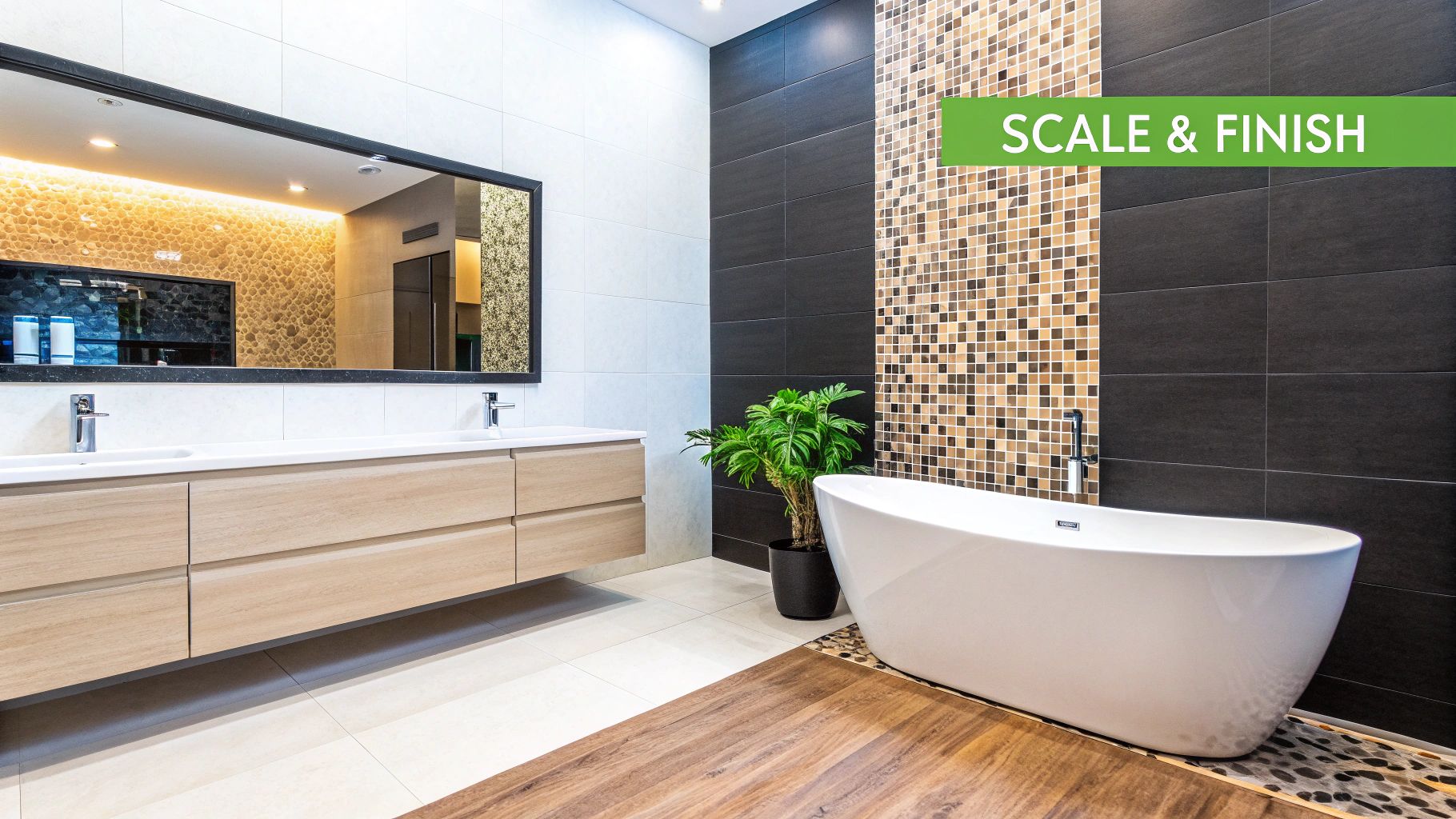
This focus on bespoke opulence is defining the UK’s high-end property market. The floor and wall tile sector is poised for steady growth, largely driven by renovations in affluent postcodes. Discerning homeowners are increasingly seeking custom designs that reflect personal taste, moving beyond standard options to create truly unique spaces.
The Impact of Tile Scale
The size of your tile has a profound psychological effect on a space. It’s not just about covering a wall; it’s about creating drama, amplifying light, and even tricking the eye.
-
Large-Format Tiles: There is a strong trend towards large-format porcelain slabs. They create seamless, almost monolithic surfaces that feel clean, expansive, and incredibly modern. By drastically reducing the number of grout lines, you achieve an unbroken visual plane that makes a smaller bathroom feel far more open—a fantastic technique for creating a spa-like sanctuary.
-
Small-Format and Mosaic Tiles: At the other end of the spectrum, small tiles and intricate mosaics introduce texture, detail, and artisanal character. They are perfect for crafting a captivating feature wall behind a vanity or lining a shower enclosure. In period properties, a thoughtfully chosen mosaic can nod to the intricate patterns of original Victorian flooring, blending modern luxury with heritage charm.
Often, the most sophisticated designs lie in the combination. Imagine using large-format tiles across the main floor and walls to create a calm, uncluttered backdrop, then introducing a detailed mosaic in a shower niche. This contrast adds depth and gives the bathroom a truly bespoke quality.
Mastering the Art of the Finish
A tile’s finish dictates how it plays with light and how it feels to the touch, contributing hugely to the bathroom’s overall mood and, crucially, its practicality.
Choosing a tile finish is about more than just aesthetics; it’s a decision that balances the desired atmosphere with essential functional needs, particularly slip resistance in wet areas. A polished finish reflects maximum light but is best for walls, whereas a honed or matte finish provides a safer footing.
Let’s break down the most common options:
-
Polished: This highly reflective, glossy surface bounces light around brilliantly, making any space feel brighter and more glamorous. Polished marble cladding the walls of a high-end Kensington (SW7) home creates an immediate statement of opulence. However, it becomes incredibly slippery when wet, so we almost always reserve it for walls or very low-traffic floor areas.
-
Honed: Offering a smooth, satin-like surface, a honed finish is much less reflective than polished. It delivers an understated, contemporary elegance, showcasing the natural patterns in stone without the high gloss. Crucially, honed tiles offer better slip resistance, making them a superb and popular choice for bathroom floors.
-
Matte: With no reflection at all, a matte finish provides a soft, modern, and almost organic feel. It’s fantastic at hiding water spots and fingerprints, making it an incredibly practical choice for a busy bathroom. Its natural non-slip properties make it one of the safest options for flooring, especially in family bathrooms or dedicated wet rooms.
-
Textured: Finishes with a three-dimensional or cleft surface—like those found on natural slate or certain types of porcelain—provide the highest level of slip resistance. They also add a tactile, rustic quality that can ground a space and provide a beautiful contrast to smoother surfaces.
By thoughtfully combining scale and finish, we move beyond just tiling a room and start to craft a bathroom that is not only visually stunning but perfectly attuned to your daily life. It’s this meticulous attention to detail that truly defines a luxury renovation.
Tiling Challenges in London’s Period Properties
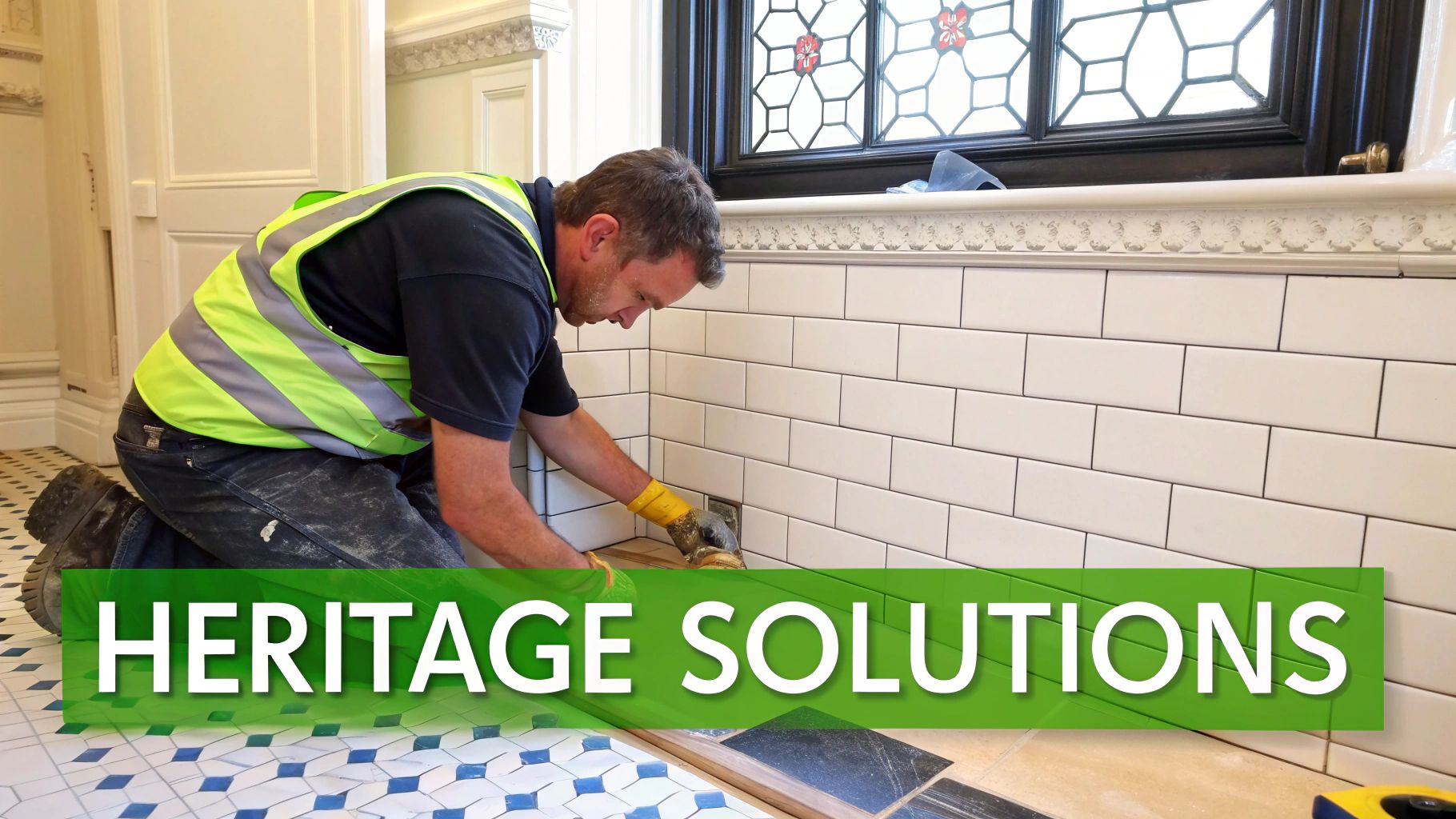
Renovating a historic London home is a delicate art. It’s one thing to choose beautiful luxury tiles, but quite another to install them in a property with its own story and quirks. The charming eccentricities of Victorian and Georgian architecture, common from St John’s Wood (NW8) to South Kensington (SW7), pose unique technical challenges that a standard tiler is not equipped to handle. It requires a deep respect for how these grand old buildings breathe and shift over time.
Where a modern new-build offers perfectly straight walls and level floors, period properties tell a different story. Decades, and sometimes centuries, of settlement mean that subfloors are rarely even, and original timber joists may no longer offer the rigid support needed for heavy natural stone. Getting these foundational issues right is non-negotiable for a flawless, lasting finish. This is where our 20+ years of specialist experience in period property renovation ensures modern luxury is built on a solid, historically sensitive foundation.
Preparing the Foundation for Flawless Tile
The most critical part of tiling a period bathroom happens long before the first tile is laid. Meticulous subfloor preparation is the bedrock of a successful project. An uneven or unstable base will inevitably lead to cracked tiles and failed grout—costly and heartbreaking problems that are entirely avoidable with the right expertise.
Our systematic approach is uncompromising:
- Structural Assessment: We begin by inspecting the original timber joists, checking their condition and spacing to see if they need reinforcement to support the significant weight of marble slabs or large porcelain tiles.
- Levelling and Stabilising: We then tackle any unevenness in the subfloor. This often involves installing a high-quality, marine-grade plywood overlay or using a self-levelling compound to create a perfectly flat, rigid canvas.
- Decoupling Membrane Installation: Finally, we install a decoupling membrane. This specialist layer acts as a shock absorber between the timber subfloor and your new tiles, absorbing the natural micro-movements of the house and preventing stress from transferring to the tiling and causing cracks. It is an essential shield for your investment.
Integrating Modern Comforts with Heritage Charm
A successful period bathroom renovation is about seamlessly blending contemporary comforts with the home’s original character.
The real art is introducing modern amenities like underfloor heating and walk-in showers so discreetly that they feel as if they have always been part of the home. This blend of new technology and old-world elegance is the hallmark of an expert luxury bathroom renovation in Chelsea (SW3).
Take underfloor heating. Installing an electric system requires careful planning to accommodate its depth without creating an awkward threshold. Likewise, creating a sleek, level-access walk-in shower demands sophisticated waterproofing and drainage to protect the delicate period structure below. We use advanced tanking systems to create a completely impervious barrier, safeguarding original features from water damage. For a deeper dive into these methods, explore our guide to reviving Victorian homes.
These are not jobs for a generalist. They demand the precision and foresight of a specialist team that understands the unique pressures of London’s most prestigious properties. It’s this painstaking attention to detail that ensures your new bathroom is not only beautiful but built to stand the test of time.
Understanding the True Cost of a Luxury Bathroom
When planning a luxury bathroom renovation, a clear picture of the finances is paramount. For projects in postcodes like Chelsea (SW3) or Kensington (SW7), the price per square metre of your chosen tile is only a fraction of the story. A flawless, long-lasting finish depends on a system of specialist materials and highly skilled labour, and these are not areas where corners can be cut.
A true luxury installation is far more than what you see on the surface. The total investment reflects this complexity, and homeowners in Knightsbridge (SW1X) and Mayfair (W1K) rightly see these materials as a sound investment, not just an expense.
Breaking Down the Budget
When we put together a proposal, the costs are carefully allocated across several critical areas. Understanding these components helps you see exactly where your investment is going.
- Subfloor Preparation: This is the absolute foundation, particularly in London’s period properties. It involves everything from reinforcing joists to installing crucial decoupling membranes.
- Waterproofing Systems: We create a completely sealed, ‘tanked’ environment using advanced membranes to protect the very structure of your home from moisture damage.
- Specialist Adhesives and Grouts: High-end materials demand more than standard products. They require flexible, high-grab adhesives and epoxy or flexible grouts that resist cracking and staining over time.
- Skilled Labour: This cost reflects the years of experience our in-house master craftspeople bring. Their precision in cutting, setting, and finishing is what elevates a project from merely ‘good’ to truly exceptional.
For a comprehensive luxury bathroom renovation in prime central London, a realistic budget typically falls between £15,000 and £70,000+. The final figure hinges on the project’s scale, the rarity of the materials, and the complexity of the installation. For a more detailed breakdown, our guide on home renovation costs in Central London is a useful resource.
The Return on Your Investment
Investing in a high-quality, professionally executed bathroom renovation is one of the smartest ways to enhance your property’s value. In the fiercely competitive London market, a bespoke bathroom designed by luxury bathroom designers Chelsea is a powerful statement that speaks directly to discerning buyers.
A flawlessly tiled bathroom, featuring premium materials and expert craftsmanship, signals a home that has been maintained and upgraded to the highest possible standard. It is not an expense but a strategic investment in your property’s long-term capital appreciation.
Of course, the return isn’t purely financial. It’s about the daily pleasure of living in a space perfectly crafted for you—a personal sanctuary that blends timeless beauty with modern function. When you budget for true excellence, you’re investing in your property’s future and your own quality of life.
Expert Installation and Long-Term Aftercare
Your investment in exquisite luxury bathroom tiles deserves to be protected for decades. Once the design is finalised, the project moves into its most critical phase: execution and long-term preservation. This is where meticulous installation and diligent aftercare become everything.
Choosing a specialist tiler is non-negotiable, particularly for high-end renovations in properties across Kensington (SW7) and Hampstead (NW3). Materials like large-format porcelain slabs or bookmatched natural stone demand a level of precision that only a master craftsperson with years of dedicated experience can deliver.
The Non-Negotiable Role of a Master Tiler
Attempting to cut costs with a general builder can lead to disastrous results that are far more expensive to rectify. Our in-house artisans are true experts, trained to handle the unique challenges posed by luxury materials.
- Specialist Cutting: Natural stone and oversized porcelain require water-cooled diamond saws for clean, chip-free cuts. A single mistake can shatter a tile worth hundreds of pounds.
- Perfect Adhesion: Ensuring 100% adhesive coverage on the back of large tiles is crucial to prevent hollow spots and future cracking—one of the most common failure points in substandard installations.
- Flawless Grouting: Achieving perfectly consistent, minimal grout lines for a seamless, monolithic finish is an art form that requires patience and an uncompromising eye for detail.
The difference between an adequate job and an exceptional one lies in the final millimetre. Expert installation is the invisible framework that ensures your luxury bathroom tile looks flawless not just on day one, but for a lifetime.
Preserving the Beauty of Your Investment
Once your renovation is complete, the right maintenance routine is key to keeping your tiles pristine. Different materials have distinct needs, and using the wrong cleaning products can cause irreversible damage.
For ongoing care, a pH-neutral cleaner is your best friend for all tile types, but it is especially vital for natural stone. You must avoid acidic or abrasive products at all costs. For porous stones like marble or travertine, periodic sealing is essential to protect against staining and moisture ingress. We typically recommend a professional reseal every 12 to 24 months. You can find more detailed advice in our guide to maintenance and aftercare.
Finally, keeping grout immaculate involves regular cleaning and addressing any mildew promptly. This commitment ensures your bathroom remains a source of pride and a testament to timeless quality.
Your Luxury Tile Questions, Answered
When planning a bespoke bathroom renovation, questions are inevitable. Having managed projects in London’s most prestigious postcodes for over 20 years, from Chelsea (SW3) to Hampstead (NW3), we’ve heard them all. Here are clear, straightforward answers to some of the most common queries.
Our goal is simple: to give you the clarity you need to make the right choices for your home.
How Long Do Bespoke or Imported Tiles Take to Arrive?
This is a critical question for project planning. While a high-grade porcelain tile might be available within a few weeks, true luxury often comes with a longer lead time that needs to be factored into your schedule from the beginning.
- Bespoke Artisanal Tiles: Handcrafted tiles like Moroccan Zellige or a custom mosaic are made to order. This artisanal process naturally takes time, usually anywhere from 8 to 16 weeks.
- Imported Natural Stone: If you’ve set your heart on a specific marble from a quarry in Italy or a unique limestone from Spain, the process of sourcing, cutting, and shipping can take between 6 to 12 weeks.
We always advise finalising tile selections early in the design phase. This way, we can build these lead times directly into the project timeline and avoid frustrating delays.
What Is the Best Way to Clean Different High-End Materials?
Protecting your investment comes down to proper aftercare. Using the wrong cleaning products, especially on natural stone, can cause irreversible damage like etching or discolouration.
The most important rule to remember is to avoid anything acidic or abrasive. A simple, high-quality, pH-neutral cleaner mixed with warm water is the safest and most effective solution for day-to-day cleaning on almost any luxury tile, from polished marble to matte porcelain.
For natural stone like marble or travertine, it’s vital to blot spills—especially from things like red wine, makeup, or citrus—immediately. This prevents the acid from etching the stone’s surface. Regular professional sealing is also non-negotiable to maintain a protective barrier.
Which Tile Type Is Best for a Wet Room or Walk-In Shower?
In a wet room, safety and performance are just as important as aesthetics. While almost any tile is suitable for the walls, your choice of flooring requires careful thought to ensure it’s slip-resistant.
- Matte or Honed Porcelain: This is a fantastic choice. It offers incredible durability and has excellent anti-slip properties built-in, all without ever needing to be sealed.
- Natural Stone with a Textured Finish: Materials like honed travertine or cleft slate not only look stunningly organic but also provide a natural grip underfoot, making them perfect for wet environments.
We would never recommend a polished finish for a wet room floor. As beautiful as it looks dry, it becomes incredibly slippery and hazardous when wet. By choosing the right material and finish from the start, we ensure your bathroom is as safe as it is luxurious.
Your home deserves a bathroom that reflects its character and your personal style. With over 20 years of master craftsmanship and an absolute commitment to quality, we deliver truly exceptional results for every client.
Contact BathKitchenLondon.com for a personalized quote on your luxury renovation project.
Published via the Outrank app