
Coloured tiles are a superb way to inject personality and bespoke elegance into a bathroom, moving beyond the safety of neutrals to create a space with genuine character. For London’s most discerning homeowners in postcodes like Chelsea (SW3) and Hampstead (NW3), this isn’t just about adding a splash of colour; it’s about meticulously selecting hues like deep emerald greens, rich sapphire blues, or warm terracottas to craft a sanctuary that feels both personal and completely timeless.
The Return of Colour in Luxury Bathroom Design
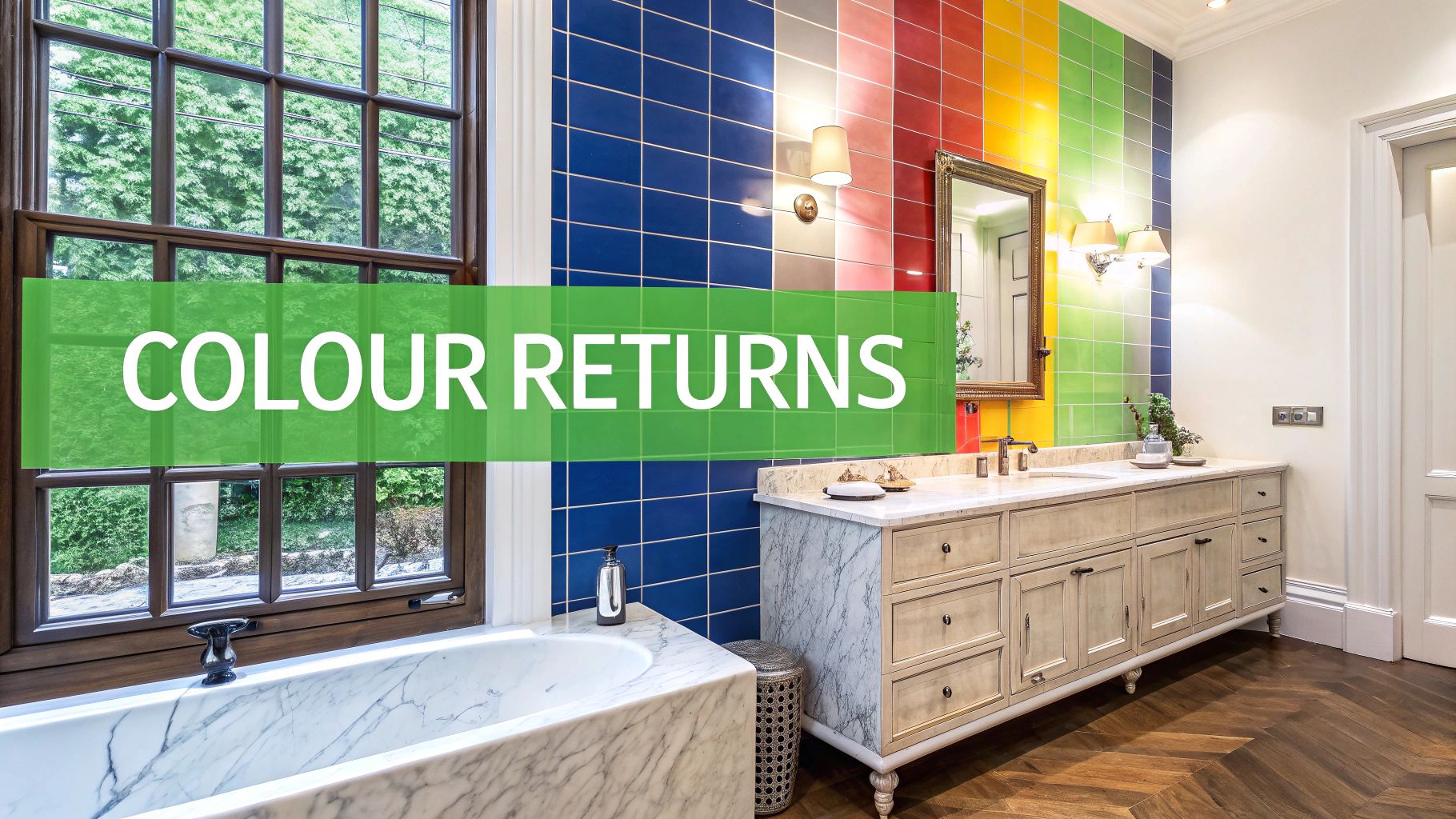
For years, minimalist palettes of grey and beige dominated high-end interior design. We are now seeing a decisive shift, especially among our clients in Kensington (SW7) and Mayfair (W1K), who are confidently reintroducing colour to create bathrooms that feel both luxurious and deeply personal. This revival isn’t about chasing fleeting trends; it’s about using sophisticated, enduring colour to make a definitive statement of style.
The real appeal of coloured tiles for bathroom renovations lies in their power to completely transform the atmosphere of a room. A perfectly chosen tile can turn a purely functional space into a serene retreat, an energising washroom, or an opulent powder room that honours the architectural integrity of a period property.
Embracing a New Era of Bespoke Style
In prime London postcodes, from the Georgian terraces of Belgravia (SW1X) to the Victorian villas in Highgate (N6), generic design simply doesn’t meet the standard. A bespoke approach is essential, and coloured tiles offer an incredible canvas for true creativity. This shift is echoed in broader home renovation patterns, with bathroom projects becoming more ambitious. Spaces are often being enlarged to create a more spa-like experience; in fact, the number of homeowners increasing their bathroom’s size more than doubled in just one year. You can explore more insights from the latest Houzz & Home Study.
This renewed passion for colour allows our designers to craft spaces that are truly one-of-a-kind. With over 20 years of experience, our focus is always on:
- Curating Sophisticated Palettes: We move beyond basic primary colours to explore nuanced jewel tones, earthy shades, and subtle pastels that complement natural stone and high-end fixtures.
- Honouring Heritage: We select colours and tile styles that respect and enhance the original character of period properties—a hallmark of our work in a bespoke kitchen renovation in Hampstead.
- Creating Lasting Value: A thoughtfully designed bathroom featuring high-quality coloured tiles isn’t just beautiful; it’s a significant investment that enhances your property’s long-term appeal and value.
Creating a Mood with Colour Psychology
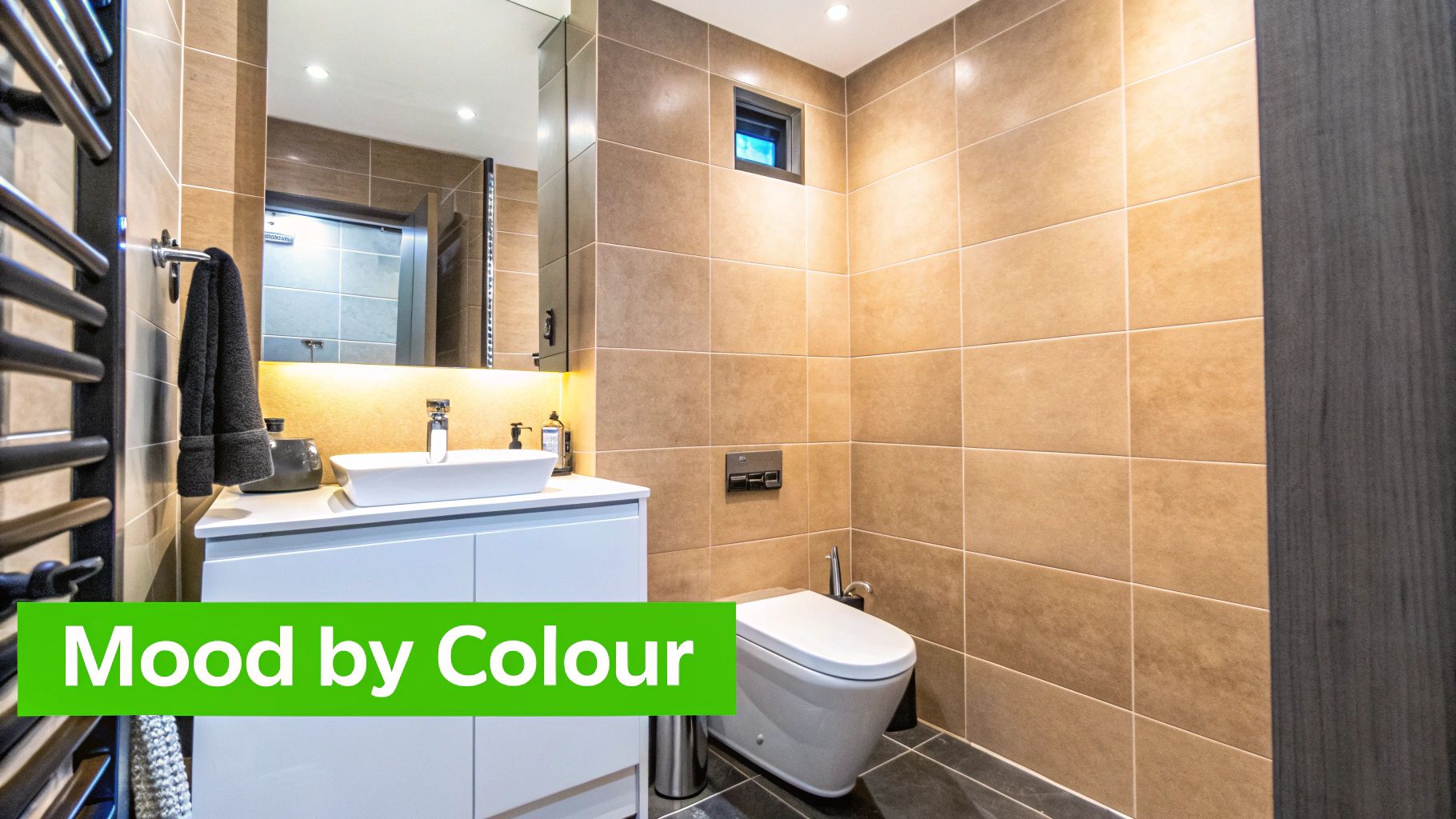
Colour is the silent architect of atmosphere. It has the power to influence how you feel the moment you step into a room. When we undertake a luxury bathroom renovation, choosing a tile colour is about so much more than aesthetics; it’s about using psychology to craft a personal sanctuary that truly resonates with you. This bespoke approach is essential, particularly when we’re tailoring a space to the unique character of a property in St John’s Wood (NW8) or Belgravia (SW1X).
The right palette of coloured tiles for bathroom design can genuinely redefine your daily rituals. Imagine starting your morning in a space that feels bright and energising, or unwinding at night in a tranquil haven that encourages relaxation. By understanding the emotional weight of different hues, we can design a bathroom that actively enhances your well-being.
Evoking Serenity and Calm
For clients dreaming of a tranquil, spa-like retreat, we almost always look to colours inspired by the natural world. These tones have a proven calming effect, helping to lower stress and create a palpable sense of peace. They are especially effective in primary bathrooms where unwinding is the main event.
- Deep Blues and Aquas: Shades like sapphire, navy, and teal call to mind the depth and serenity of the ocean. These colours are perfect for creating an immersive, cocoon-like wet room in a contemporary Knightsbridge (SW1X) apartment, fostering a feeling of quiet contemplation.
- Emerald and Forest Greens: Connecting with the restorative qualities of nature, deep greens ground a space and bring a sense of balance. In a Victorian property in Hampstead (NW3), emerald green tiles can introduce an air of opulent calm, beautifully complementing original architectural details.
- Eco-Friendly Options: For a high-end eco kitchen in Mayfair or a sustainable bathroom, consider tiles made from recycled glass or ethically sourced ceramics in natural green or earthy tones to create a serene, environmentally conscious space.
Creating Warmth and Inviting Character
On the other hand, warm tones can make a bathroom feel wonderfully inviting, cosy, and intimate. These colours are excellent choices for guest bathrooms or for adding personality to larger spaces that might otherwise feel stark. They also work exceptionally well in Georgian properties, adding a layer of historical richness and charm.
Consider these options for crafting a welcoming atmosphere:
- Terracotta and Russet: These earthy tones provide a grounded, organic warmth that’s hard to resist. A feature wall of terracotta tiles can bring a touch of rustic sophistication to a bathroom in a Belsize Park (NW3) home, making the space feel instantly more inviting.
- Rich Burgundy and Plum: For a dash of drama and opulence, deep reds and purples create a luxurious and intimate setting. These bold choices are perfect for a powder room in a Mayfair (W1K) townhouse, where you want to make a memorable impression on guests.
Strategic Use of Colour for Spatial Perception
Beyond setting the mood, colour is a clever tool for altering the perception of a room’s size and shape. This is a critical consideration in many London properties, where space is often a luxury. Our designers frequently use these techniques in areas like South Kensington (SW7) to maximise the feeling of space.
Step-by-step tip for smaller bathrooms:
- Select a single colour: Choose one consistent tile colour. A light or mid-tone shade in a glossy finish works best.
- Apply seamlessly: Run the tile continuously across the floor and up the walls, including within the shower enclosure.
- Use matching grout: Select a grout colour that closely matches the tile to minimise distracting lines.
- Result: This technique blurs the room’s boundaries, making a compact en-suite feel significantly larger and more cohesive.
Getting to Grips with High-End Tile Materials and Finishes
Choosing the right colour is a fantastic start, but it’s the tile’s material and finish that truly bring that vision to life. This is where texture, light, and lasting quality come into play. For our clients in prime London, from the elegant townhouses of Chelsea (SW3) to the contemporary apartments in Mayfair (W1K), understanding these nuances is what creates a genuinely bespoke result. With over 20 years of in-house craftsmanship, we guide you to the perfect choice for your property.
A bathroom is a high-moisture environment, so a tile’s beauty must be matched by its performance. We work with a curated selection of premium materials, each offering a distinct aesthetic and practical benefits perfectly suited for luxury renovations.
Premium Tile Materials Explained
- Porcelain and Ceramic: These are the workhorses of luxury bathrooms for good reason. Modern manufacturing has elevated porcelain tiles to an incredible standard of durability, making them resistant to water, stains, and daily wear. They offer a vast spectrum of colours and can convincingly mimic natural stone, giving you aesthetic flexibility for a Belsize Park (NW3) renovation without the demanding upkeep.
- Natural Stone (Marble, Travertine): For sheer opulence, nothing comes close to natural stone. Each slab of marble is entirely unique, bringing one-of-a-kind veining and depth to a bathroom in Kensington (SW7). It’s a statement of timeless luxury. However, its porous nature means it requires professional sealing and careful maintenance.
- Glass Mosaics: To create a shimmering, light-filled space, glass tiles are exceptional. Their iridescent qualities can make a compact en-suite in a modern Knightsbridge (SW1X) apartment feel brighter and more expansive. We often use them to design stunning feature walls.
- Artisanal Tiles (Zellige, Encaustic): For those seeking authentic character, artisanal tiles are a superb choice. Hand-painted Moroccan Zellige tiles, with their subtle imperfections and rich glaze variations, add incredible texture and soul. Encaustic cement tiles offer bold patterns perfect for making a statement floor, blending heritage charm with contemporary style. You can see how we’ve used these materials in our gallery of bespoke tailored bathroom renovations.
Understanding Finishes: Matte vs. Gloss
The finish of your tile dramatically changes its look and how it functions. The choice between matte and gloss is a critical decision that balances aesthetics with practicality.
A tile’s finish isn’t just a stylistic choice; it’s a functional one. Gloss reflects light and is a breeze to clean, making it ideal for walls. A matte finish, on the other hand, provides essential grip underfoot, making it the safer, more sophisticated option for floors, especially in wet areas.
A high-gloss finish on a wall tile in a smaller South Kensington (SW7) bathroom will bounce light around, creating a brilliant illusion of space. Its smooth surface is also exceptionally easy to wipe down, making it perfect for shower surrounds.
Conversely, a matte finish lends a soft, contemporary feel with less glare, and its non-reflective surface is excellent at hiding water spots. Most importantly, it provides superior slip resistance, making it our standard recommendation for all bathroom floors and shower trays. It’s about ensuring safety without ever compromising on style.
Integrating Tile Patterns in Period Properties
London’s magnificent Victorian and Georgian properties, from the grand villas in Highgate (N6) to the elegant terraces of Chelsea (SW3), offer a unique canvas for bathroom design. The challenge—and where our expertise truly lies—is in blending modern luxury with bespoke tile patterns without sacrificing the home’s soul. With our team’s two decades of dedicated experience, we’ve mastered the art of honouring a property’s heritage while introducing sophisticated, contemporary comfort.
Honouring Heritage with Classic Layouts
In a period property, the tile pattern must respect the scale and style of the existing architecture. Soaring ceilings and intricate cornicing demand thoughtful design choices. We often advise clients to look to patterns that have stood the test of time, as they inherently harmonise with historic settings.
- Herringbone and Chevron: These dynamic patterns create a sense of movement and sophistication. A marble herringbone floor can add subtle drama to a Hampstead (NW3) bathroom, while a chevron feature wall in a rich, coloured tile creates a stunning focal point.
- Geometric Mosaics: Drawing inspiration directly from Victorian tradition, small-scale geometric mosaics are perfect for floors. A classic black and white combination is timeless, but introducing a deep green or burgundy into the pattern adds a bespoke, modern twist.
- Basketweave: This intricate pattern adds a fantastic layer of texture. It works exceptionally well in smaller spaces, like a guest en-suite in a St John’s Wood (NW8) townhouse, providing a decorative touch without overwhelming the room.
Overcoming Period Property Challenges
Renovating a period home is rarely straightforward. Years of settlement can lead to uneven walls and floors, which pose a significant challenge for a flawless tile finish. This is where true craftsmanship becomes non-negotiable.
Common challenges and our solutions:
- Uneven Floors/Walls: Our in-house craftsmen meticulously level subfloors and re-plaster walls to create a perfect substrate before tiling begins.
- Damp and Poor Ventilation: We integrate modern, discreet ventilation systems and use advanced waterproof tanking membranes behind tiles to protect the building’s fabric.
- Preserving Original Features: We carefully scribe tiles around original cornicing or sash windows, ensuring a seamless blend of old and new.
This level of detail is what separates an average finish from a truly luxurious one delivered by our luxury bathroom designers in Chelsea. For a deeper dive, explore our guide on reviving Victorian homes with modern renovations.
This hierarchy diagram helps visualise the fundamental choices when selecting luxury coloured tiles for your bathroom.
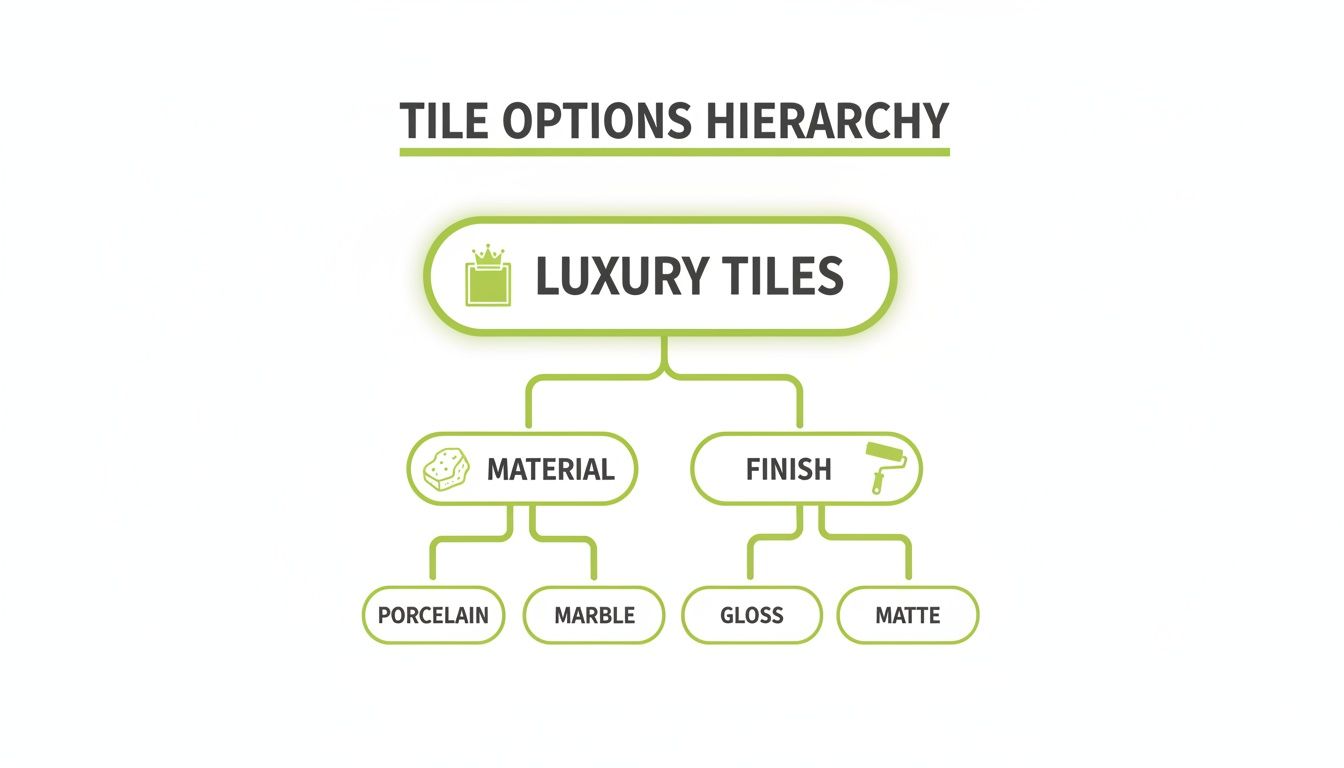
The visualisation shows how initial decisions on material and finish cascade down to specific options like porcelain or gloss, guiding a structured approach to tile selection. Ultimately, a successful design blends these classic patterns with modern sensibilities, creating a bathroom that feels both historically appropriate and perfectly suited to contemporary life.
Budgeting for Your Luxury Tiling Project
Understanding the investment is the first practical step in any successful, stress-free bathroom renovation. For our clients in prime locations like Mayfair (W1K) or South Kensington (SW7), we believe in creating a completely transparent and detailed budget. It’s the best way to ensure every design dream is grounded in a practical financial plan, delivering exceptional value and a flawless finish.
A bespoke project using coloured tiles for bathroom designs is a significant investment in your property’s long-term appeal. In prime London postcodes, a full luxury bathroom renovation typically falls somewhere between £15,000 to £70,000+. This all-encompassing figure covers everything from structural work and plumbing to high-end fittings and the specialist in-house craftsmanship required. The tiling itself usually makes up around 15-20% of this total budget. You can find more details in the UK bathroom renovation costs breakdown.
Key Factors Influencing Your Tiling Costs
Several key elements will shape the final cost of your tiling project. Understanding these from the outset allows for informed decisions.
- Tile Material: The material is the biggest cost driver. Hand-crafted Zellige tiles or large-format Italian porcelain will command a higher price than standard high-quality ceramics.
- Design Complexity: An intricate layout like a mosaic or herringbone pattern demands more time, precision, and material wastage, all factored into the cost.
- Labour and Preparation: The expertise of a master tiler is invaluable in period properties. The cost here reflects the painstaking surface preparation needed to handle the characteristically uneven walls of a Kensington townhouse, guaranteeing a perfect, lasting finish.
- Grout and Sealants: Opting for a high-performance epoxy grout adds to the initial outlay but its superior stain resistance and durability save on long-term maintenance—a smart investment for a family bathroom in Hampstead.
Budgeting Tip: Planning a budget isn’t about limiting creativity; it’s about channelling it effectively. By understanding the cost breakdown, we can allocate funds strategically—perhaps investing in a show-stopping feature wall of artisanal tiles while choosing a more cost-effective porcelain for other areas.
Tiling as a Value-Adding Investment
Investing in high-quality coloured tiles is a decision that pays dividends. Recent industry data shows homeowner spending on bathroom renovations is rising, with the median spend jumping 26% in just one year. As primary showers get larger, there’s a growing opportunity to use stunning coloured tiles to make a real statement. You can read the full findings from Houzz’s Bathroom Trends Study.
A beautifully executed tiling project does more than just brighten your daily routine; it adds tangible value to your property. To get a better sense of how these tiling costs fit into the bigger picture, you might find our guide on how much a home renovation costs in Central London helpful.
Your Questions About Coloured Bathroom Tiles Answered
As specialists in bespoke renovations across London’s most distinguished postcodes, we’ve heard every question imaginable. Drawing on over 20 years of hands-on experience, our experts are here to give you clear, authoritative answers to the queries that come up time and again when planning a bathroom renovation.
Will Bold Coloured Tiles Make My Bathroom Look Smaller?
Not at all; when implemented correctly, the opposite is true. Consider the compact en-suites common in Chelsea (SW3) or Kensington (SW7) apartments. By using a single, continuous colour across both the floor and walls, we erase the visual boundaries of the room, making it feel far more expansive. This seamless approach creates a sophisticated, jewel-box effect that feels luxurious, not cramped. The tile’s finish also plays a massive role; glossy surfaces are brilliant at bouncing light, which immediately makes a space feel brighter and more open.
Are Coloured Tiles a Timeless Choice or Just a Passing Trend?
While certain patterns might have their moment, colour itself is absolutely timeless. The secret to a lasting look is choosing the right hue in a high-quality material. Deep jewel tones like sapphire blue or emerald green, especially in classic porcelain or artisanal ceramic, have an inherent elegance that has graced beautiful interiors for centuries. These sophisticated palettes are particularly at home in the grand Victorian and Georgian properties found in Hampstead (NW3) and Highgate (N6). We guide you towards refined colour choices and timeless patterns—think herringbone or basketweave—that ensure your bathroom design feels chic for decades to come.
A timeless design isn’t about avoiding colour; it’s about choosing it with intention. We focus on palettes that feel authentic to both your personality and the architectural soul of your home.
How Do I Maintain Different Types of Coloured Tiles?
Maintenance is determined by the material. For most projects, we recommend high-quality porcelain or ceramic tiles. They are incredibly durable, non-porous, and require nothing more than a simple pH-neutral cleaner to stay looking pristine. Natural stone, such as coloured marble, requires more attention and will need periodic professional sealing to protect it from staining. When we complete a project in your Knightsbridge or Belgravia home, we provide a detailed, bespoke care guide tailored specifically to the materials we’ve installed.
What Is the Timeframe for a Luxury Bathroom Tiling Project?
A complete luxury bathroom renovation typically takes between four to eight weeks from commencement to final handover. The tiling phase itself generally requires five to ten days of that period. This includes meticulous surface preparation, the precise laying of each tile, grouting, and sealing. Of course, if the design involves intricate mosaic patterns or large-format natural stone slabs, it may require additional time to achieve the flawless finish our in-house craftsmen are known for.
Contact BathKitchenLondon.com for a personalized quote on your luxury renovation project.