

When choosing the best underfloor heating system in the UK for a luxury London property, the decision comes down to two leading technologies: hydronic (wet) systems, which circulate warm water through pipes, and electric systems, which use heating mats or cables.
As a guiding principle refined over 20+ years of high-end renovations, a hydronic system is the superior choice for whole-home projects, new extensions, and eco-conscious refurbishments where long-term efficiency is paramount. Conversely, electric systems provide unparalleled flexibility for single-room upgrades, such as a luxury bathroom in Chelsea or a bespoke kitchen in Hampstead, delivering targeted heat without extensive structural work.
Underfloor Heating: An Essential Element of Modern Luxury
Underfloor heating has gracefully moved from a niche, high-end feature to a true hallmark of sophisticated home design. This is especially true within London’s distinguished period properties in postcodes like Hampstead (NW3), Kensington (SW7), and Mayfair (W1K).
For homeowners in these exclusive areas, it’s the perfect blend of invisible comfort, energy efficiency, and complete design freedom. With over two decades of experience, our in-house craftsmen specialise in integrating these systems seamlessly into bespoke kitchen renovations and luxury bathroom designs. We have a deep understanding of the unique challenges posed by Victorian and Georgian architecture, ensuring that modern comforts enhance a property’s timeless character, rather than compromise it.
This guide provides a clear, practical comparison of the two leading options, helping you make a confident decision for your home.
Here’s a straightforward breakdown to help you weigh up the options:
| Consideration | Hydronic (Wet) System | Electric System |
|---|---|---|
| Best For | Whole-home renovations, new extensions, and eco-friendly projects. | Single rooms (bathrooms, kitchens), extensions, and retrofits. |
| Running Costs | Very low, especially when paired with renewable energy sources. | Higher per hour, but cost-effective for targeted, intermittent use. |
| Upfront Cost | Higher due to complex installation and materials. | Lower, with simpler and faster installation. |
| Heat-Up Time | Slower (several hours), but retains heat for longer. | Faster (30-60 minutes), ideal for on-demand warmth. |
| Floor Height | Adds more height (15mm+), requiring more structural planning. | Minimal impact (3-5mm), preserving existing ceiling heights. |
The demand for these systems is a clear reflection of a broader trend. The UK underfloor heating market was valued at approximately £213 million in 2024, showcasing its growing appeal among discerning homeowners who prioritise discreet and efficient heating solutions.
Whether you’re planning a custom bathroom installation in Kensington or envisioning a premium kitchen extension in Knightsbridge featuring integrated Gaggenau appliances, understanding the nuances of each system is crucial. Our expertise ensures the system you choose not only delivers exceptional comfort but also aligns perfectly with your aesthetic and sustainability goals.
Hydronic Systems: The Gold Standard for Whole-Home Luxury
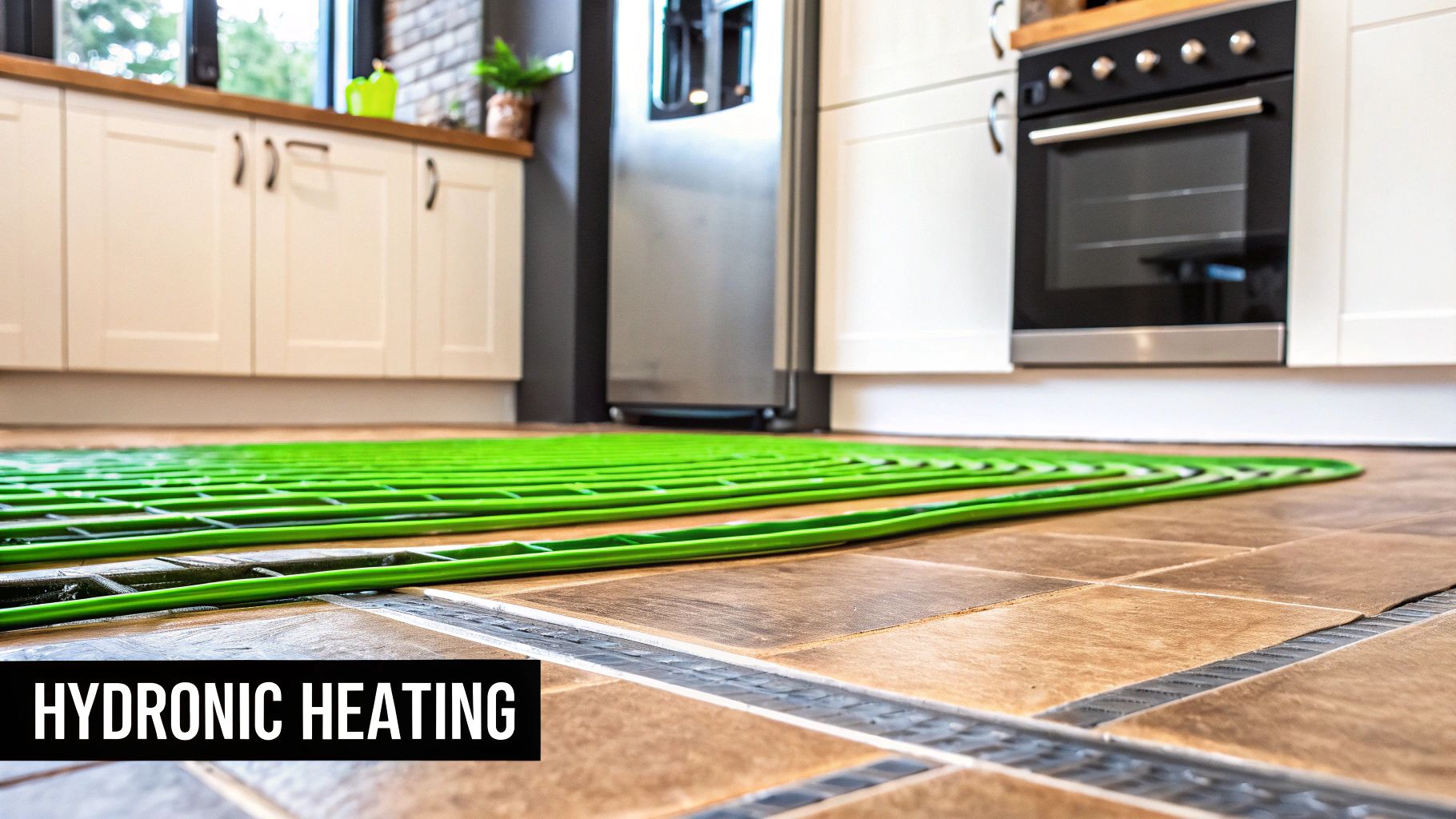
For those undertaking a comprehensive renovation or adding a new extension to one of London’s fine properties, from Belgravia townhouses to Knightsbridge apartments, water-based (hydronic) underfloor heating is the pinnacle of comfort and efficiency. The system works by circulating gently heated water through a network of durable pipes laid beneath the floor. The result? A consistent, enveloping warmth that traditional radiators simply cannot replicate.
Its single biggest advantage is its phenomenal energy efficiency, especially when paired with modern, sustainable heat sources. This makes it a core part of our client-focused approach to creating beautiful, eco-friendly living spaces.
Why Hydronic Systems Excel in Large Renovations
Hydronic systems truly come into their own in large, open-plan spaces where even heat distribution is non-negotiable. Picture a bespoke kitchen renovation Hampstead fitted with professional-grade appliances from Miele or a Wolf & Sub-Zero refrigeration suite; a hydronic system ensures every inch of the stone floor is comfortable, banishing the cold spots radiators are notorious for.
Because the installation is more involved, it’s best integrated during a full home renovation or a substantial extension project. This allows our in-house team to embed the system seamlessly into the property’s structure, preserving the unique architectural integrity of London’s cherished Victorian and Georgian homes.
With over two decades of experience, our in-house craftsmen meticulously plan every hydronic installation. This ensures the system not only performs flawlessly but also respects and protects the period features that make your home unique.
This dedication to quality is why homeowners trust our expertise. You can see it in our excellent client feedback on our TrustATrader profile, which reflects our commitment to superior craftsmanship.
Unlocking Long-Term Efficiency and Sustainability
While the upfront investment for a hydronic system is higher, the long-term running costs are significantly lower, delivering a fantastic return over the system’s lifespan. They operate at much lower flow temperatures (around 35-45°C) compared to radiators, which often demand 65-75°C. That difference translates directly into reduced energy use and lower bills.
This low-temperature operation makes hydronic systems the perfect partner for renewable technologies like air source heat pumps. Integrating these systems is a core part of our work in creating a high-end eco kitchen Mayfair or a luxury bathroom in Kensington, helping clients reduce their carbon footprint without compromising on luxury. This focus also aligns perfectly with the UK’s wider push for greener homes.
In fact, market analysis shows that water-based underfloor heating is set to become one of the best systems in the UK. Hydronic types are projected to be the fastest-growing market segment through to 2032, largely due to their superb synergy with low-carbon heat sources. With the UK market valued at £213 million in 2024, water systems already represent over 60% of new installations, slashing running costs by 20-30% compared to traditional gas boilers when paired with a heat pump. You can find out more about the future of the UK underfloor heating market and its growth drivers.
Key Advantages of Hydronic Underfloor Heating
For homeowners embarking on a major renovation, the benefits are clear and compelling:
- Superior Running Costs: Unbeatable long-term efficiency makes it the most cost-effective choice for heating entire properties.
- Perfect for Renewables: Its low-temperature operation is ideally matched with heat pumps, future-proofing your home.
- Consistent, Gentle Comfort: Provides an even, radiant warmth that eliminates cold spots and enhances the feeling of luxury.
- Design Freedom: By removing bulky radiators, it opens up complete freedom for your interior design and furniture placement.
Our in-house team of skilled craftsmen handles every aspect of the installation, from design to commissioning, ensuring a flawless integration. This approach guarantees quality control, a standard we uphold as proud members of the Guild of Master Craftsmen. For those looking to reduce their home’s environmental impact, our guide to eco-friendly renovations offers further insights.
Electric Systems: The Smart Choice for Bespoke Spaces
While a full-scale renovation calls for the steady warmth of a hydronic system, electric underfloor heating is a brilliantly agile and targeted alternative. It truly shines in luxury upgrades for specific rooms—think bathrooms, kitchens, or extensions where flexibility and minimal disruption are priorities. The technology is simple yet effective: slim heating mats or loose-lay wires are installed just below the final floor finish, delivering heat incredibly quickly.
The main attractions are the lower upfront installation cost and the almost negligible impact on floor height. This makes it a perfect fit for a custom bathroom installation in a Kensington apartment or a high-end eco kitchen in Mayfair, where every millimetre of ceiling height counts. It’s a way to introduce modern comfort into a period property without touching its architectural soul.
Our in-house craftsmen install these systems with meticulous precision, often laying them beneath premium surfaces from trusted suppliers like Topps Tiles to ensure a flawless result. We then pair them with sophisticated smart controls, giving homeowners in St John’s Wood or Highgate the ability to manage their heating from anywhere—the ultimate in convenience and efficiency. It’s a seamless blend of modern tech and our time-honoured craftsmanship.
Why Electric Systems are Perfect for Retrofits
One of the biggest advantages of electric underfloor heating is how well it works for retrofit projects. Because the mats are exceptionally thin—often adding just 3-5mm to the floor height—they can be laid over existing subfloors without significant structural work. This is a massive plus in London’s period homes, from Victorian terraces in Belsize Park to mansion flats in South Kensington.
Take a project for one of our luxury bathroom designers Chelsea clients, for example. The goal is to bring in modern luxury without fundamentally changing the building’s character. An electric system can be installed efficiently, giving you warm tiled floors in as little as 30-60 minutes. It’s that small touch of immediate comfort that completely transforms how you experience the space.
This focused approach brings real benefits:
- Minimal Disruption: Installation is fast, often completed in a day or two.
- Cost-Effective for Single Areas: Lower material and labour costs make it the smart financial choice for individual rooms.
- Preservation of Period Features: By avoiding major floor build-up, we can keep original skirting boards, door frames, and ceiling heights intact.
Seamless Integration with Smart Home Technology
Modern luxury isn’t just about how a space looks; it’s about intelligent living. Electric underfloor heating systems are designed to integrate seamlessly with today’s leading smart home tech. Our team can connect your system to a smart thermostat, allowing you to control heating schedules, temperatures, and energy use right from your phone.
Imagine warming your bathroom floor in your Knightsbridge home before you get out of bed, or ensuring your bespoke kitchen renovation in Hampstead is perfectly warm for your morning coffee. This level of control isn’t just a convenience—it optimises energy use by heating rooms only when you need them.
This precise, on-demand heating is what makes electric systems such an intelligent investment. By heating only the spaces you need, when you need them, you cut out the energy waste that comes with heating an entire property. It’s a simple step towards a more efficient and environmentally conscious home.
This approach is gaining serious traction. The residential electric underfloor heating market is forecast to grow steadily, driven by homeowners becoming more energy-aware and the push towards the UK’s 2050 net-zero goal. Within the UK’s £213 million underfloor heating market, electric systems claim a major share of retrofit projects and can be up to 25% more energy-efficient than traditional convection heating. You can read more about the residential electric underfloor heating market and its future trends.
Hydronic vs. Electric: A Practical Comparison for Period Properties
Choosing between hydronic and electric underfloor heating is a pivotal moment in planning a high-end renovation. The best underfloor heating systems UK homeowners can install aren’t a one-size-fits-all solution; the right choice is dictated by the property’s unique character and the project’s scope. For London’s period homes, this decision is a careful balance of architectural constraints, running costs, and aesthetic vision.
Instead of generic pros and cons, let’s look at each system through the lens of what truly matters to our clients in properties across Hampstead, Chelsea, and Kensington.
Installation and Structural Impact
The most immediate difference is how each system is installed—a critical factor in heritage properties where every millimetre counts.
A hydronic system involves laying a network of water-filled pipes, usually encased in screed. This process adds significant height to the floor, often 50mm or more with insulation. In a period home, that can compromise original features like skirting boards and door thresholds. This is why we almost exclusively recommend hydronic systems for major ground-floor renovations or new extensions where the floor structure is being rebuilt from scratch.
In stark contrast, an electric system is made of ultra-thin mats that add as little as 3mm to the floor height. This minimal build-up makes it the perfect solution for retrofitting into a single room, like a bathroom, without disturbing the existing architecture.
Our Approach: For a Victorian villa in Hampstead undergoing a complete ground-floor remodel, a hydronic system is the logical, long-term investment. But for a luxury ensuite renovation in a Knightsbridge apartment block, a slimline electric system delivers targeted comfort without any structural compromise.
Running Costs and Long-Term Efficiency
While electric systems are cheaper to install, hydronic systems boast substantially lower running costs, making them more economical for heating large areas or entire homes.
Hydronic heating is incredibly efficient because it runs on low water temperatures (around 35-45°C), especially when paired with an air source heat pump. This synergy can slash running costs by up to 40% compared to traditional radiators, aligning with our commitment to creating sustainable, future-proofed homes.
Electric systems are 100% efficient at the point of use, but electricity currently costs more per unit than gas. Their running costs are therefore higher. However, when used intelligently in specific zones—like a bathroom floor timed to warm up for just an hour—they remain a very cost-effective and luxurious solution.
This decision tree helps visualise the best choice based on your renovation scale and priorities.
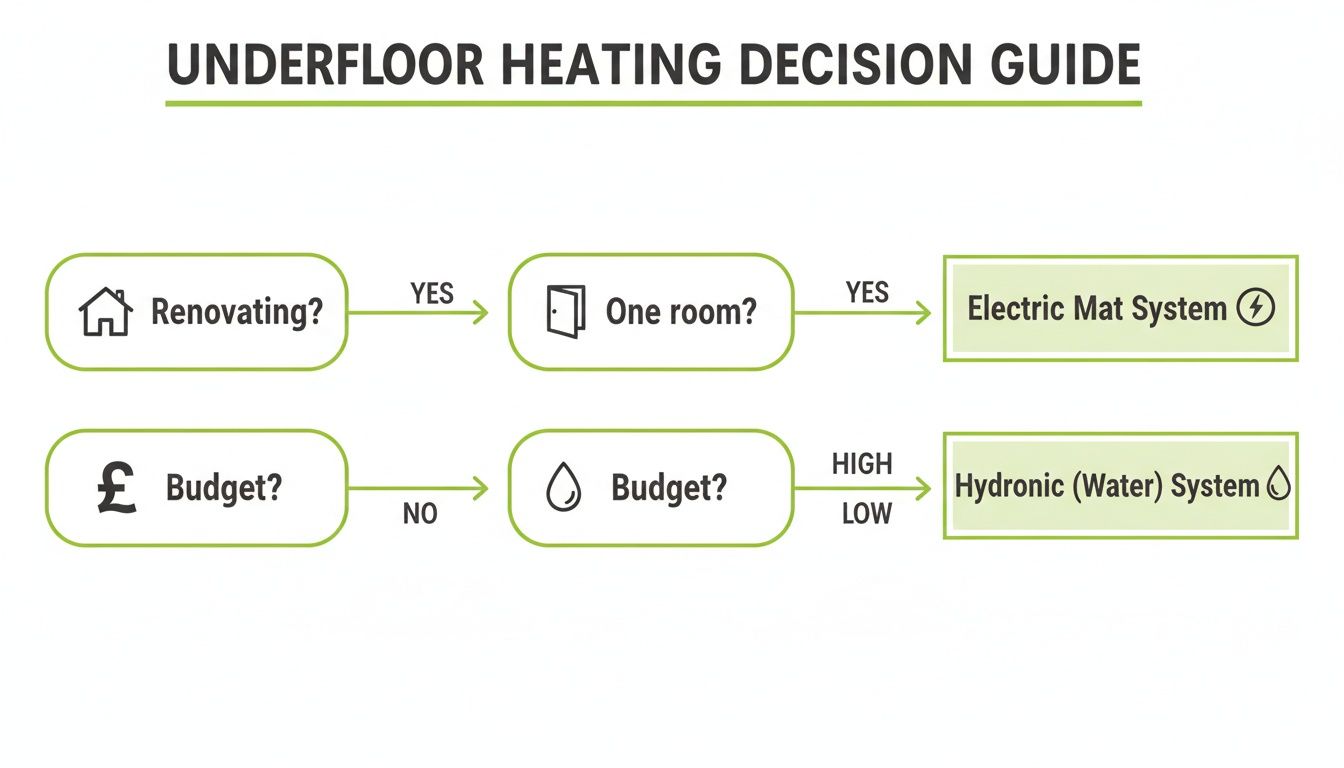
As the flowchart shows, if you’re undertaking a whole-house project with an eye on long-term efficiency, hydronic is the clear winner. For single-room upgrades where budget and installation speed are priorities, electric excels.
To make this even clearer, here’s a side-by-side comparison tailored for the kinds of decisions we help clients make for their London homes.
Underfloor Heating Systems At a Glance for London Period Homes
| Consideration | Hydronic (Wet) System | Electric System |
|---|---|---|
| Best For | Whole-house heating, new extensions, major ground-floor renovations. | Single rooms (bathrooms, ensuites), retrofitting into existing spaces. |
| Installation Impact | High. Adds significant floor height (50mm+), requiring structural changes. | Very low. Minimal height increase (as little as 3mm), preserving original features. |
| Upfront Cost | Higher. More complex installation, requires a boiler or heat pump connection. | Lower. Simpler materials and faster installation process. |
| Running Cost | Very low, especially with a heat pump. Highly efficient for large areas. | Higher. Best for targeted, intermittent use to manage electricity costs. |
| Heat-Up Time | Slower. Takes several hours to reach temperature but retains heat well. | Faster. Heats up in 30-60 minutes, providing on-demand warmth. |
| Period Home Suitability | Ideal for “back to brick” renovations. Can be installed from below to save original floors. | Excellent for preserving architectural integrity in smaller, targeted renovations. |
Ultimately, the right system isn’t just about the technology; it’s about how it integrates into the unique fabric of a period property.
Compatibility with Original Floor Finishes
A common concern in period properties is how to install underfloor heating without sacrificing beautiful original floorboards. Both systems can work, but the installation method is what makes all the difference.
- Hydronic Systems: Can be installed by fitting pipes between the floor joists from the ceiling below. This complex but brilliant technique leaves the original floorboards above completely untouched. It’s a job for skilled craftsmen, something our in-house team excels at.
- Electric Systems: Are typically laid on top of the subfloor. This means the original boards have to be carefully lifted and then reinstated. While achievable, it demands exceptional skill to avoid damaging the aged timber.
Our deep expertise in handling these delicate materials is central to what we do; we’ve spent more than two decades perfecting techniques for integrating modern systems into London’s finest homes. For more information, visit our local team in Hampstead.
Mastering Installation in Heritage Homes
The true value of a luxury renovation lies in the execution. Our unique advantage is our dedicated in-house team of master craftsmen, who personally manage every detail of your underfloor heating installation. This section walks you through the meticulous process we follow, from initial structural assessments to final commissioning, ensuring a flawless result without relying on subcontractors.
Navigating the complexities of London’s period properties, whether in South Kensington or Belsize Park, is our specialism. We’ve designed our process to protect the architectural integrity of these homes while seamlessly integrating modern comforts.
Our Meticulous Installation Process
Every project starts with a thorough structural assessment. In Victorian and Georgian homes, floors are rarely perfectly level, and joists often need reinforcement before any system can be laid. Our team addresses these foundational issues first, creating a stable and perfectly prepared substrate.
This level of preparation is non-negotiable. It prevents future problems and guarantees the system performs optimally for decades to come.
The key steps we follow include:
- Structural Survey: We assess the condition of existing floor joists and subfloors, identifying any repairs or reinforcements needed.
- Floor Levelling: Using specialist techniques and materials from trusted suppliers like Wickes and Builder Depot, we create a perfectly flat surface, which is crucial for even heat distribution.
- Insulation First: We install high-performance insulation boards to prevent downward heat loss. This critical step directs 100% of the warmth upwards into the room for maximum efficiency.
- System Installation: Our certified in-house technicians lay either the hydronic pipework or electric mats with precision, ensuring optimal spacing for consistent warmth.
Protecting Original Features
One of the greatest challenges in heritage properties is working around original features. Our craftsmen are experts at carefully lifting and reinstating original floorboards, period tiles, and decorative mouldings. For a premium kitchen extension in Knightsbridge, this could mean integrating a hydronic system beneath reclaimed timber without a single sign of disturbance.
Our commitment is to enhance your home, not erase its history. Every cut, every fitting, and every connection is made with the utmost respect for the property’s unique character.
This level of care is a direct result of our in-house expertise. It’s why we’re a proud member of the Guild of Master Craftsmen, an organisation that independently verifies our commitment to exacting standards and quality craftsmanship.
Smart Home and Renewable Integration
A modern luxury home demands intelligent, intuitive control. We integrate your new underfloor heating system with leading smart home platforms, allowing you to manage zones, schedules, and temperatures from a single app. This isn’t just about convenience; it’s about optimising energy consumption.
We also specialise in pairing hydronic systems with renewable heat sources. For clients planning a sustainable loft conversion in Belgravia or a high-end eco kitchen in Mayfair, connecting the system to an air source heat pump is a powerful step towards a lower carbon footprint. This forward-thinking approach truly future-proofs your investment. You can learn more about our expertise in creating bespoke kitchens that incorporate these sophisticated integrations.
Your Underfloor Heating Questions Answered
When you’re considering an upgrade like underfloor heating, questions are bound to arise. With over two decades of experience, we’ve helped homeowners across London’s most sought-after postcodes get the clarity they need for their luxury renovations.
Can We Install Underfloor Heating in a Listed Property?
Yes, absolutely. Delicately integrating modern comforts into period properties is one of our core specialities. Many of our clients in historic Georgian or Victorian homes in postcodes like Chelsea (SW3) or Hampstead (NW3) worry about disturbing original features, but our approach is designed to be sympathetic.
For a custom bathroom installation Kensington, where floor height is critical, we often specify low-profile electric mats. They add minimal build-up. Our in-house craftsmen are masters at carefully lifting and reinstating original floorboards, preserving the home’s character. We also handle all necessary consultations to ensure everything is compliant with conservation area rules.
Which System Is More Eco-Friendly?
For whole-home heating that’s genuinely sustainable, a hydronic (wet) system is the clear winner. Because it runs at much lower temperatures than traditional radiators, it’s the perfect partner for renewable technologies like air or ground source heat pumps. This pairing is a powerful way to reduce your home’s carbon footprint.
That said, electric systems can be highly efficient, especially when powered by a domestic solar PV array. This makes them a brilliant, targeted solution for a premium kitchen extension Knightsbridge where you want instant, localised warmth without firing up the central heating.
What Is the Typical Installation Timeframe?
The answer depends on the system and the scope of your project.
Electric systems are remarkably quick to install. For a single room being renovated, we can often have the mats laid and ready in just 1-3 days.
A full-home hydronic system is a more involved undertaking, best planned as part of a major refurbishment. The installation of the pipework itself typically takes 1-2 weeks before the screed is poured. Because we manage the entire project with our dedicated in-house team, we can schedule trades with precision, ensuring your renovation in Highgate or Mayfair runs like clockwork.
Ready to transform your home with timeless luxury? Contact BathKitchenLondon.com for a personalized quote on your bespoke kitchen, bathroom, or full renovation project.