
Choosing the right bathroom tile is one of the most critical decisions in a luxury renovation. It’s about more than a surface; tiles dictate the character, practicality, and lasting value of your space. This is especially true in London’s iconic Victorian and Georgian homes, where the perfect choice must respect architectural heritage while delivering modern performance.
Choosing Tiles for Period Homes: The Foundation of Luxury
When we’re renovating a bathroom in a period property, we don’t see tiles as a final decorative touch. They are the foundational canvas for the entire design. For over 20 years, our in-house teams have tackled the unique challenges of homes in Kensington (SW7) and Chelsea (SW3). In these properties, tile selection must satisfy both aesthetics and, often, tricky structural realities.
The process of how to choose bathroom tiles goes far deeper than just picking a colour or pattern. It requires a strategic eye that honours the home’s original character. For instance, in a Victorian villa in Hampstead (NW3), our first task is always correcting decades-old uneven subfloors—long before a single tile from suppliers like Topps Tiles can be laid. This client-focused preparation is non-negotiable. Similarly, for a listed Georgian townhouse in Mayfair (W1K), our material choices must often adhere to strict conservation area rules, seamlessly blending today’s luxury with historical integrity.
This guide takes you beyond the showroom floor, offering practical insights from decades of hands-on experience:
- The interplay of materials: From the timeless elegance of natural stone to the hardy, versatile nature of Italian porcelain.
- Scale and proportion: How tile size can dramatically alter the feel of a space, particularly in London’s more compact bathrooms.
- Eco-friendly and sustainable solutions: Aligning your renovation with modern values without compromising on a high-end finish.
- Technical considerations: Ensuring your chosen tiles are genuinely fit for purpose, from slip resistance to underfloor heating compatibility.
Ultimately, choosing your luxury bathroom tile is an investment in your home’s future. With careful planning and expert guidance, your selection will create a sanctuary that is both beautiful and built to last.
Matching Tile Materials to Your Lifestyle
The material you choose for your bathroom tile is where beautiful form meets everyday function. It’s a decision that defines not just the look of the room, but how it stands up to daily life and the maintenance required. For a high-end renovation in a home in Hampstead (NW3) or South Kensington (SW7), this choice is a delicate balance between your personal style and the demands of a modern, luxury lifestyle.
It’s about far more than what catches your eye in a showroom; it’s about lasting value. With over two decades of experience, our in-house craftsmen have fitted an enormous range of premium materials, and we always guide our clients towards choices that deliver both timeless style and uncompromising performance. We start by asking how the space will be used—is it a high-traffic family bathroom, a tranquil primary ensuite, or a guest powder room designed to make a statement? Each scenario demands a different approach.
The Enduring Appeal of Porcelain
For the vast majority of our luxury bathroom projects, from grand homes in Chelsea (SW3) to period properties in Belsize Park (NW3), porcelain is our go-to material. Modern manufacturing has transformed porcelain from a merely practical option into something spectacular. Top-tier Italian and Spanish porcelain tiles now offer breathtakingly realistic imitations of natural stone, like Calacatta marble or travertine, but without the high maintenance.
Here’s why porcelain so often comes out on top for our clients:
- Exceptional Durability: It’s incredibly dense and hard-wearing, making it resistant to scratches, chips, and stains. A custom bathroom installation in Kensington (SW7) requires materials that can withstand daily use without showing wear.
- Water Resistance: Porcelain has a water absorption rate of less than 0.5%, which is fantastic for wet rooms and shower enclosures. It gives you peace of mind that moisture issues won’t be a problem down the line.
- Low Maintenance: Unlike its natural stone counterparts, porcelain doesn’t require sealing. It’s simple to clean and keeps its good looks for years with minimal fuss.
This chart breaks down the key pillars of our decision-making process.
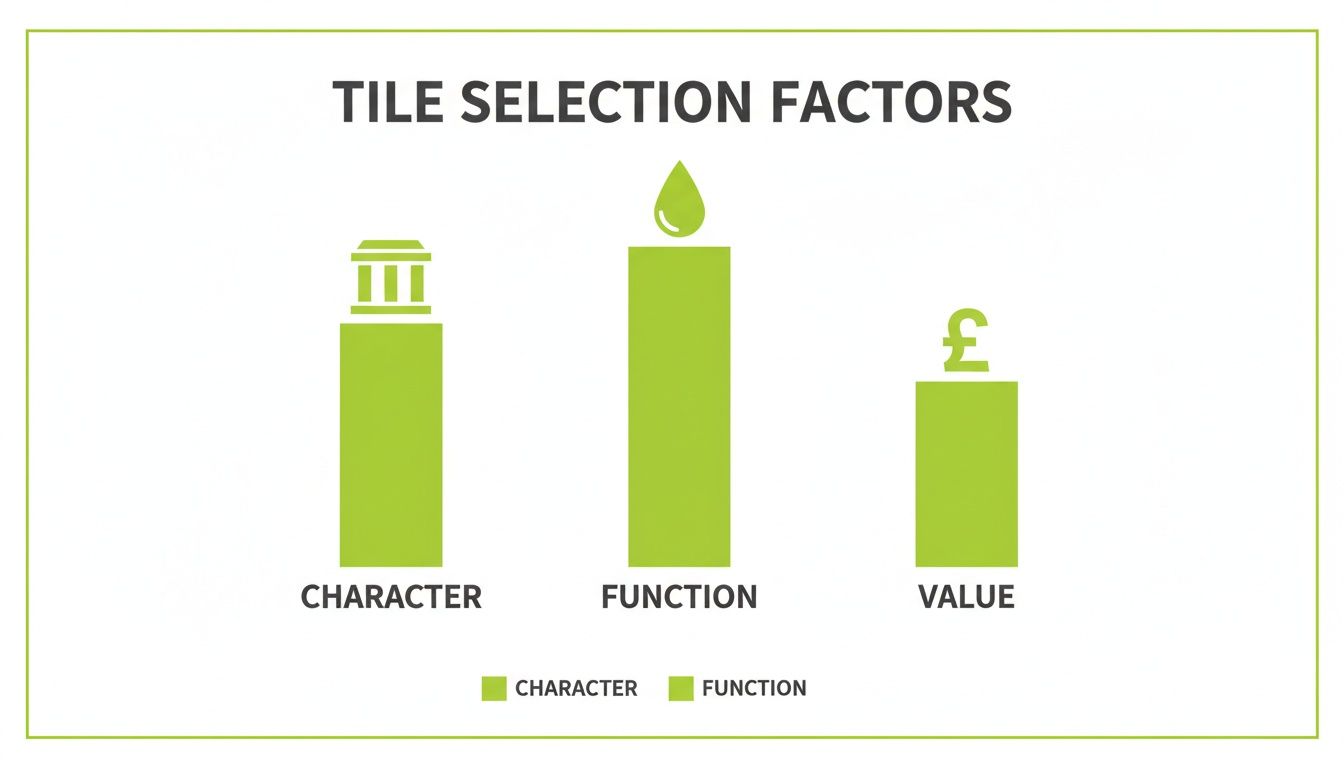
As you can see, while character and value are important, it’s the functional performance that is absolutely critical for a successful, long-lasting luxury bathroom.
The Timeless Luxury of Natural Stone
There’s an undeniable romance to natural stone. Materials like marble, limestone, and travertine bring an organic, unique beauty to a bathroom that simply can’t be replicated. Every tile is one-of-a-kind, with its own veining and subtle tonal shifts, creating a finish that is genuinely bespoke.
When we’re renovating period properties in postcodes like Knightsbridge (SW1X) and Belgravia (SW1X), natural stone can elevate a bathroom to a level of opulence that is second to none. It is, however, an investment that requires a certain level of commitment.
Because it’s porous, natural stone has to be professionally sealed by our in-house team right after installation and then resealed periodically to protect it from stains and water damage. It’s also softer than porcelain, making it more prone to scratches. We often suggest a honed finish for floors, as it’s less slippery and doesn’t show wear as obviously as a polished surface. If you adore the aesthetic but the upkeep gives you pause, our guide on the best tile for a bathroom explores fantastic alternatives that offer durability without compromising on beauty.
Here’s a quick comparison to help you weigh your options:
A Comparison of Luxury Bathroom Tile Materials
Choosing between these exquisite materials often comes down to balancing aesthetic desires with practical realities. This table provides a snapshot of how the most popular high-end options stack up, particularly for London’s unique period homes.
| Material | Best For | Durability | Maintenance Level | Typical Cost |
|---|---|---|---|---|
| Porcelain | High-traffic family bathrooms, wet rooms, and achieving a stone look without the upkeep. | Excellent. Highly resistant to scratches, stains, and water. | Low. No sealing required; easy to clean. | ££ – £££ |
| Marble | Master ensuites and statement powder rooms where luxury is the priority. | Moderate. Softer than porcelain and prone to scratching/staining. | High. Requires regular sealing and careful cleaning. | ££££ – £££££ |
| Limestone | Creating a soft, warm, and natural aesthetic in ensuites and guest bathrooms. | Moderate. Softer than marble and needs careful maintenance. | High. Must be sealed to prevent water damage and staining. | £££ – ££££ |
| Travertine | Achieving a classic, textured, and rustic look. Great for bathroom floors (honed finish). | Good. Harder than limestone but still porous and requires care. | High. Needs regular sealing and specific pH-neutral cleaners. | £££ – ££££ |
| Recycled Glass | Feature walls, backsplashes, and adding a vibrant, eco-conscious touch. | Excellent. Non-porous, stain-resistant, and easy to clean. | Low. Durable and requires minimal upkeep. | £££ – £££££ |
Ultimately, the right material will feel like a natural extension of your home and lifestyle. Porcelain offers incredible versatility and peace of mind, while natural stone provides an unmatched, authentic luxury for those prepared for the commitment.
Sustainable and Artisanal Choices
For our clients who prioritise sustainability, we have a curated selection of beautiful, eco-conscious tile options. Recycled glass tiles, for instance, are a stunning choice for a feature wall. They reflect light beautifully, add a splash of vibrant colour, and are completely non-porous and easy to clean—a perfect marriage of environmental responsibility and high performance. A high-end eco kitchen in Mayfair (W1K) can benefit from similar principles, where sustainable choices enhance both value and aesthetics.
As a company with over 20 years of experience in luxury conversions across London’s prime postcodes, we also champion options like recycled glass, which align perfectly with the values of discerning, forward-thinking homeowners. Our commitment extends to using low-VOC adhesives and grouts, ensuring healthier indoor air quality for your family.
Harmonising Tiles with Period Architecture
Choosing tiles for a Victorian or Georgian home is a true art form. It’s about creating a conversation between the new and the old, making sure modern luxury doesn’t erase the architectural soul that makes these properties so special. Getting it right comes down to understanding scale, pattern, and colour, and how they play with original features like high ceilings, intricate cornices, and elegant sash windows.
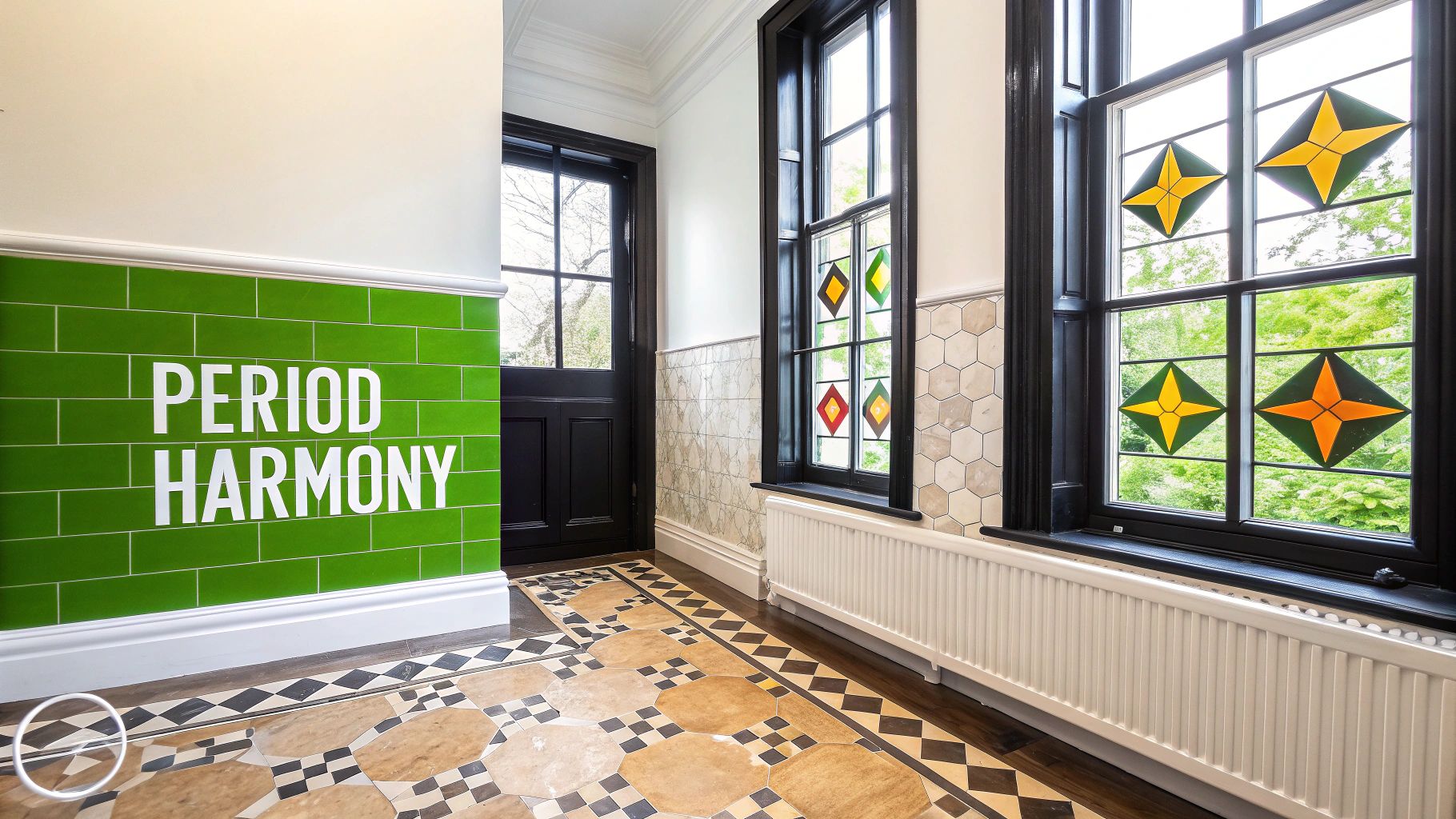
In our two decades renovating homes in areas like Hampstead (NW3) and Highgate (N6), we’ve seen first-hand how the perfect tile can lift a space from simply functional to genuinely exceptional. On the flip side, the wrong choice can feel jarring, diminishing the property’s inherent character.
The Impact of Scale and Proportion
The size of your tile can completely change how a room feels—a critical point in London properties where bathroom dimensions can vary dramatically. It might sound counterintuitive, but using large-format tiles is one of our go-to strategies for making compact bathrooms, so common in Mayfair (W1K) apartments, feel more expansive and calm.
With fewer grout lines, you create a less “busy” surface, which tricks the eye into seeing a larger, more seamless area. A continuous run of a large marble-effect porcelain tile from floor to ceiling can make a room feel taller and more open, creating that spa-like sanctuary our clients desire.
Of course, in a grander bathroom with soaring ceilings, smaller or more intricate tiles can add texture, detail, and a nod to the home’s heritage without ever feeling overwhelming.
Reimagining Period Patterns
Victorian and Georgian design is famous for its decorative patterns. Rather than shying away from this, our luxury bathroom designers in Chelsea often lean into it with a contemporary twist. A well-chosen geometric or encaustic-style tile can create a stunning feature floor or a dramatic backdrop for a freestanding bath.
Here are a few client-focused bespoke approaches we love:
- Modern Heritage: Take a classic pattern, like a monochrome checkerboard, but render it in modern, muted tones for a sophisticated update. This works beautifully in homes across St John’s Wood (NW8).
- The Statement Wall: A single wall of intricately patterned tiles provides a powerful focal point. This allows the rest of the bathroom to stay calm and uncluttered.
- Subtle Texture: For a more understated look, a classic tile like a metro or herringbone can be laid in a contemporary pattern. Using a contrasting grout colour makes the pattern pop, while a matching grout creates a softer, more textural effect.
For a deeper dive into creating a cohesive period look, our guide to designing a Victorian style bathroom suite offers some great insights.
Curating a Timeless Colour Palette
The colour of your tiles is the emotional heart of your bathroom design. It sets the mood and must work in harmony with the light, architectural details, and other finishes.
For enduring elegance, neutral palettes are a superb foundation. They don’t have to be boring. Think of the subtle warmth of limestone-effect porcelain, the soft grey veining in Calacatta marble, or the creamy tones of travertine. These shades create a tranquil backdrop that lets original features, like a cast-iron fireplace or ornate window frames, take centre stage.
A common mistake we see is choosing tiles with a cool, blue-white undertone when the property’s existing elements have warmer tones. This can make fixed features look dated. Our design process always starts by analysing the “fixed whites” in the room to ensure every new element relates perfectly.
That said, a period bathroom can also handle bold colour with grace. A deep emerald green, rich navy, or even a soft blush pink on a feature wall can inject personality and drama—a nod to the Victorians’ love for rich hues, but with a modern, luxurious feel. The key is balance; if you go for a strong colour on the walls, keep the floor tile more subdued to ground the space.
The Nitty-Gritty: Essential Technical Tile Considerations
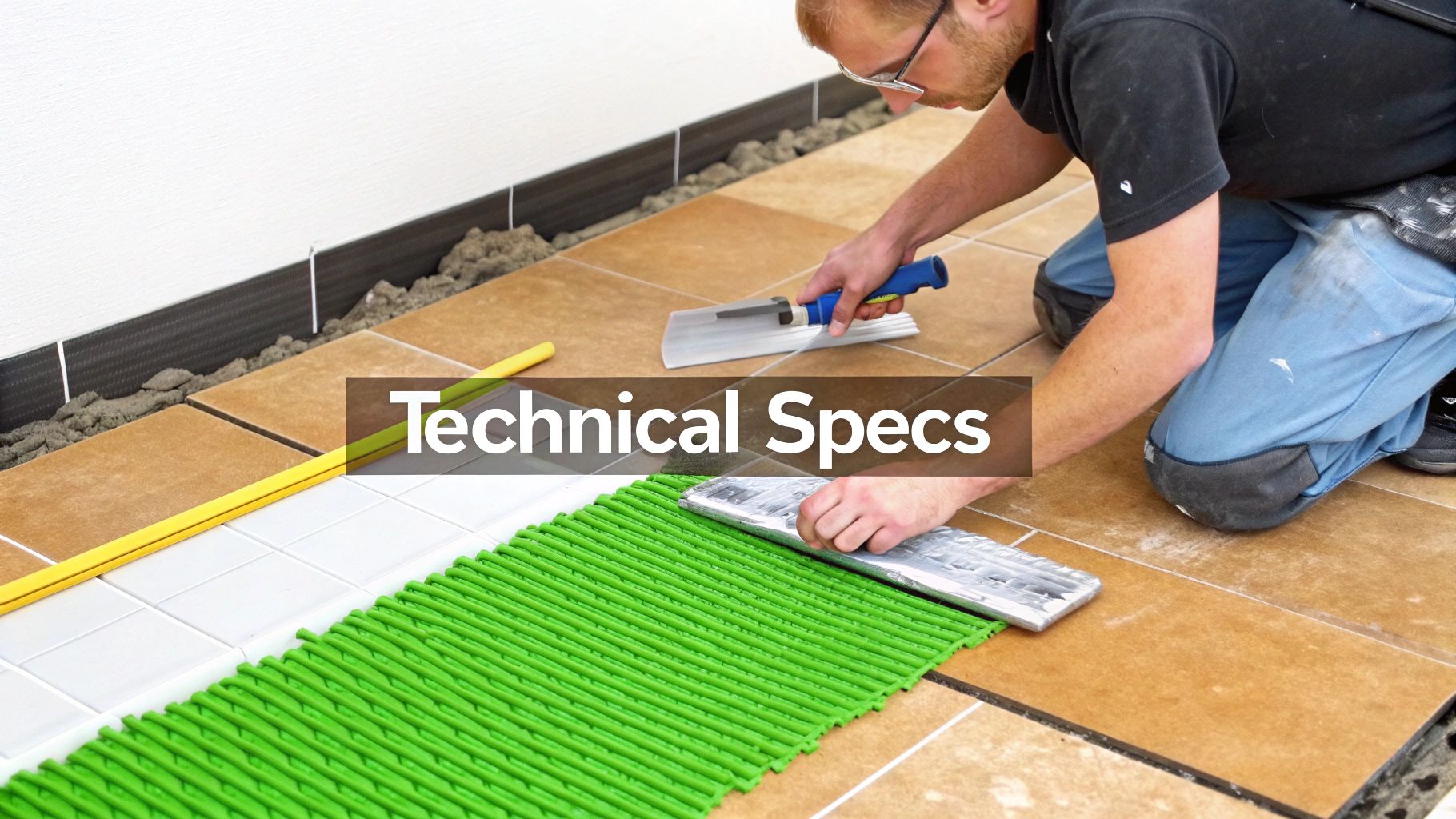
Beyond the sheer beauty of a tile’s colour and pattern, there’s a world of technical specifications that are absolutely non-negotiable for a safe, durable, and truly luxurious bathroom. Trust me, a stunning tile that cracks or becomes dangerously slippery is a costly mistake. After more than 20 years in this business, we know that overlooking these details can completely undermine an entire renovation. This is where real-world experience makes all the difference.
Our in-house craftsmen, who handle everything from plumbing right through to the final tile placement, understand that a flawless finish is only as good as the foundation it’s built on. In a period property in Kensington (SW7), for instance, preparing an old, uneven timber subfloor is the crucial first step to prevent tiles from cracking under stress. Likewise, for a sleek, modern wet room in Chelsea (SW3), meticulous waterproofing (or ‘tanking’) is the secret to longevity. The luxury is in the details you don’t see.
Durability and Wear Ratings Explained
A tile’s toughness is measured by its PEI (Porcelain Enamel Institute) rating, which tells you how well it resists abrasion. For our residential projects, we focus on ensuring the tile can handle daily foot traffic and cleaning without losing its finish.
- PEI 2 (Light Traffic): Perfect for wall tiles in a master or guest ensuite.
- PEI 3 (Light to Moderate Traffic): The sweet spot for most residential bathroom floors.
- PEI 4 (Moderate to Heavy Traffic): A must-have for busy family bathrooms or a main ensuite that gets a lot of daily use.
The Absolute Importance of Slip Resistance
In a bathroom, safety comes first. A tile’s slip resistance is given an ‘R’ rating (from a Ramp Test), ranging from R9 (quite slippery) to R13 (excellent grip). For any area that gets wet, especially shower floors, choosing a tile with the right R rating is a decision we never compromise on.
As a rule, we always specify a minimum of R10 for bathroom floors and will often push for an R11 or higher inside the shower itself. This is especially important for families with young children or older clients who need that extra peace of mind. Naturally, tiles with a textured or matt finish will always offer better grip than something highly polished.
Water Absorption: The Key to Longevity
How porous a tile is—its water absorption rate—is a huge deal, particularly with our damp UK climate. Tiles are graded based on how much water they can absorb:
- Non-vitreous (>7% absorption): Unsuitable for any bathroom.
- Semi-vitreous (3% to 7%): Still too porous. We advise steering clear for wet areas.
- Vitreous (0.5% to 3%): A good standard, suitable for most bathroom walls and floors.
- Impervious (<0.5% absorption): The gold standard. This is typical for porcelain tiles and our firm recommendation for shower enclosures, wet rooms, and steam rooms.
In a luxury project, getting this right is paramount. For a recent wet room conversion in Knightsbridge (SW1X), specialist tiling and tanking was a primary focus to guarantee a waterproof seal and drastically cut the risk of mould.
Thinking About Underfloor Heating?
Underfloor heating has gone from a rare luxury to an expected feature in any high-end bathroom. It adds a level of comfort that’s hard to beat, and it’s brilliant for helping to dry the room out. But not all tiles play nicely with it.
Porcelain and natural stone are fantastic choices because they conduct and hold heat incredibly well. When installing these systems, particularly in period properties, our in-house team is meticulous about preparing the subfloor and using the correct decoupling membrane. This small but crucial layer prevents the natural expansion and contraction from heat from causing cracks in your beautiful new tiles or grout lines down the road. If you’re weighing this up, you can learn more about how underfloor heating works in our detailed guide.
Our obsessive attention to these technical points is what defines our work. It’s why clients trust us with their homes—a reputation we’re proud to maintain on platforms like TrustATrader and the Guild of Master Craftsmen.
Budgeting for Premium Tiling in London
When budgeting for a luxury bathroom renovation, it’s easy to focus on the price per square metre of the tile you’ve fallen in love with. But the reality of achieving a flawless finish, especially in London’s prestigious postcodes, goes much deeper. The final cost is an investment in unparalleled craftsmanship and longevity that adds real, tangible value to your property.
In my experience with projects in Knightsbridge (SW1X) and Belgravia (SW1X), many clients are initially surprised to learn that the tiles themselves often only account for 40-50% of the total tiling budget. So, where does the other half go? It’s dedicated to the meticulous preparation and specialist labour that truly define a high-end installation.
Beyond the Tile Price Tag
The secret to a perfect tiling job isn’t what you see; it’s what lies beneath. This is particularly true in London’s period properties, where getting the foundation right is absolutely non-negotiable and demands a huge amount of expertise.
Here are some of the critical preparatory costs we always factor in:
- Substrate Reinforcement: Floors in Victorian and Georgian homes are rarely perfectly level. We must reinforce them to prevent any movement that would inevitably lead to cracked tiles or grout down the line.
- Professional Waterproofing: We call it ‘tanking’. It’s an essential process of applying a membrane system to create a completely sealed, waterproof envelope in shower and wet room areas. Skipping this is asking for expensive water damage in the future.
- Decoupling Membranes: If you’re having underfloor heating, a decoupling membrane is a must. It absorbs the tiny movements caused by heating and cooling, protecting the tiles from thermal stress.
This foundational work is where our in-house, skilled teams really shine. Unlike firms that outsource, we manage every single stage, ensuring each layer is executed to our exacting standards.
The Value of Master Craftsmanship
The complexity of your chosen tile and pattern has a massive impact on labour costs. Laying a large-format porcelain tile in a simple grid pattern is straightforward. But an intricate herringbone or basketweave design using tiny mosaic tiles? That’s a different story entirely. It demands the precision, patience, and skill of a master tiler, and the budget will reflect that.
For a recent custom bathroom installation in Kensington (SW7), the client chose a breathtaking marble mosaic for a feature wall. The painstaking labour for this intricate work accounted for nearly 70% of that wall’s tiling cost. The result, however, was a one-of-a-kind centrepiece that completely transformed the space.
We partner with trusted suppliers like Topps Tiles to source premium materials, but it’s the skill of our craftsmen that elevates those materials into a lasting work of art.
Contextualising Your Tiling Investment
So, how does this fit into the bigger picture? In a full luxury bathroom renovation, tiling typically makes up 15-20% of the total project budget. For a high-end project in London, where budgets can easily range from £30,000 to over £100,000, this helps put the cost into a realistic perspective.
Understanding this allocation helps you see how tiling fits alongside other key investments, such as bespoke joinery, premium sanitaryware, or a state-of-the-art steam shower. Our detailed proposals provide this clarity from the outset, empowering you to make informed decisions.
To see how all these elements come together in a finished project, take a look at our complete guide to bathroom refurbishment in London. Remember, investing in quality materials and expert installation doesn’t just deliver a beautiful bathroom today—it protects your property’s value for decades to come.
Common Questions About Choosing Bathroom Tiles
Over our 20+ years of designing and building luxury bathrooms across London’s most sought-after postcodes, we’ve found that clients often have similar, important questions. Making a confident decision on your bathroom tiles is crucial. Below, we’ve pulled together some of the most frequent queries we get, with clear answers drawn from decades of hands-on experience.
What Are The Best Tile Choices for a Small Bathroom in a Chelsea Flat?
To make a smaller bathroom in a Chelsea (SW3) flat feel more expansive and luxurious, our design team consistently recommends large-format porcelain or marble-effect tiles. It’s all about creating an illusion of space. Light, neutral colours like soft whites or pale greys are your best friends here, as they reflect light beautifully and open up the room.
A key strategy we often employ is running the same tile across both the floor and walls. This simple trick blurs the visual boundaries, creating a seamless, spa-like feel that makes the room feel much larger than it is. The minimal grout lines you get with large-format tiles also contribute to this clean, uncluttered aesthetic. Pair this with wall-hung fixtures to free up floor space, and the effect is truly transformative.
How Can I Ensure My New Tiles Are Eco-Friendly?
For our clients who place a high value on sustainability, we’ve built a carefully curated network of suppliers who provide tiles with strong eco-credentials. Sourcing sustainable materials isn’t an afterthought for us; it’s a cornerstone of our philosophy.
Recycled glass and porcelain tiles with a high percentage of recycled content are excellent choices. They don’t just reduce landfill waste; they also offer exceptional performance and durability. Another fantastic option is responsibly quarried natural stone, which is a long-lasting investment when sourced correctly. But our commitment doesn’t stop at the tiles themselves.
We exclusively use low-VOC (Volatile Organic Compound) adhesives and grouts to ensure healthier indoor air quality for your family. This holistic approach is a fundamental part of our promise to deliver exceptional eco-friendly renovations.
Is Natural Stone Hard to Maintain in a Family Bathroom?
There’s no denying the beauty of natural stone like marble or limestone, but it absolutely requires more diligent care compared to porcelain. Because it’s porous, it must be professionally sealed by our in-house craftsmen upon installation and then resealed periodically—typically every one to two years—to prevent staining and water damage.
For busy family bathrooms in areas like St John’s Wood (NW8) or Belsize Park (NW3), we often suggest a highly practical yet equally luxurious alternative: premium Italian porcelain that masterfully mimics natural stone. These tiles give you the same elegant aesthetic, capturing the intricate veining and subtle tones of real marble, but with none of the maintenance headaches. Porcelain is non-porous, highly stain-resistant, and never needs sealing, striking the perfect balance of beauty and practicality for a modern family lifestyle.
How Do You Manage Tiling in a Listed Building?
Working on listed properties, particularly in historic areas like Hampstead (NW3) or Mayfair (W1K), demands a profound level of specialist expertise and respect for heritage. Our two decades of experience have given us the nuanced understanding needed to navigate these complex regulations successfully.
Every single decision, especially tile selection, must be sympathetic to the building’s specific era and architectural integrity. This often means sourcing reclaimed tiles or even commissioning bespoke, heritage-style reproductions to ensure a perfect match.
All structural preparations are carried out with meticulous care by our skilled teams to preserve and protect original features, from floorboards to decorative plasterwork. Crucially, our team handles the entire process of obtaining the necessary permissions and consents, ensuring the project is fully compliant from start to finish. This seamless management allows us to blend modern luxury with the building’s unique heritage, delivering a result that is both stunning and respectful of its history.
Ready to transform your home with timeless luxury? Contact BathKitchenLondon.com for a personalized quote on your bespoke kitchen, bathroom, or full renovation project.