
There’s a certain magic to a Victorian bathroom. It’s more than just a style; it’s a statement of timeless elegance, blending ornate historical details with a real sense of luxury. Think of a classic freestanding roll-top bath, a beautifully crafted pedestal basin, and the unmistakable silhouette of a high-cistern toilet. This aesthetic feels perfectly at home in London’s finest period properties, from St John’s Wood (NW8) to Chelsea (SW3), creating a sanctuary that respects heritage while meeting modern demands.
Why We Still Love Victorian Bathroom Design
The appeal of a Victorian bathroom suite has never faded, especially within London’s distinguished period homes in areas like Chelsea (SW3) and Hampstead (NW3). It remains a benchmark for sophistication. For discerning homeowners, it’s a coveted choice that masterfully combines intricate detailing with a level of comfort that feels both grand and personal.
This guide provides practical, actionable insights for planning and executing a flawless Victorian bathroom renovation. With over 20 years of experience delivering bespoke projects in London’s most exclusive postcodes, we understand this is about more than just picking out fixtures; it’s about crafting a space that feels completely authentic to your home’s character and your own personal style.
What Makes the Victorian Aesthetic a Smart Choice?
Choosing a Victorian design means you’re investing in enduring style, not just following a fleeting trend. For anyone who owns a townhouse in Kensington (SW7) or a grand home in Highgate (N6), this approach honours the building’s architectural soul. The design language of the era was built on quality craftsmanship and a sense of grandeur that adds real, tangible value to a property.
At its heart, a successful luxury bathroom renovation in Hampstead comes down to three things:
- Celebrating Heritage: Faithfully restoring or recreating historical details that feel like they’ve always been part of the home.
- Investing in Craftsmanship: Choosing pieces made from high-quality, honest materials like cast iron, porcelain, and solid brass that are built to last generations.
- Creating a Statement: Using iconic fixtures to create a powerful focal point that is as beautiful as it is functional.
A well-executed Victorian bathroom isn’t a museum piece. It’s a living, breathing space that combines the best of nineteenth-century elegance with twenty-first-century performance—an investment in your home’s story and its future.
With over two decades of experience working in London’s most exclusive postcodes, we’ve navigated the unique challenges these projects present, from the structural quirks of a Belgravia townhouse to sourcing the perfect antique brassware for a Primrose Hill flat. Our expertise lies in seamlessly fusing the old with the new.
Next, we’ll introduce the quintessential components—the statement roll-top bath, the elegant pedestal basin, and the iconic high-cistern toilet—that form the very heart of this classic design.
For more inspiration, explore our insights on reviving Victorian homes.
The Quintessential Elements of Your Victorian Suite
To capture the true essence of Victorian design, you have to get the core fixtures right. Think of these as the non-negotiables, the foundational pieces that define the entire character of the room. This is where we move beyond simple functionality and into creating a cohesive, luxurious sanctuary that feels perfectly at home in a Kensington (SW7) or Knightsbridge (SW1X) townhouse.
Let’s walk through the critical choices, from the commanding presence of a freestanding roll-top bath to the intricate details of period-perfect brassware. The goal here is to help you visualise how these components come together to form the perfect victorian style bathroom suite.
The Unmistakable Roll-Top Bath
The centrepiece, the absolute star of the show, is the freestanding roll-top bath. This isn’t just a place to wash; it’s a sculptural statement that anchors the entire room’s design. Traditionally crafted from cast iron, these baths are legendary for their incredible heat retention and sheer durability. They are a genuine lifetime investment.
While nothing beats authentic cast iron for historical accuracy, modern acrylic and stone resin alternatives offer a lighter, more cost-effective option. This is often a crucial consideration in period properties across Chelsea (SW3), where floor reinforcement is a common structural challenge we tackle to support a cast iron tub, which can easily weigh over 200kg when full.
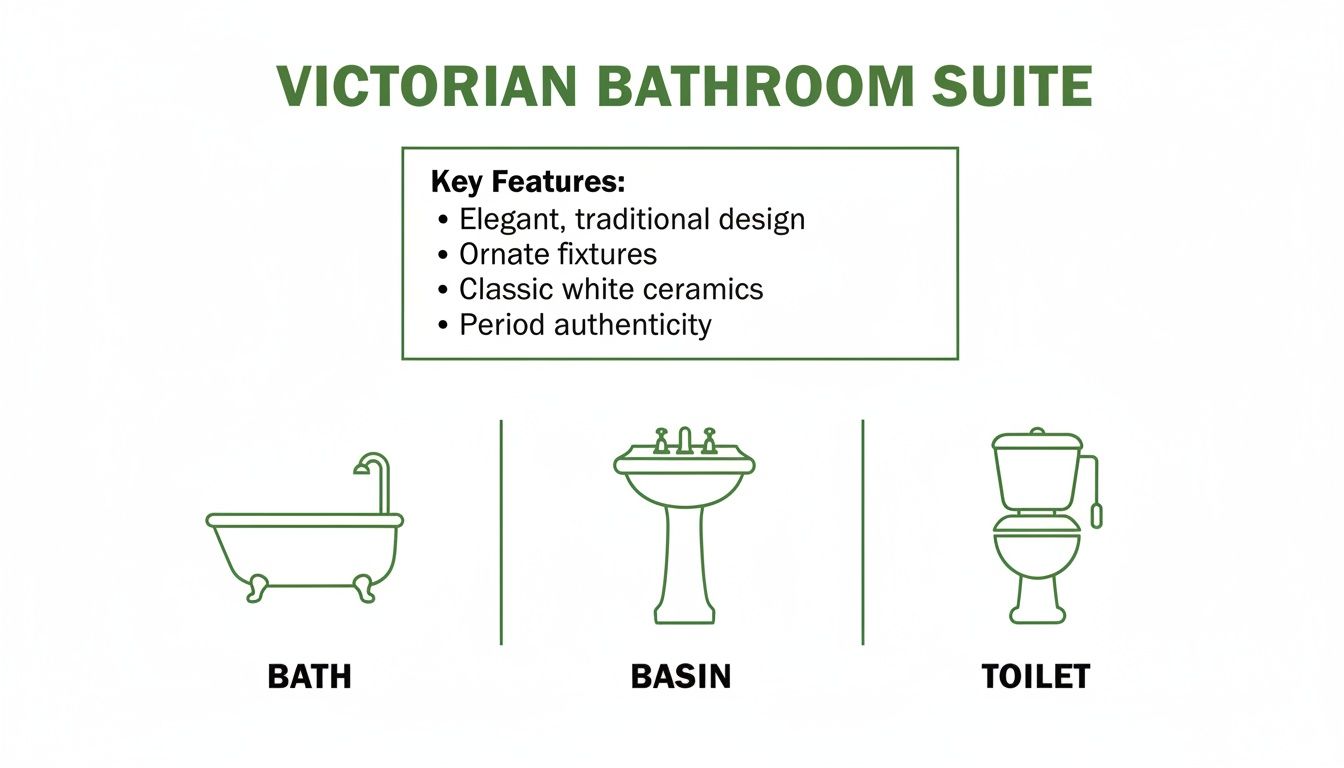
Each element—the roll-top bath, the pedestal basin, and the high-cistern toilet—plays an equally vital role in establishing the room’s authentic feel.
The Elegant Pedestal Basin
Next up is the pedestal basin. Its elegant, statuesque form is designed to conceal all the necessary pipework while creating a graceful silhouette that stands in beautiful contrast to modern, wall-hung designs. Made from high-quality ceramic or porcelain, these basins often feature lovely decorative details, like moulded edges or ornate tap holes.
For a truly bespoke finish in a St John’s Wood (NW8) residence, you might consider a console basin. This variation is supported by two or four decorative legs, often in chrome or polished nickel, giving a more open, airy feel while still holding onto that classic aesthetic.
The Dramatic High-Tank Toilet
Perhaps the most distinctive feature of all is the high-tank toilet. With its cistern mounted high on the wall, connected by a long flush pipe and operated by a pull chain, it brings a touch of theatricality and vertical drama to the space. It’s not just for show; the gravity-fed flush is also incredibly effective.
Of course, for smaller bathrooms or where you want something a little less imposing, a low-level or close-coupled toilet in a traditional style is an excellent alternative. It blends period charm with a more compact footprint without compromising the overall look. Eco-conscious options now include dual-flush mechanisms cleverly disguised within traditional pull-chain designs, providing modern water efficiency.
The secret to a successful Victorian design isn’t just about picking individual pieces. It’s about understanding how their scale, materials, and ornate details work in harmony to create a balanced composition that feels both grand and inviting.
To help you navigate the material choices for these fixtures, the table below compares the most common options, weighing up authenticity against the practical realities of a luxury London renovation.
Comparing Core Fixture Materials For Your Victorian Bathroom
| Fixture | Material Option | Authenticity | Durability & Maintenance | Typical Cost Bracket |
|---|---|---|---|---|
| Roll-Top Bath | Cast Iron | High – The original material, offering superior heat retention. | Excellent – Extremely durable but heavy. Requires specialist installation. | Premium (£2,500 – £8,000+) |
| Roll-Top Bath | Acrylic | Medium – A modern, lightweight alternative. | Good – Easier to install and maintain, but less heat retentive. | Mid-Range (£800 – £3,000) |
| Basin/Toilet | Porcelain/Ceramic | High – The quintessential material for Victorian sanitaryware. | Excellent – Hard-wearing, easy to clean, and stain-resistant. | Mid-Range to Premium (£500 – £2,500+) |
| Taps/Brassware | Polished Brass | High – Authentic but requires regular polishing to avoid tarnishing. | Good – Develops a natural patina over time if left unlacquered. | Premium (£400 – £1,500+) |
| Taps/Brassware | Polished Nickel/Chrome | Medium – Became popular later but offers a classic look. | Excellent – Highly durable and very low maintenance. | Mid-Range to Premium (£300 – £1,200) |
By carefully selecting each of these quintessential elements, you lay the foundation for a truly remarkable victorian style bathroom suite. For a deeper dive into bringing period renovations to life, our guide on tailored bathroom renovations offers further valuable insights.
From Furnished Parlour to Tiled Sanctuary
To execute a Victorian bathroom correctly, you must understand its origins. The bathroom as a dedicated, hygienic space didn’t just appear overnight; it evolved from a furnished room into the tiled, practical sanctuary we know today. This history is especially important for owners of period townhouses in places like Mayfair (W1K) or Belgravia (SW1X), as it gives real weight to every design choice.
In the early Victorian era, a room for bathing was a luxury only the wealthiest could afford. These spaces often resembled any other parlour, with carpets, heavy drapery, and wooden furniture. Bathing was an occasional event, not a daily routine.
The Great Sanitary Awakening
Everything changed in the mid-19th century with the “Great Sanitary Awakening.” This public health movement completely shifted societal views on cleanliness. This new thinking, combined with advances in plumbing and the advent of hot running water, revolutionised bathroom design.
As hot water systems became common, a major shift occurred. Designs moved from wood and fabric towards hygienic, tiled rooms built for easy cleaning and longevity. White porcelain and encaustic tiles became the new standard, symbols of purity and quality that still guide high-end renovations in Mayfair and Knightsbridge today. You can read more on this fascinating shift in Victorian bathroom history on vivaciousvictorian.com.
This change wasn’t just aesthetic; it was a powerful statement about modernity and social standing.
The Victorian bathroom quickly became a showcase for the latest technology and a symbol of a family’s commitment to modern health and hygiene. All that gleaming white porcelain and intricate tilework wasn’t just for show; it was a declaration of a clean, civilised, and sophisticated home.
From Wood and Fabric to Tile and Porcelain
This crucial move away from absorbent materials like wood and textiles towards non-porous surfaces was driven by a new understanding of germs and hygiene. The key changes were quite dramatic:
- Flooring: Old wooden floorboards were torn out and replaced with decorative, hard-wearing encaustic or geometric tiles that were easy to scrub down.
- Walls: Wallpaper and paint were stripped in favour of ceramic tiles, often installed up to dado rail height to create a waterproof, wipeable surface.
- Fixtures: Ornate wooden commodes were out. In their place came gleaming white porcelain toilets and basins that proudly showed off how clean they were.
This journey from parlour to sanctuary informs every decision we make on a bespoke renovation in a period property. For our projects in prestigious postcodes like Hampstead (NW3) or St John’s Wood (NW8), respecting this history is absolutely key. It means we choose materials not just for their appearance, but for their historical accuracy and their link to this incredible design evolution. Understanding this story makes it clear why an authentic victorian style bathroom suite is so much more than just a set of fittings—it’s a nod to a revolutionary chapter in our domestic history.
Tackling Renovation Challenges in Period Properties
Bringing an authentic Victorian style bathroom suite into a period London home is rarely a simple affair. These wonderful old buildings, whether Highgate townhouses or Belsize Park villas, are full of unique structural and plumbing quirks that demand a specialist’s touch. Attempting to manage these challenges without expert guidance can lead to expensive mistakes, but with careful planning and an experienced team, they are entirely solvable.
It all starts with a meticulous assessment of the existing space. With over two decades of experience working in London’s most distinguished properties, we know that no two period homes are ever the same. Each presents its own hurdles, requiring an approach founded on precision and genuine respect for the building’s original fabric.
Supporting a Cast Iron Centrepiece
A classic cast iron roll-top bath is the undeniable heart of any Victorian bathroom, but it’s incredibly heavy. A standard tub can weigh over 150kg even before you add water and an occupant, putting enormous strain on original timber joists that are often over a century old.
Step-by-step Solution:
- Structural Survey: Our first step is always a structural survey to assess the floor’s integrity.
- Reinforcement Plan: We then devise a plan, often involving reinforcing joists from below or adding extra noggins to distribute the load evenly.
- Expert Installation: Only then do our specialists install the bath, ensuring a safe and lasting result. For a luxury bathroom designers Chelsea project, this foundational work is non-negotiable.
Modernising Outdated Plumbing Systems
Another common challenge is integrating modern, high-pressure water systems with original, narrow Victorian pipework. The plumbing in these homes was never designed to cope with the flow rate of a contemporary rainfall shower or a fast-filling bath.
Attempting to connect new fixtures to old pipes without a full system upgrade can result in poor performance, noisy pipes (known as ‘water hammer’), and potential leaks within walls and floors.
Our approach is a comprehensive plumbing overhaul. This usually means:
- Upgrading Pipe Diameters: We replace old, narrow lead or iron pipes with wider, modern copper or plastic alternatives to ensure fantastic water pressure.
- Installing New Stopcocks: We fit accessible isolation valves for every fixture—a modern convenience often missing in older systems.
- Rerouting for Aesthetics: Our team carefully conceals new pipework within walls or under floorboards to maintain the clean, classic lines of the Victorian aesthetic.
Perfecting Imperfect Walls and Floors
One of the great charms of period properties is their character—but that character often includes walls that aren’t perfectly straight and floors that aren’t level. When you’re aiming for a high-end finish with intricate geometric floor tiles or precise wall panelling, these imperfections must be skilfully addressed.
Our in-house craftsmen are masters of this delicate work. We meticulously level floors using self-levelling compounds and straighten walls with plaster or backing boards long before any tiles or paint are applied. This painstaking preparation ensures perfect grout lines and allows bespoke vanity units to sit flawlessly against the wall, achieving the pristine finish expected in a Mayfair (W1K) or Belgravia (SW1X) home.
Navigating these technical hurdles is what separates a good renovation from a great one. For a more detailed look at the complexities involved, we invite you to learn more about reviving Victorian homes in our dedicated guide.
Budgeting Your Bespoke Victorian Bathroom in London
Embarking on a bespoke Victorian bathroom renovation is a significant investment in your property’s heritage and long-term value. For homeowners in prestigious postcodes like Chelsea (SW3) and South Kensington (SW7), having a clear financial picture from the outset is key to a successful, stress-free project.
You should realistically budget anywhere from £15,000 to £70,000+ for a high-end victorian style bathroom suite in these areas of London. The final figure depends entirely on the project’s scale, the specification of materials, and the structural complexities of the space. This is not a cosmetic refresh; it’s a meticulous restoration that demands specialist craftsmanship and premium materials to do justice to your home’s character.
What Shapes Your Renovation Budget?
Several key elements will determine where your project falls on that cost spectrum. The specification of authentic materials, the complexity of custom joinery, and the hidden technical hurdles that period properties often present all have a significant impact.
Here’s a breakdown of the main cost drivers for a luxury renovation:
- Sanitaryware & Brassware: Authentic reproductions from heritage brands or meticulously restored antique fixtures are central to the look and command a higher price than off-the-shelf items.
- Tiling & Finishes: Hand-made encaustic floor tiles, marble vanity tops, and custom-made wall panelling add layers of character and, consequently, cost.
- Bespoke Joinery: Custom-built vanity units and mirrored cabinets designed to fit the unique dimensions of older homes are hallmarks of a luxury renovation.
- Labour & Specialist Skills: A project of this calibre relies on master craftspeople, from expert tilers who can lay intricate geometric patterns to plumbers who can integrate modern systems into a period property.
A well-considered budget isn’t just a shopping list for fixtures and fittings. It’s an investment in the foundational quality and technical skill that ensures your bathroom not only looks beautiful but will stand the test of time, adding significant, lasting value to your home.
A Smart Investment in Your Property’s Future
Beyond the immediate luxury, a beautifully executed Victorian bathroom renovation is a sound financial decision. The UK bathroom market is consistently strong, driven by homeowners seeking refurbishments that boost property value, especially in London’s prime postcodes.
For property owners in areas like Hampstead (NW3) and South Kensington (SW7), investing in an authentic victorian style bathroom suite can increase a property’s value by as much as 5-10%. You can get a broader sense of the UK bathroom market trends on researchandmarkets.com. This return comes from creating a space that blends timeless period charm with the high-performance functionality that discerning buyers now expect, turning a functional room into a standout feature that elevates the entire property.
Blending Modern Luxury With Timeless Victorian Charm
For our clients in Primrose Hill and Belsize Park, creating a Victorian-style bathroom suite isn’t about sacrificing modern comfort for authenticity. The real art lies in seamlessly weaving today’s technology and eco-friendly solutions into a classic design, ensuring the space delivers an exceptional experience without losing its heritage soul.
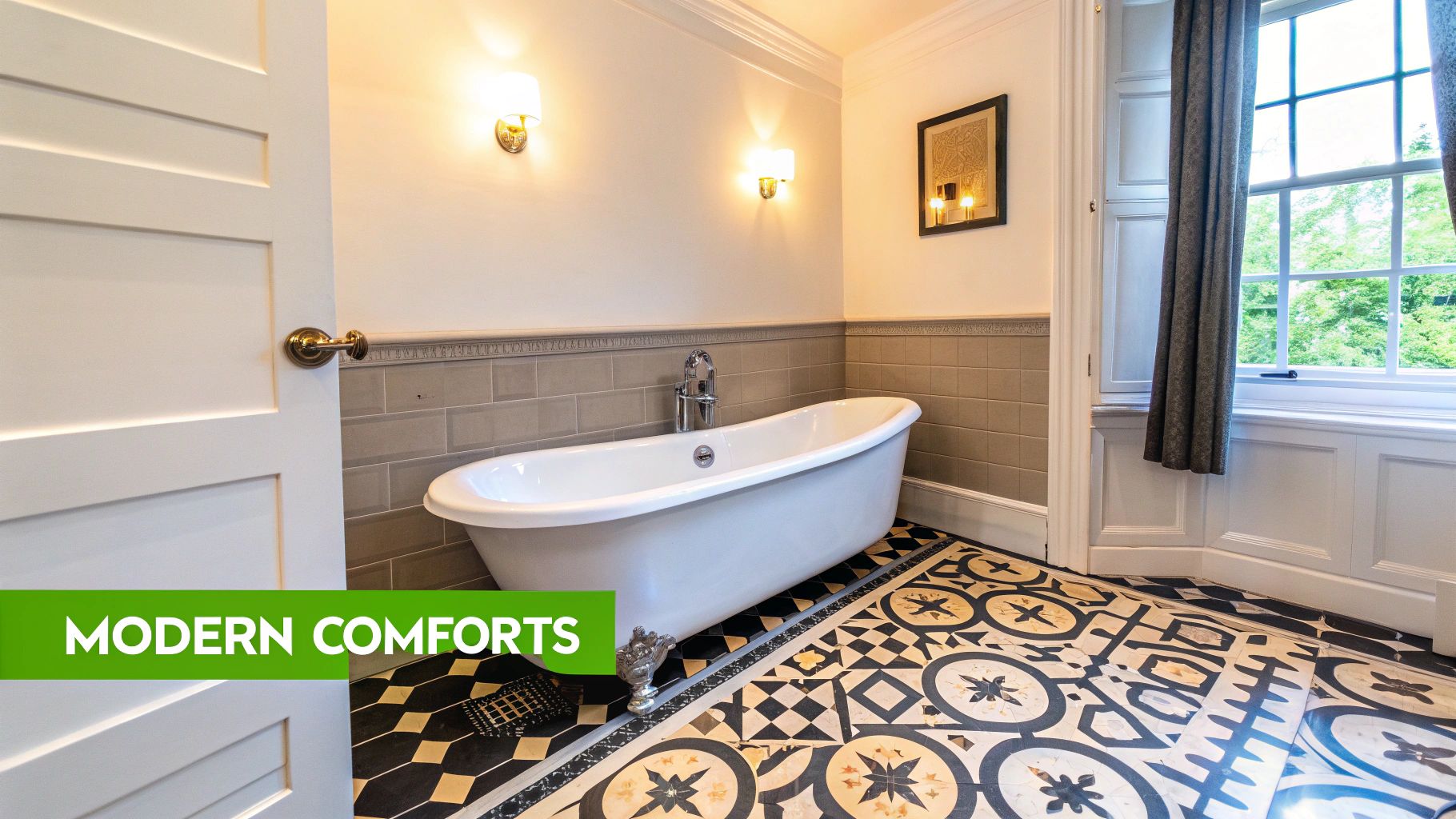
The secret is subtlety. A truly successful design ensures modern features are felt, but never seen. It’s a sophisticated approach that lets you enjoy every contemporary comfort within a space that feels entirely period-correct—perfect for a high-end lifestyle in a historic London home.
Invisible Comforts and Eco-Friendly Solutions
One of the most effective ways to introduce modern luxury is through heating. Traditional cast iron radiators are a non-negotiable for visual authenticity, but they can be beautifully supplemented by the silent efficiency of electric underfloor heating. This system works perfectly beneath classic geometric or encaustic tiles, providing a consistent, gentle warmth.
In the same way, we can elevate the bathing experience without disrupting the aesthetic. Imagine a powerful, high-pressure rainfall shower using period-style brassware that cleverly conceals advanced thermostatic controls. Sustainable options include water-saving aerated showerheads that reduce consumption without compromising pressure. A high-end eco kitchen Mayfair project might feature similar water-saving tapware, principles we apply across all our renovations.
Smart Technology With a Traditional Face
The integration of smart technology is another area where modern function can meet classic form. A thoughtfully designed lighting scheme can completely transform the atmosphere, yet the controls can be classic dolly switches in brass or ceramic.
The most sophisticated luxury is that which appears effortless. By concealing modern systems behind a traditional facade, we create a bathroom that honours its architectural roots while performing flawlessly for the 21st century.
Consider these smart integrations for your own project:
- Intelligent Lighting: We can install layered, energy-efficient LED lighting systems with discreet strips under vanity units or within alcoves, controlled via a central system for preset scenes.
- Demisting Mirrors: A heated demister pad fitted behind a traditionally framed mirror ensures it remains crystal clear after a hot bath or shower—a small but significant touch of daily luxury.
- Efficient Ventilation: High-performance, whisper-quiet extractor fans are essential for protecting the fabric of a period property from damp. These can be cleverly concealed within the ceiling or joinery.
Bespoke Joinery for Modern Storage Needs
Finally, storage is one area where modern needs diverge sharply from the past. A Victorian bathroom was often sparse, but today’s luxury spaces must accommodate an array of products and linens. This is where our in-house craftsmen excel, designing and building bespoke vanity units and cabinets that perfectly mimic period furniture, often using sustainably sourced timber.
These beautiful pieces can conceal deep drawers, clever internal dividers, and even integrated charging points for electric toothbrushes and shavers. This approach ensures your sanctuary remains serene and uncluttered, with every modern convenience hidden just out of sight. To see how we achieve this seamless fusion, you can learn more about our bespoke tailored bathroom renovations and unique design philosophy.
Choosing the Right Specialist for Your Renovation
Entrusting your home to a renovation specialist is a critical decision, particularly for a period property in London. Selecting the right partner is the single most important factor in whether your Victorian-style bathroom suite becomes a masterpiece or a source of stress. It requires diligence, knowing what to look for, and asking the right questions.
With 55% of UK homeowners now actively upgrading their bathrooms, the demand for true specialists is soaring. For those in prime London postcodes, it is essential to find a contractor who genuinely understands the quirks of period properties and can deliver a truly bespoke finish. You can read more about the rising demand for bathroom renovations at mintel.com.
Verifying Specialist Experience in Period Properties
Not all renovation companies are created equal; many are not equipped for the unique challenges of Victorian and Georgian homes. When vetting potential partners for a bespoke kitchen renovation Hampstead or a bathroom project in Kensington (SW7), your first priority must be proven, specific experience.
Look for a firm with a deep portfolio of high-end Victorian bathroom projects in your neighbourhood. This demonstrates not just their design eye, but their familiarity with the structural and plumbing nuances of local period architecture. An established company with over 20 years of experience will have already solved the very issues your property is likely to present.
The ideal specialist isn’t just a builder; they’re a custodian of your home’s heritage. They should have an in-house team of master craftspeople—from joiners to tilers—who understand the level of precision needed to blend historical authenticity with modern luxury.
Crucial Questions for Your Potential Contractor
To feel confident in your decision, treat this process like an interview. A transparent, knowledgeable contractor will welcome your questions and have solid answers ready.
Here’s a checklist to guide your conversations:
- Portfolio and References: “Could you show me a portfolio of at least three Victorian bathroom projects you’ve completed in postcodes like SW3 or NW8? I would also like to speak with those clients.”
- In-House Team: “Do you use your own in-house team for critical work like joinery, tiling, and plumbing, or do you subcontract?”
- Project Management: “Who will be my dedicated point of contact throughout the renovation, and how often can I expect to receive progress updates?”
- Problem-Solving: “Can you describe a complex structural or plumbing issue you faced in a similar period property and how your team resolved it?”
- Insurance and Guarantees: “What level of public liability insurance do you carry, and what guarantees do you offer on your craftsmanship and the materials?”
This line of questioning quickly separates the experts from the rest. For more advice, have a look at our detailed article on choosing the right building team for your Central London renovation.
At Bath Kitchen Renovation Ltd, we combine decades of specialised experience with a genuine passion for preserving London’s architectural heritage. Contact BathKitchenLondon.com for a personalized quote on your luxury renovation project.
Powered by the Outrank app